
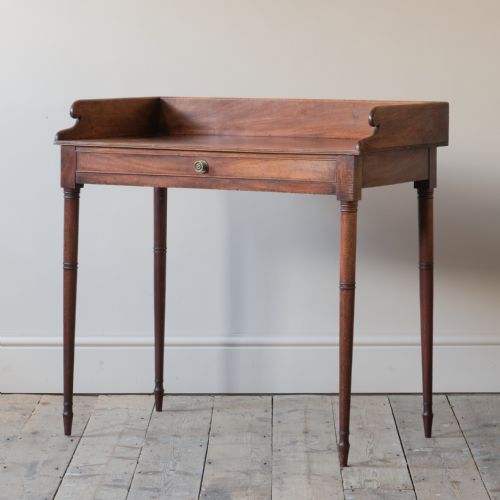
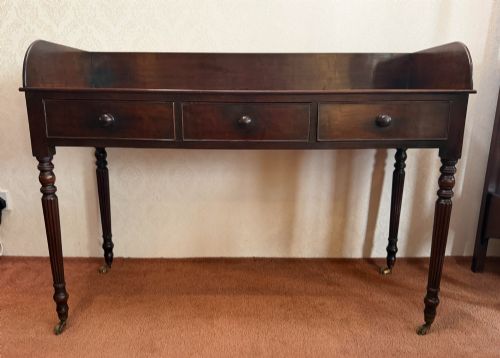
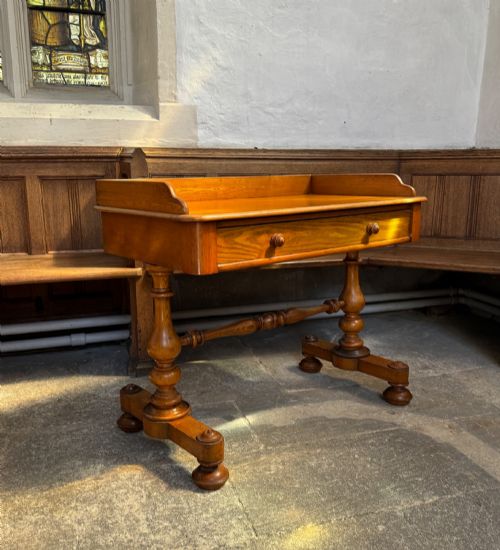

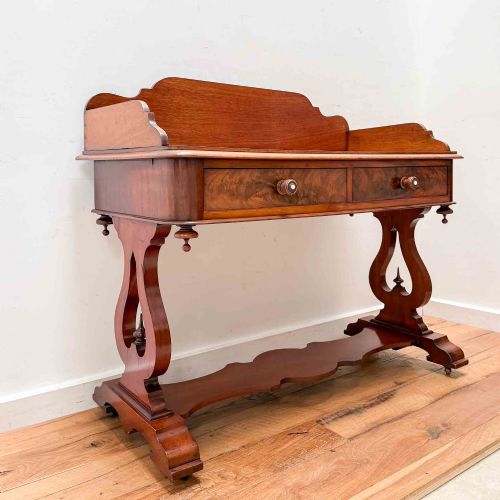




Gallery Back Console Table
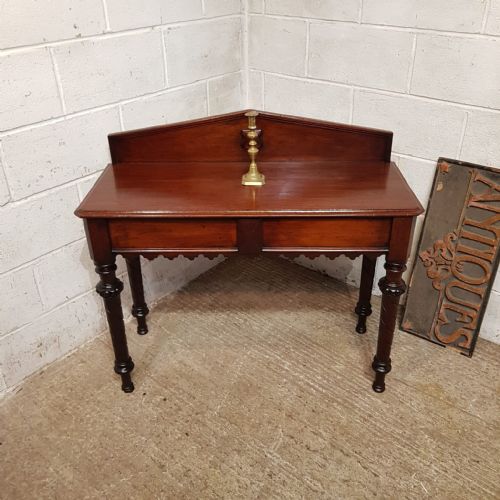
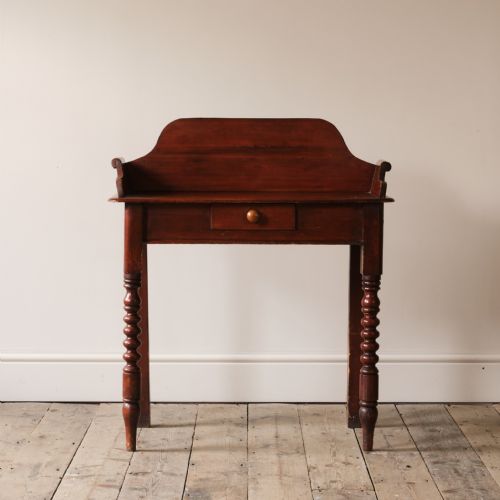
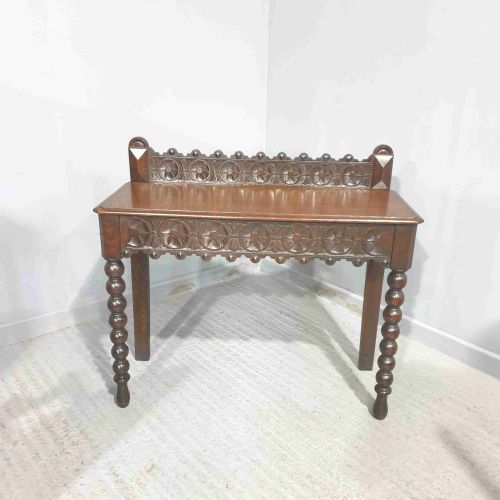
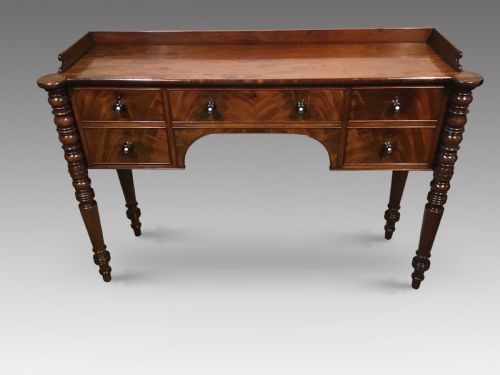
These gallery back console table examples bring together nineteenth century timber and practical design to anchor a hallway or reception room.
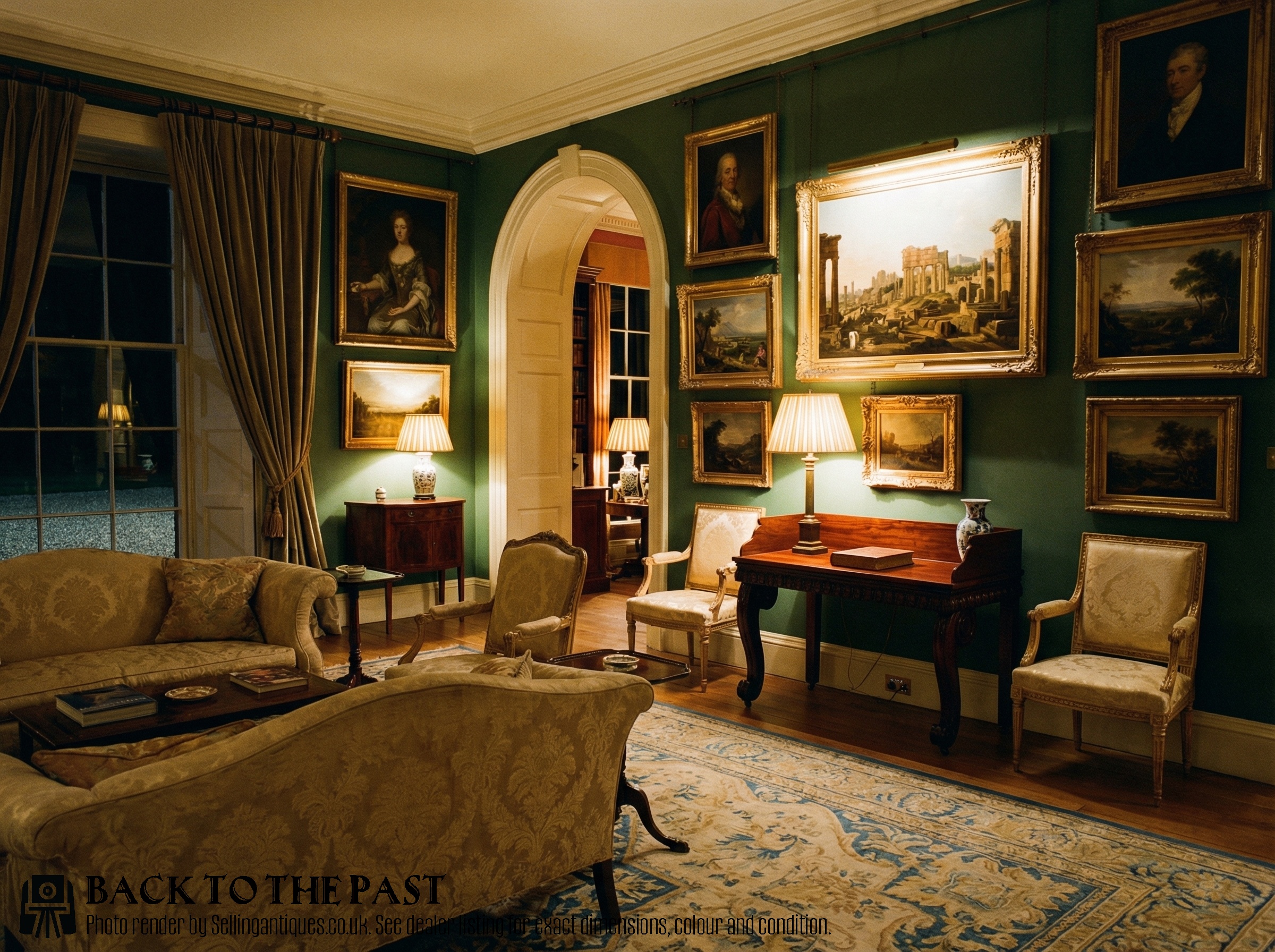
Gallery Back Console Table
A gallery back console table serves as a functional surface against a wall, frequently incorporating a raised rear ledge to prevent items from slipping. The selection spans George III, Regency, and Victorian periods, drawing on styles from Georgian simplicity to Gothic Revival.
Makers adapted these forms for various domestic duties, resulting in pieces catalogued variously as side tables, writing tables, washstands, and serving buffets. Mahogany remains the dominant timber, supplemented by pine, oak, pitch pine, and rosewood.
The most common formats on this page reflect nineteenth century production, often featuring single or twin drawers beneath the main surface. Marble tops appear on select pieces alongside traditional timber construction.
What varies in quality
The choice of timber grain and veneer selection dictates much of the visual appeal, with figured flame mahogany sitting at the higher end of the scale. Crispness in carved details, such as those found on Gothic Revival or Regency examples, indicates superior craftsmanship.
Original brass fittings, stable drawer movement, and the preservation of natural patina elevate a piece beyond standard utility furniture. Structural integrity in the gallery back attachment remains a key indicator of careful period assembly.
Mahogany is the most frequent timber across these listings, appearing alongside oak, pine, pitch pine, and rosewood.
Maples
The Gallery Back Console Table Glossary
- Flame mahogany
- A veneer cut from the fork of a mahogany tree where the branch meets the trunk, creating a distinct swirling flame pattern. Cabinet makers prized this figure for principal surfaces.
- Regency
- A British design period spanning the early nineteenth century, characterised by classical restraint and neoclassical motifs. Furniture from this era often incorporates subtle brass inlay and elegant proportions.
- Washstand
- A domestic table designed to hold a basin and pitcher for personal washing, frequently adapted into general side table use today. These items often include marble tops or splashbacks.
- Patina
- The surface sheen and mellowed colour developed by wood through age, use and waxing. This characteristic layer marks genuine period pieces.
Gallery Back Console Table: Frequently Asked Questions
What is a gallery back?
A gallery back is a raised barrier along the rear edge of a table top. It prevents items from sliding off and adds a decorative finish to the piece.
This feature appears frequently on tables designed for serving, writing, or washstand duties where containment was useful.
How do I date a console table?
Dating relies on observing construction methods, timber choices, and stylistic details. Regency and Georgian pieces show different proportions and carving styles compared to later Victorian items.
Examine the drawer construction and secondary timbers beneath the piece to confirm its period of manufacture.
Can I use a washstand as a hall table?
Many period washstands and side tables function well in hallways as console surfaces. Their narrow proportions suit entrance spaces and corridors effectively.
Marble tops found on certain washstands offer a durable surface for everyday household items.
What woods were used?
Mahogany is the primary timber across these listings, appearing in solid form and as flame veneer. Oak, pine, pitch pine, and rosewood also feature in specific regional and period pieces.
Secondary woods like pine were typically reserved for internal framing and drawer construction.