


William IV Leather Seat
A william iv leather seat brings solid nineteenth-century presence to a room, combining sturdy mahogany or rosewood frames with supple hide upholstery.

William IV Leather Seat
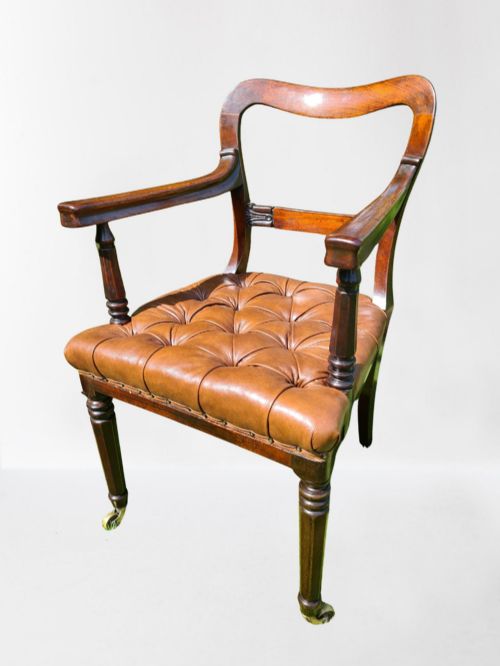
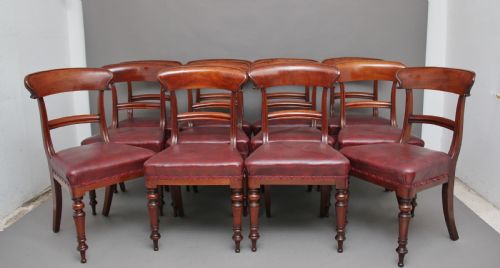
When you search for a william iv leather seat, you are looking at nineteenth-century seating that spans dining chairs, library armchairs, desk chairs, and piano stools. The pieces on this page draw from the Regency, William IV, and Victorian periods, reflecting the robust tastes of the era.
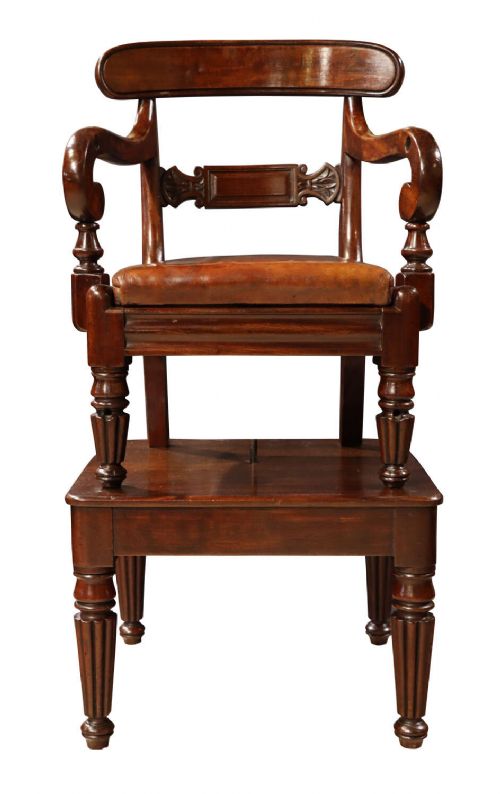
Mahogany and rosewood form the primary wooden structures of these pieces, often paired with brass details and cane work alongside the leather upholstery. You will encounter sets of dining chairs alongside single library armchairs and metamorphic child chairs.
The aesthetic bridges the refined lines of the Regency style with the heavier proportions characteristic of early Victorian design. Whether configured as a barback dining chair or a reclining reading armchair, each piece demonstrates the substantial craftsmanship of the period.
Materials and Construction
Makers of the period relied heavily on solid mahogany and rosewood to build durable frames capable of supporting daily use. These dense timbers were frequently carved with the bold details typical of nineteenth-century cabinet making.
Leather was selected for hard-wearing surfaces, secured to the seats with brass studs in many examples. Secondary materials like cane appear in specific bergère designs, offering textural contrast to the polished timber and smooth hide.
Distinguishing Quality in Seating
The refinement of the timber carving and the scale of the set determine the standing of individual pieces. Matched sets of twelve dining chairs or pairs of library armchairs represent a higher level of original commission than isolated single pieces.
The integrity of the structural joinery and the execution of the woodwork separate standard production from exhibition pieces. Selection of fine-grained mahogany and high-grade rosewood further elevates the execution of the design.
The William IV Leather Seat Glossary
- Bergère
- An enclosed armchair with upholstered or cane sides. The wooden frame is typically exposed and polished.
- Barback
- A dining chair style featuring a horizontal crossbar across the backrest, often shaped or carved. This form is common in nineteenth-century seating.
- Carver
- An armchair designed to match a set of single dining chairs, usually placed at the head of a table. These feature supportive armrests integrated into the frame.
- Metamorphic
- Furniture designed to transform into alternative configurations, such as a high chair converting into a low seat. These pieces utilise clever mechanical joints hidden within the timber frame.
- Piano stool
- A seat designed for keyboard players, often featuring an adjustable height mechanism. These accompany nineteenth-century domestic instruments.
William IV Leather Seat: Frequently Asked Questions
What rooms suit a leather library armchair?
These large armchairs work well in studies, libraries, or living spaces where substantial seating is required. Their dark timber frames and brown leather upholstery anchor a room with traditional character.
Position them beside a writing desk or near a bookshelf to use them as intended for reading and writing tasks.
How do I care for nineteenth-century leather?
Keep the leather conditioned with appropriate balms to prevent the hide from drying out over time. Avoid placing the seat in direct sunlight or next to heat sources.
Dust the wooden frame regularly with a dry cloth and protect the polished surface from moisture.
Can I mix dining chairs with different tables?
Sets of nineteenth-century dining chairs pair well with both antique mahogany tables and simpler contemporary surfaces. The warm tones of rosewood and mahogany coordinate easily with various timber finishes.
Ensure the seat height matches your table clearance before arranging them for daily dining use.
How do I distinguish William IV from Regency style?
Regency pieces often display lighter proportions and classical neoclassical influences derived from earlier French and English designs. William IV designs tend to be heavier, with bolder carved details and sturdier structural members.
Both styles overlap during the early nineteenth century, sharing materials like mahogany, rosewood, and brass.