


William IV Dining Furniture
William iv dining furniture brings heavy timber warmth and architectural presence to the room.
William IV Dining Furniture
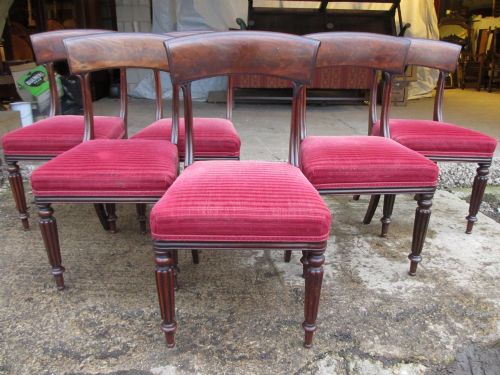
William iv dining furniture encompasses the tables, chairs, sideboards and serving pieces designed during the early nineteenth century. Buyers seek these forms for their robust proportions and rich timber figuring.
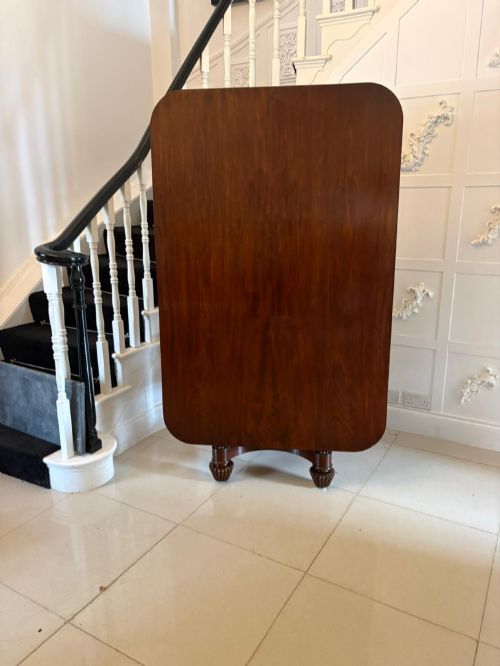
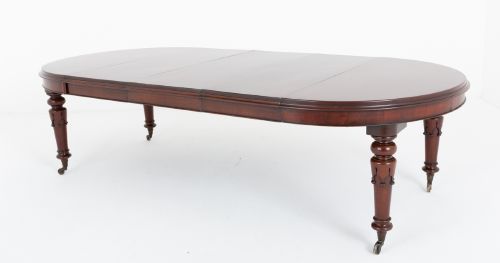
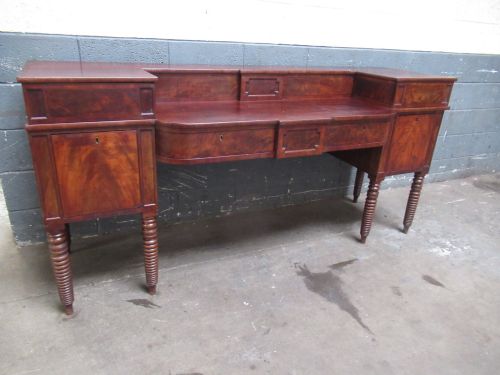
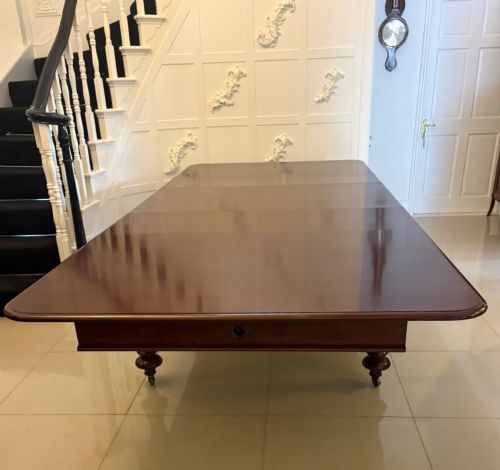
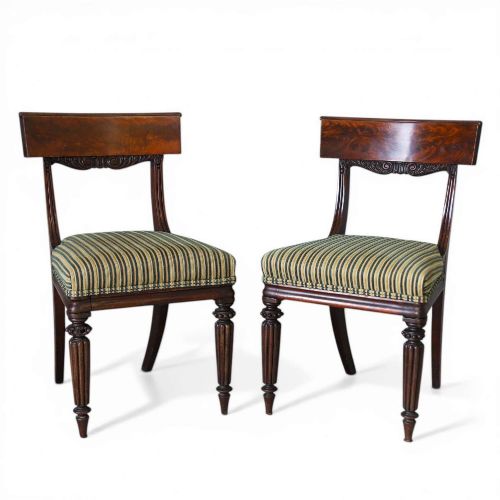
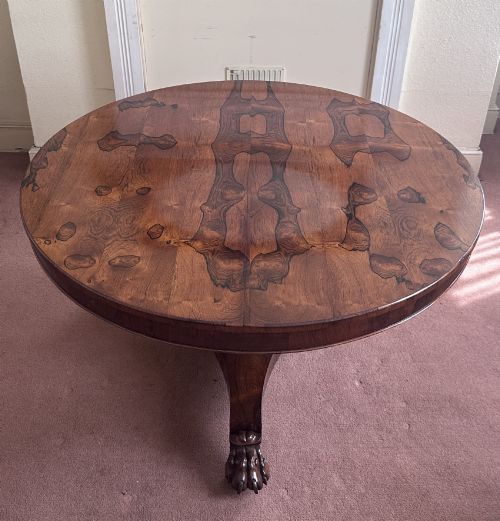
Tables range from circular breakfast models with tilt tops to large extending dining tables seating up to fourteen people. Chairs often appear in sets alongside matching sideboards, serving tables and cellarettes.
The aesthetic bridges late regency restraint and early victorian ornamentation through bold carved details and substantial turnings.
Distinctions in Quality
The calibre of william iv dining furniture rests upon the selection of timber figures, such as flame mahogany and figured rosewood, and the depth of the carving on structural members. Pieces showcasing intricate scrollwork and well-proportioned turnings stand apart from simpler iterations.
Completeness of sets and originality of components dictate distinction among dining chairs and extending tables. Tables retaining their original leaves and mechanisms hold a marked advantage over adapted examples.
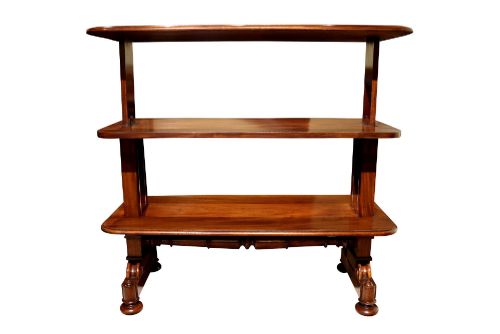
Object forms span extending dining tables, loo tables, cellarettes, dumb waiters and sets of side and carver chairs.
Gillows
The William IV Dining Furniture Glossary
- Cellarette
- A lockable container used for storing wine and bottles near the dining table. These frequently take sarcophagus or serpentine shapes in mahogany.
- Tilt-top
- A table mechanism allowing the circular top to pivot vertically for storage against a wall. This feature appears on breakfast and centre tables.
- Dumb waiter
- A tiered revolving or stationary stand utilised for serving food without domestic staff present. Examples appear in mahogany and pollard oak.
- Carver chair
- An armchair designed with elbow rests, traditionally placed at the heads of a dining table. These often match larger sets of side chairs.
- Flame mahogany veneer
- A sliced timber sheet displaying a distinctive flickering flame grain pattern applied over a secondary wood base.
William IV Dining Furniture: Frequently Asked Questions
How do I seat fourteen people with these tables?
Large extending dining tables designed in the nineteenth century accommodate substantial gatherings through removable leaves.
Buyers should verify the mechanism and check that supporting legs provide adequate clearance and stability when fully extended.
What is the difference between a breakfast table and a dining table?
Breakfast tables typically feature a single central pillar supporting a circular top, often with a tilt mechanism for saving space.
Dining tables rely on multiple legs or pedestals to support larger rectangular or extending surfaces intended for formal meals.
How do I care for rosewood and mahogany surfaces?
These dense hardwoods respond best to regular dusting with a soft cloth and occasional application of appropriate wax polish.
Avoid placing pieces near direct heat sources or strong sunlight to prevent the timber and French polish from drying out.
Are dining chair sets usually matched or assembled later?
Sets survive in varying quantities, ranging from small groupings of four to larger collections of ten or fourteen chairs.
Inspecting the joinery and timber consistency helps determine whether the chairs originated as a single suite or were gathered together subsequently.