


William IV Carver
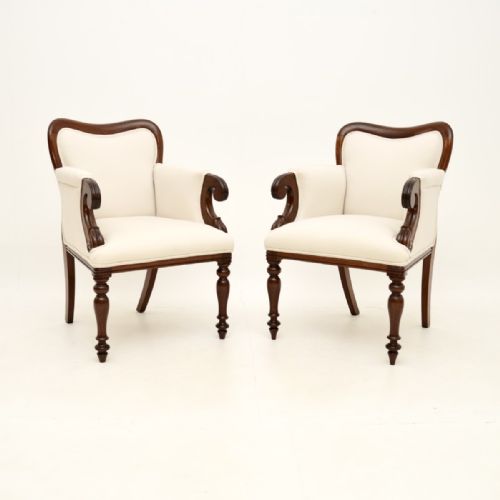
A william iv carver provides a substantial seating option with defined armrests, built primarily in mahogany for dining rooms and libraries.
William IV Carver
When you search for a william iv carver, you encounter robust wooden armchairs originating from the nineteenth century. These seating pieces typically serve as the matching armchairs to a set of dining chairs or function independently as desk and library chairs.
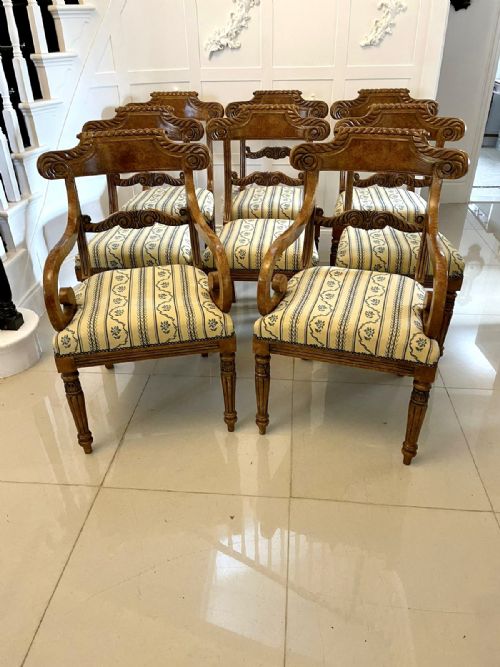
The material record shows a heavy reliance on mahogany, supplemented by occasional examples in laburnum wood and faux birds eye maple. The overarching aesthetic embraces the William IV style alongside Regency, Georgian, and Victorian influences.
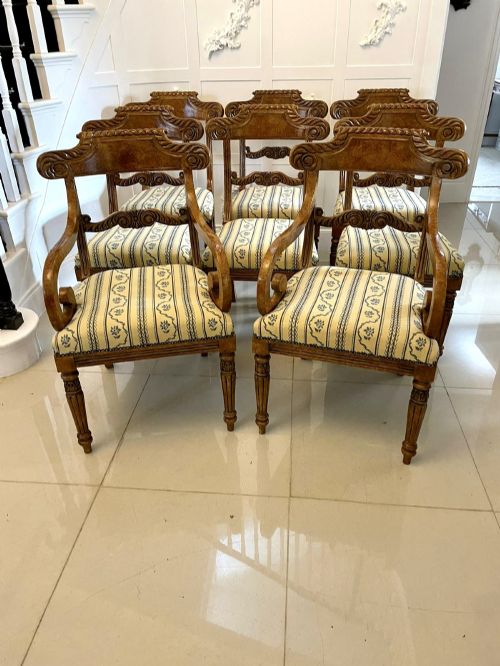
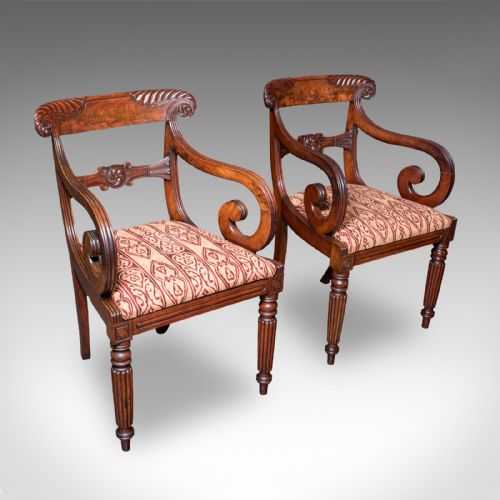
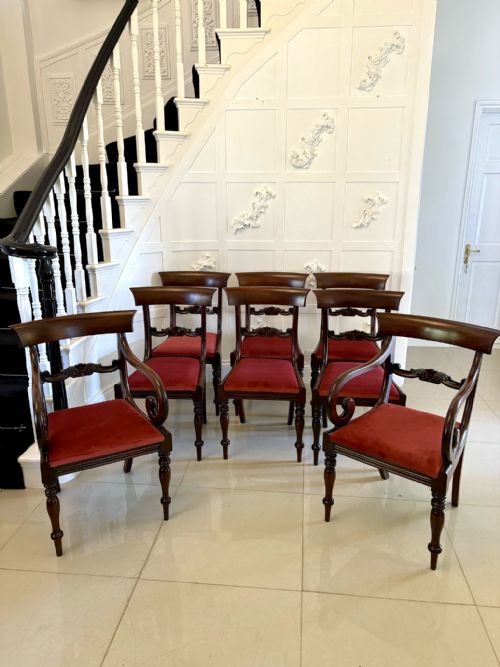
Most examples present as pairs or single armchairs, though larger sets occasionally appear. The forms span barback designs, scroll-arm elbow chairs, and saddleback variants suited to domestic and study spaces.
How they were made
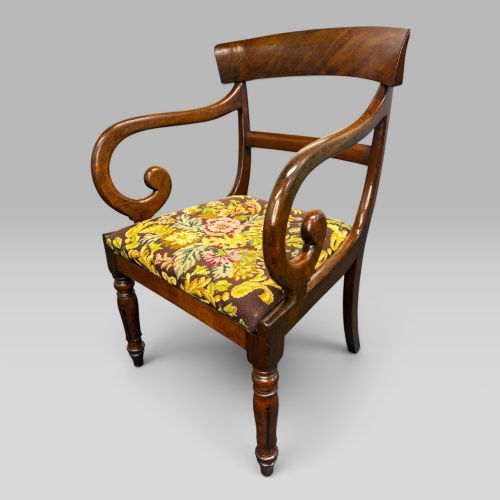
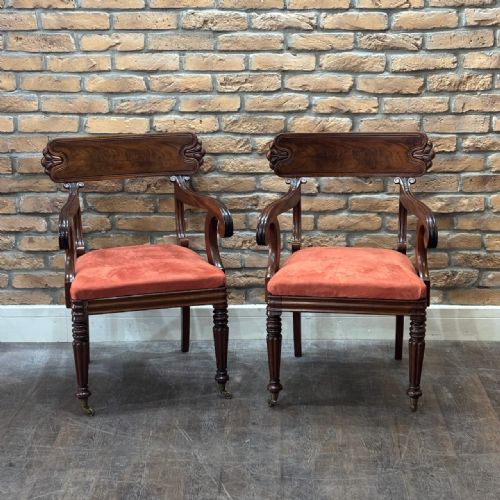
Carpenters constructed these armchairs primarily using solid mahogany, shaping the timber into robust frames with carved scroll arms and barbacks. Joinery relied on traditional mortise and tenon methods to ensure structural stability under daily use.
Upholstery formed a central part of the manufacturing process, utilising materials such as leather, fabric, velvet, and tapestry upholstery. Brass studs frequently secured these textile coverings to the wooden seats and arm supports.
Faux birds eye maple makes an unexpected appearance, proving that nineteenth-century makers enjoyed a convincing painted illusion just as much as modern ones.
What varies in quality
The standard of carving on the scroll arms and wooden frames determines much of the distinction between pieces. Sharply defined details indicate superior workshop output compared to softer, simpler mouldings.
The choice of secondary timbers and the integrity of the original upholstery materials also establish gradation. Pieces retaining period leather or specific fabrics demonstrate higher preservation levels.
Gillows
The William IV Carver Glossary
- Carver chair
- An armchair designed with open sides and armrests, traditionally placed at the heads of a dining table. These pieces match or complement the smaller single chairs in a dining set.
- Elbow chair
- An alternative term for an armchair featuring low supports for the arms. They appear frequently in morning rooms and studies.
- Barback
- A chair design incorporating a horizontal wooden slat across the upper backrest, often reeded or carved. This form appears across many nineteenth-century dining sets.
- Scroll-arm
- An armrest curved outward in a tight spiral shape. This sculptural detail characterises the woodwork of the period.
- Laburnum wood
- A dense hardwood derived from the laburnum tree, utilised for cabinet work and chair frames. Its distinctive grain patterns add visual variation to seating.
William IV Carver: Frequently Asked Questions
How were these chairs used?
Historically, these armchairs served as principal seats at the ends of dining tables. Their robust construction also suited them for use in studies, libraries, and morning rooms.
People sat in them for writing, reading, or formal dining.
How do I identify a william iv carver?
Identification relies on observing characteristic design elements such as scroll arms, barbacks, and heavy mahogany frames. The proportions tend to be substantial and grounded compared to earlier Georgian seating.
Stylistic overlaps with Regency and early Victorian aesthetics frequently appear in the woodwork.
What materials are common?
Mahogany forms the primary structural material for the vast majority of these chairs. Alternative woods like laburnum and decorated faux birds eye maple appear less frequently.
Upholstery materials include leather, velvet, fabric, and tapestry, often secured with brass studs.