


William IV Bureau
A william iv bureau brings solid timber and fitted drawers to a room, offering a dedicated writing surface built with nineteenth-century proportion.
William IV Bureau
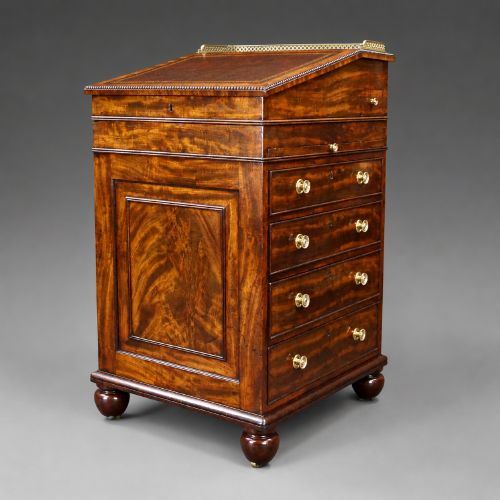
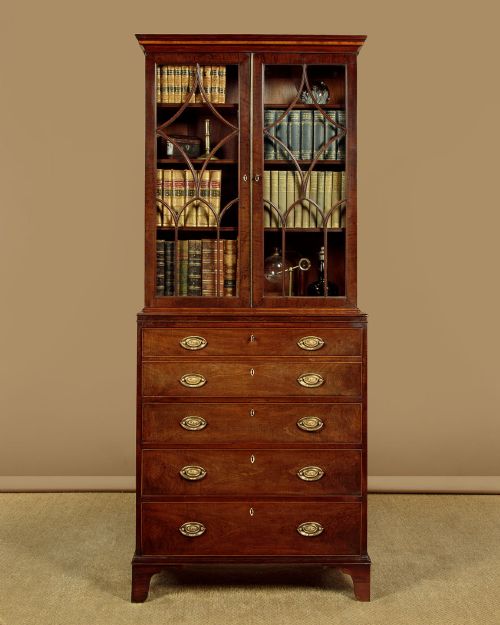
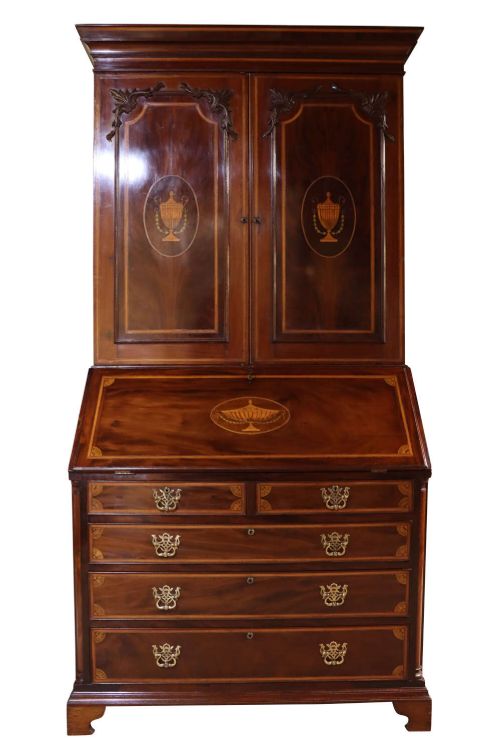
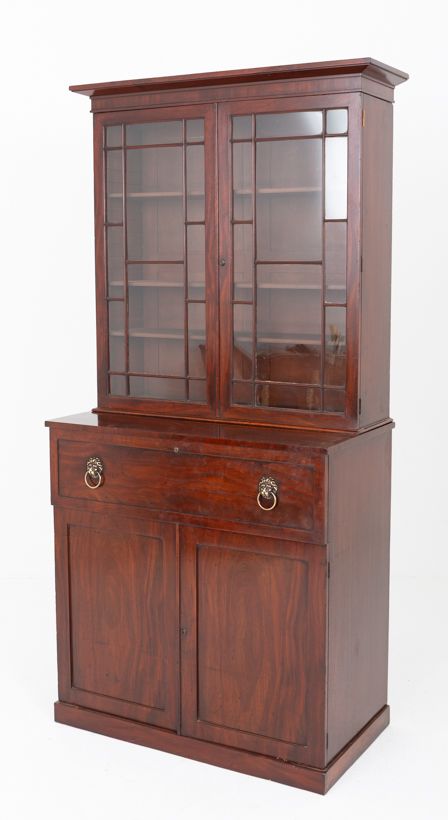
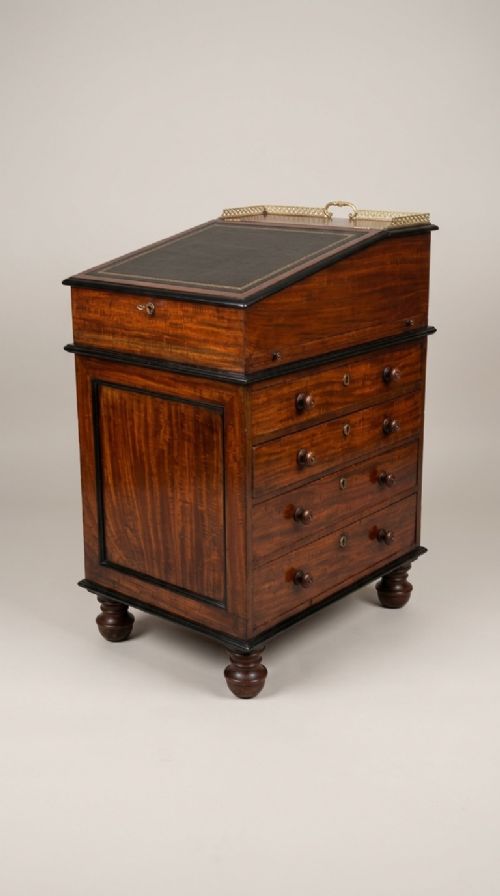
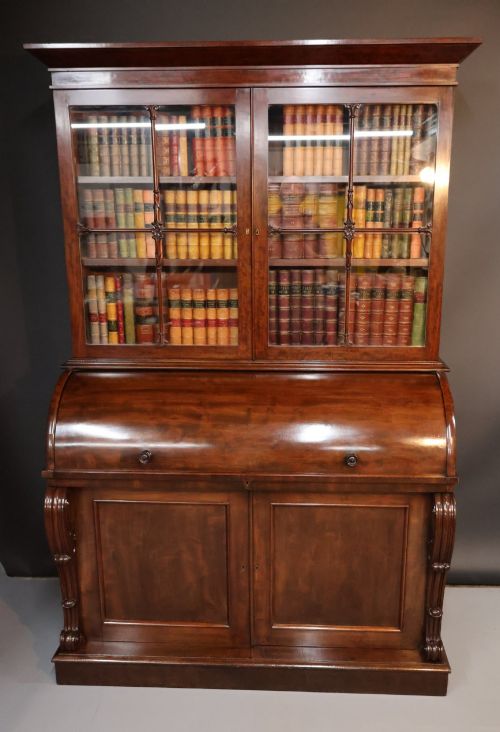
When you search for a william iv bureau, you look at pieces that combine storage with a writing surface, often appearing as secretaire bookcases or Davenport desks from the nineteenth century. These items include drop-front writing slopes and fitted compartments housed within mahogany or rosewood structures.
The versions most common on this page date from the 1800s to about 1850, spanning the William IV, Regency, and Late Georgian styles. They range from compact Davenport desks with slide tops to large two-door secretaire bookcases with glazed upper sections.
How they were made
Cabinet makers utilised dense timbers such as mahogany, Cuban mahogany, flame mahogany, and rosewood, often pairing them with wood inlay, brass fittings, and leather writing inserts. Structural elements rely on solid wood construction combined with turned legs and panelled doors.
Surfaces feature figured grain patterns, particularly in flame mahogany and Cuban mahogany selections, while details like ebonised accents and glass panes finish the upper bookcase components.
Slide tops on Davenport desks let writers hide their stationery in a hurry.
What varies in quality
Quality depends upon the choice and selection of timber, distinguishing simple structural planks from highly figured flame mahogany or richly grained rosewood veneers. The handling of wood inlay and the precision of the joinery mark the distinction between standard workshop output and finer cabinet work.
Internal organisation also sets pieces apart, where fitted pigeonholes, small drawers, and leather-lined writing surfaces show greater attention to detail and craftsmanship than plain internal spaces.
Gillows
The William IV Bureau Glossary
- Secretaire bookcase
- A tall cabinet combining a glazed upper bookcase with a lower section containing a pull-out writing drawer or drop-front desk. This form conceals pigeonholes and small drawers behind a fitted flap.
- Davenport
- A compact small desk featuring a sloping writing surface and drawers opening to the side. These pieces often incorporate slide tops and stationary compartments.
- Cylinder desk
- A writing desk featuring a rounded, rolling wooden cylinder that covers the desk interior and writing surface when closed. It opens to reveal fitted compartments and pull-out writing slides.
- Flame mahogany
- Mahogany timber cut to produce a distinctive, flamy or mottled grain pattern. Cabinet makers used this veneer on prominent drawer fronts and fall flaps.
- Cuban mahogany
- A dense, heavy variety of mahogany imported from the Caribbean, known for its dark colour and fine grain. It provides durable surfaces for nineteenth-century furniture.
William IV Bureau: Frequently Asked Questions
What is a William IV bureau?
A William IV bureau is a nineteenth-century desk or secretaire bookcase characterised by heavy timber construction and classical proportions. These pieces combine a writing surface with drawer storage or bookcase compartments.
They date primarily from the period around the 1830s and 1840s, reflecting the styles of the Regency and William IV eras through turned legs, mahogany veneers, and brass hardware.
How do I use a secretaire bookcase?
A secretaire bookcase functions as both a display cabinet and a working desk. The upper glazed doors hold books, while the middle section drops down or pulls out to provide a flat writing area.
Inside the drop-front section, small drawers and pigeonholes organise stationery and letters, allowing the piece to serve as a compact study workspace.
What woods were used for these desks?
Cabinet makers built these pieces using dense hardwoods, most notably mahogany, Cuban mahogany, flame mahogany, and rosewood. These timbers provided sturdy frames and rich grain patterns.
Secondary materials included brass for handles and fittings, leather for writing inserts, and glass for the upper bookcase doors.
How do I tell William IV from Regency?
William IV furniture often displays heavier proportions and sturdier elements such as robust turned legs, compared to the lighter, more linear designs of the Regency period. Both styles overlap during the early nineteenth century.
Details like flame mahogany veneers and specific moulding profiles help distinguish pieces from this broader transitional era.