
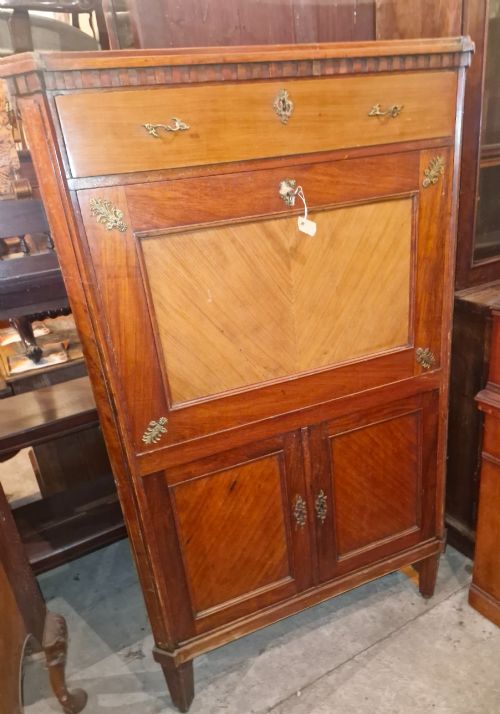


Drop Down Desk Cabinet
These drop down desk cabinet pieces combine fitted writing compartments with concealed storage, offering a traditional workspace that closes away cleanly.
Drop Down Desk Cabinet
A drop down desk cabinet encompasses forms such as secretaire bookcases, escritoires, and secretaire chests of drawers originating from the eighteenth, nineteenth, and early twentieth centuries. These furniture pieces feature a hinged writing flap that lowers to reveal fitted pigeonholes and small drawers.
Buyers on this page most frequently encounter nineteenth-century and Victorian examples, alongside pieces from the nineteen-tens and nineteen-twenties. Regional variations range from French Empire and Louis XVI styles to English Regency and Victorian Country designs.
The primary function remains writing and storage, often incorporating secondary compartments such as secret drawers or mirror-fitted cocktail drink sections. Forms span upright cabinets with upper bookcases to low chests fitted with a drop-front writing drawer.
Materials and construction methods
Construction relies heavily on hardwoods such as mahogany, walnut, rosewood, and pine, frequently finished with flame mahogany veneers. Cabinetmakers shaped these timbers into carcases that house complex internal configurations of drawers and pigeonholes.
Metalwork and decorative accents utilise brass for handles, hinges, and key escutcheons, while specific writing surfaces incorporate inset leather panels. Glass panels appear in upper bookcase doors, and interior compartments often conceal secret drawers secured by mechanical catches.
Keep an eye out for secret drawers hidden behind false pigeonholes by clever nineteenth-century cabinetmakers.
Assessing quality in drop down furniture
Quality separates along the precision of timber selection, particularly where flame mahogany veneer or figured walnut displays balanced grain patterns across the fall front. Superior examples show meticulous joinery in the internal stationery fittings and secret compartments.
The sophistication of the stylistic carving and the integration of brass hardware distinguish finer French Neoclassical and William IV pieces from simpler Victorian country workshop output.
The Drop Down Desk Cabinet Glossary
- Secretaire
- A desk or cabinet with a fall-front writing flap. This term frequently overlaps with escritoire and bureau.
- Escritoire
- A writing cabinet featuring a drop-down front. French variations often display Louis XVI or Empire styling.
- Flame mahogany veneer
- A thin slice of wood timber cut from the fork of the mahogany tree to create a distinctive flickering flame pattern. It decorates the exterior of nineteenth-century desk doors and drawer fronts.
- Fall front
- The hinged writing flap of a cabinet that pulls down into a horizontal position for writing. It conceals internal compartments when closed.
- Chiffonier
- A small sideboard or tall cabinet with drawers and shelves. Examples in the evidence combine this form with a secretaire writing section.
Drop Down Desk Cabinet: Frequently Asked Questions
What is a drop down desk cabinet?
A drop down desk cabinet is a piece of furniture featuring a hinged flap that pulls down to create a writing surface. These items typically conceal internal pigeonholes and small drawers for stationery storage.
Such designs allow a working space to be closed off when not in use, hiding clutter behind vertical cabinetry doors or chest fronts.
How do I use a secretaire desk?
Unlocking and lowering the front flap creates a stable desk surface supported by internal arms or the downward travel of the hinge itself. Inside, you find compartments designed for letters, inkwells, and paper.
Closing the flap secures the workspace and hides your papers, which suits domestic rooms where a dedicated permanent desk is impractical.
How do I date an antique cabinet?
Dating relies on identifying timber choices, construction techniques, and stylistic markers such as French Empire or Victorian proportions. Secondary woods used inside drawers provide clues regarding the period of manufacture.
Hardware styles like brass key escutcheons and handles also assist in determining whether a piece belongs to the eighteenth, nineteenth, or early twentieth century.
Where were these cabinets placed?
These pieces traditionally stood in reception rooms, drawing rooms, or home libraries where correspondence took place. Their dual nature allowed them to serve as display bookcases or storage chests while doubling as private desks.
In modern interiors, they function well in home offices, living rooms, or hallways where floor space is limited.