
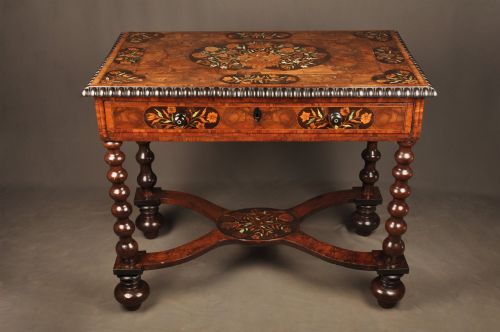
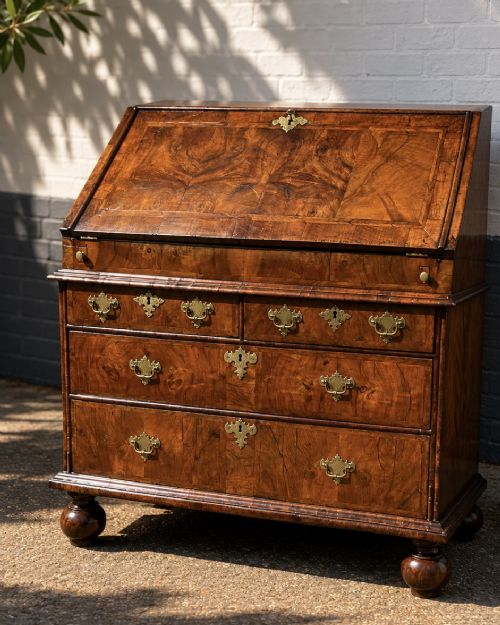





William and Mary Desk
A william and mary desk brings restrained geometry and figured timbers into a room, offering functional writing space rooted in late seventeenth-century design.
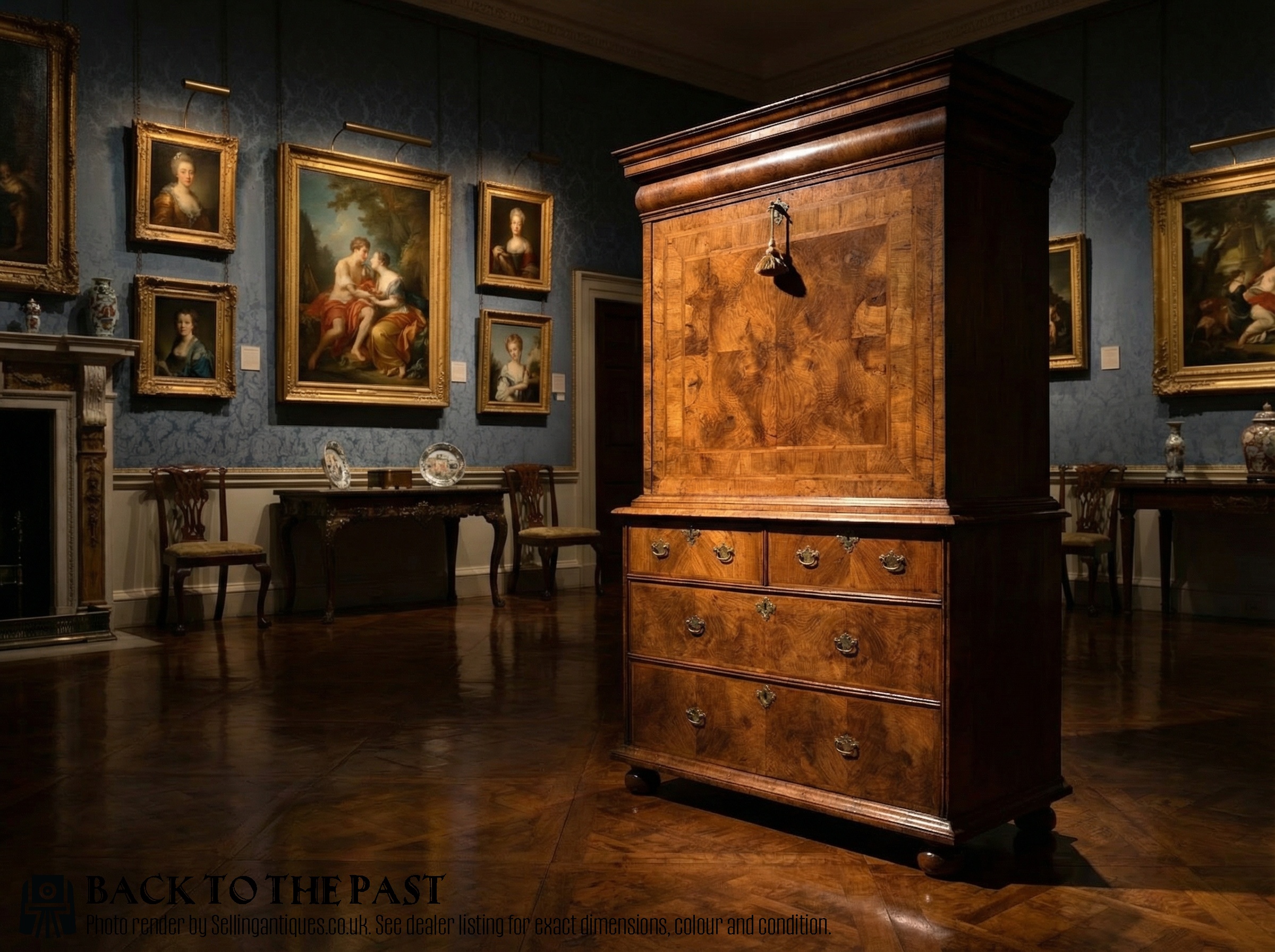
William and Mary Desk
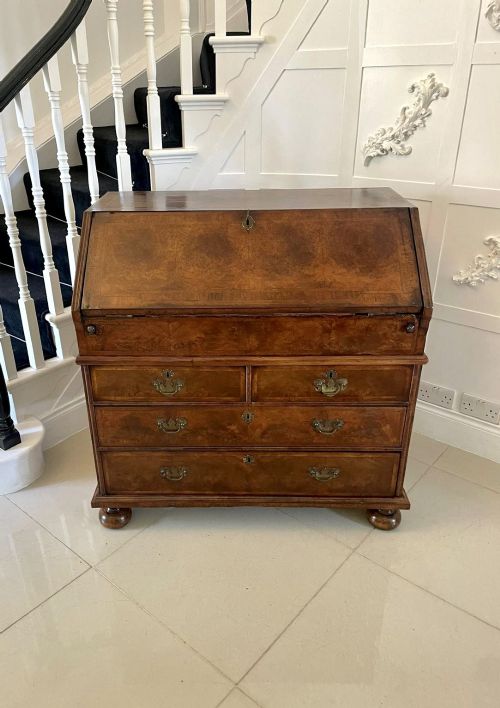
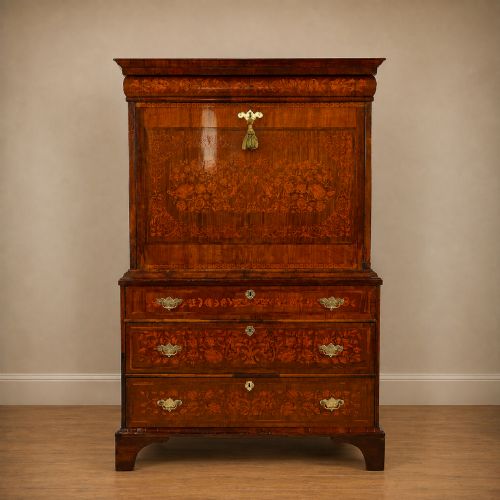
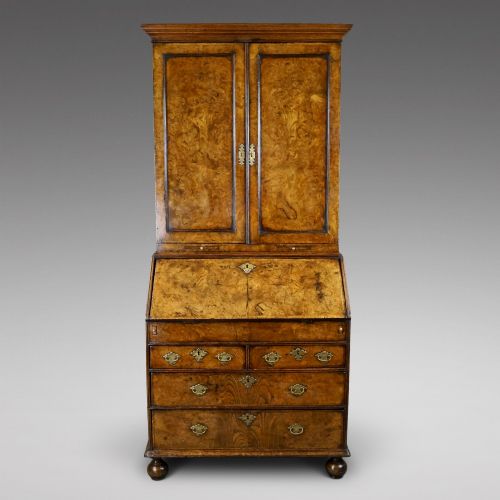
When you search for a william and mary desk, you encounter fall-front bureaux, kneehole writing tables, and elaborate bureau bookcases dating from the late seventeenth century onwards. These pieces provide compact writing surfaces alongside internal drawers and pigeonholes designed for correspondence and document storage.
The selection frequently spans both authentic period examples from the seventeenth and eighteenth centuries and later revival pieces from the nineteenth and twentieth centuries. Bureau bookcases and fall-front desks dominate the offerings, often complemented by related writing cabinets and library furniture.
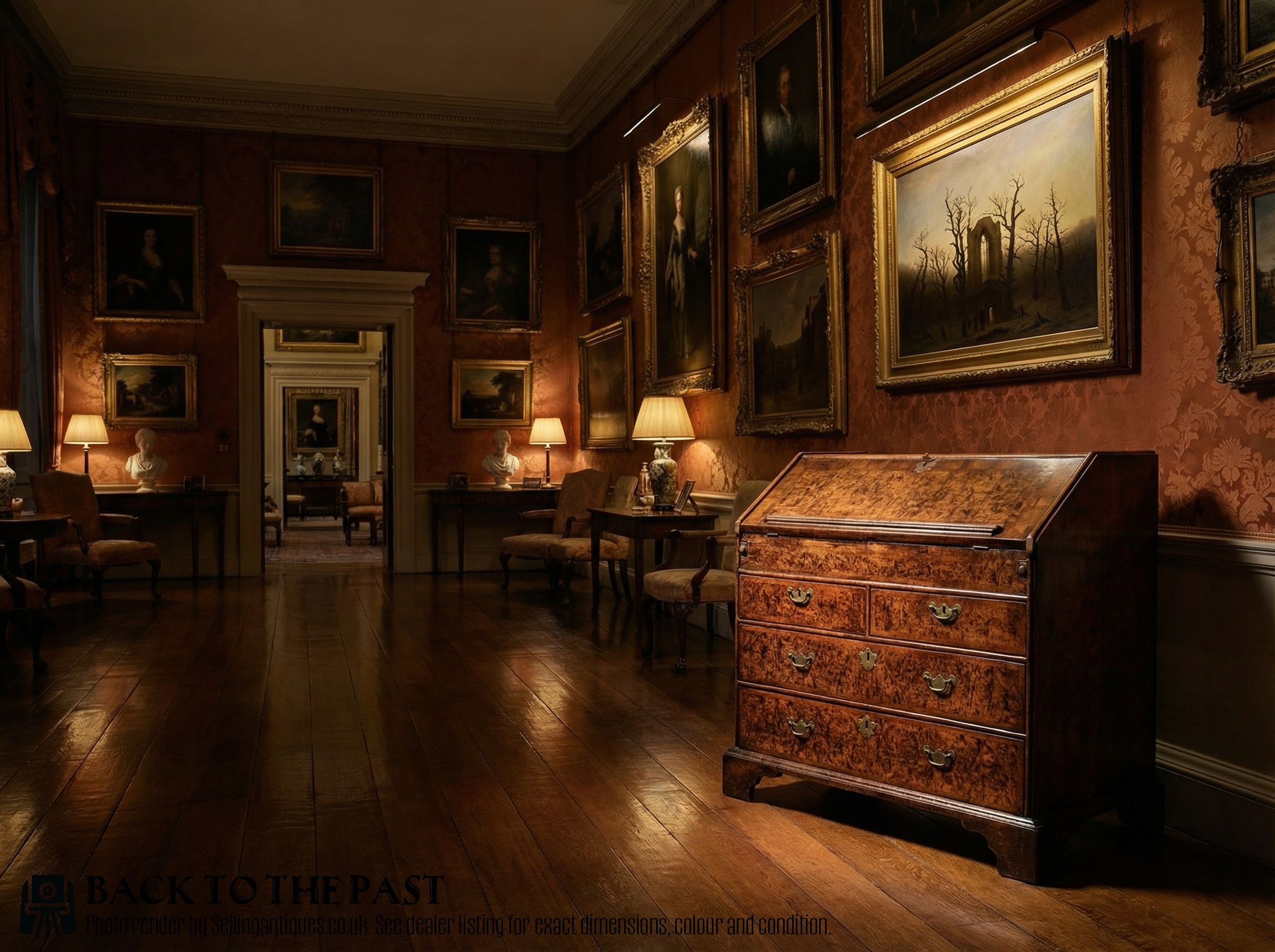
What varies in quality
The standard of a william and mary desk rests on the choice of veneers and the precision of the marquetry or parquetry work. Finely matched burr walnut and crisp floral marquetry separate exceptional cabinetwork from simpler vernacular pieces.
Internal configuration and drawer construction also dictate worth, with secondary timbers like oak used for linings in superior examples. The survival of original brass drop handles, escutcheons, and polished patination preserves the integrity of the piece.
William and Mary Desk Retail Price Guide 2026
Typical asking prices for william and mary desk among the pieces listed under this phrase on Sellingantiques today, from the lower quarter to the upper quarter. They describe what is for sale here now, not the wider market.
One surviving document box bears a carved personal initials and date from 1695, preserving a momentary owner's mark.

Coxed and Woster·Shoolbred and Co
The William and Mary Desk Glossary
- Escritoire
- A writing cabinet featuring a fall-front flap that conceals a nest of small drawers and pigeonholes. These standing desks often sit upon a drawer base or stand.
- Oyster veneering
- The practice of slicing small branches diagonally to create circular or oval patterns resembling oyster shells. This technique required meticulous placement across large surfaces.
- Herringbone inlay
- Tiny strips of veneer laid at alternating forty-five-degree angles to form a V-shaped pattern. It frequently borders larger veneered panels on drawer fronts.
- Kneehole desk
- A compact writing table featuring a central recessed cupboard flanked by banks of small drawers. This form became popular for domestic writing and correspondence.
- Marquetry
- Elaborate decorative inlay using various tinted woods, metals, or ivory to create pictorial or floral designs. Artisans embedded these patterns directly into the primary surface veneer.
William and Mary Desk: Frequently Asked Questions
How do I identify a period bureau?
Examine the construction methods and timber choices, looking for hand-cut dovetails, oak secondary woods, and period-appropriate veneer thicknesses. Seventeenth-century examples often display pegged joinery and early brass hardware configurations.
Compare the internal drawer arrangement and secondary framing against known pieces from the era. Later revival items from the nineteenth century generally reveal machine-sawn timber and more uniform internal structures.
What is an oyster veneer?
Oyster veneering involves cross-cutting small branches or roots at an angle to produce small, elliptical discs with concentric growth rings. Cabinetmakers arranged these discs closely together to cover large surfaces in decorative patterns.
This technique required considerable skill to lay and polish without splitting the timber. It remains a hallmark of late seventeenth-century English and Dutch case furniture.
How were these desks used?
These pieces served primarily for letter writing, keeping accounts, and storing private documents. The fall-front flap dropped down to provide a portable writing slope covered in leather or plain wood.
Internal compartments held inkwells, quays, sealing wax, and correspondence. Cupboards and drawers below or above secured ledgers and valuable papers out of sight.
Are revival desks worth collecting?
Nineteenth and twentieth-century revival pieces offer quality craftsmanship and period aesthetics often at a more accessible scale. Cabinetmakers of the Victorian and Edwardian eras frequently utilised fine walnut and traditional joinery techniques.
These later interpretations provide functional workspace while reflecting the enduring appeal of seventeenth-century design. Collectors value them for their own decorative merits and solid construction.