












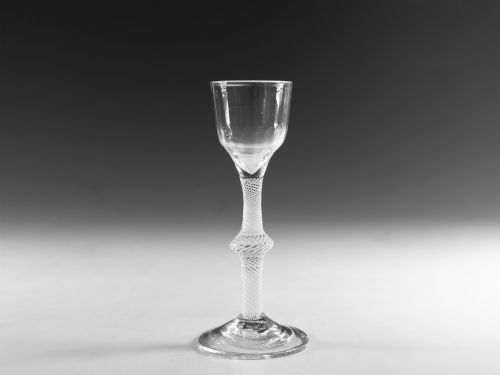
White Twist Glass
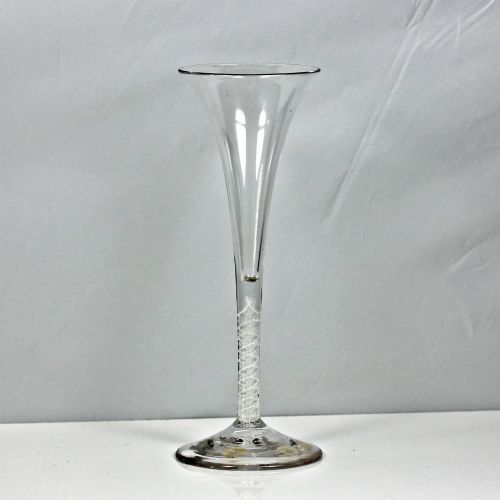
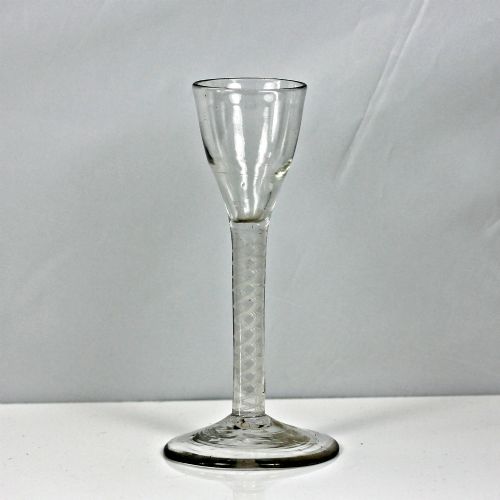
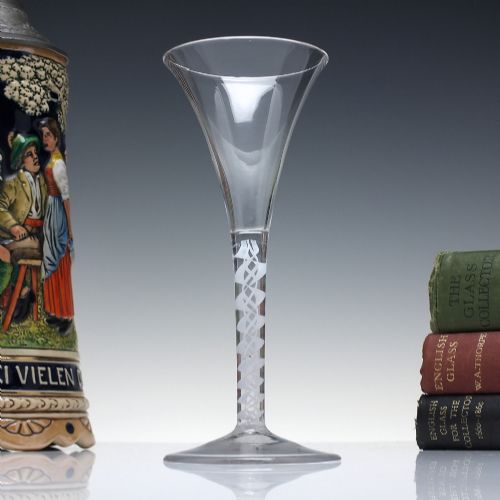
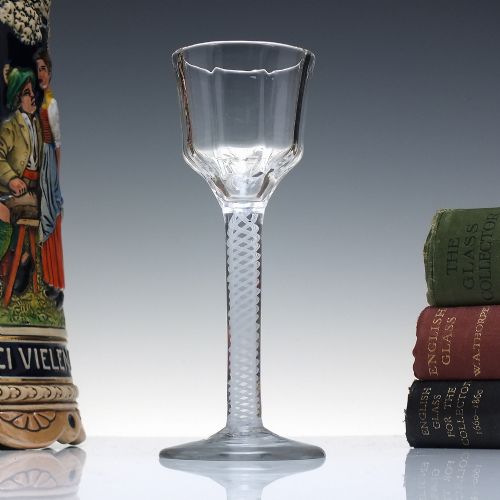
White twist glass pieces bring eighteenth-century drinking vessels and nineteenth-century jugs into modern rooms through delicate opaque enamel stems.
White Twist Glass
White twist glass primarily comprises Georgian wine glasses, ale glasses, and cordial glasses produced during the eighteenth century.
Buyers encounter single series, double series, and multi spiral opaque twist stems supporting rounded funnel, ogee, trumpet, or fluted bowls.
The selection also extends to nineteenth-century champagne jugs and Victorian wine glasses carrying the same characteristic white enamel strands.
Materials and Stem Construction
Craftsmen shaped lead glass, flint glass, and clear glass using traditional blowing techniques to form the bowl and foot of each vessel.
Internal white twist motifs were formed from opaque enamel rods enclosed within clear glass or drawn into intricate cables during the stem formation.
White Twist Glass Retail Price Guide 2026
Typical asking prices for white twist glass among the pieces listed under this phrase on Sellingantiques today, from the lower quarter to the upper quarter. They describe what is for sale here now, not the wider market.
Listings span the eighteenth century up to the Victorian era, uniting lead glass drinking vessels with nineteenth-century jugs.
Distinctions in Execution and Form
Quality rests upon the crispness of the internal enamel twist, the symmetry of the bowl, and the proportion of the stem.
Examples incorporating engraved hop and barley motifs, knops, or complex multi-spiral thread configurations demonstrate greater technical ambition.
The White Twist Glass Glossary
- Opaque twist
- A stem containing white enamel glass threads rather than air bubbles or solid lead.
- Double series
- A stem structure combining an outer cable of fine white threads with an inner gauze or spiral core.
- Ogee bowl
- An S-curve profile curving outward at the rim and inward toward the base.
- Ratafia glass
- A tall, slender vessel designed for sweet alcoholic cordials.
- Wrythened
- A twisted or fluted surface pattern applied to the glass bowl during expansion.
White Twist Glass: Frequently Asked Questions
What is white twist glass?
White twist glass refers to drinking vessels featuring stems enclosing opaque white enamel threads within clear lead glass.
These pieces date principally from the Georgian period when glassmakers mastered internal optical twists.
How do I date an opaque twist wine glass?
Dating relies on bowl form, metal weight, foot conformation, and the complexity of the internal enamel threads.
Eighteenth-century examples display characteristic tool marks on the pontil scar and specific Georgian silhouette proportions.
Were these glasses used for wine?
Many served wine, while others functioned as ale glasses, cordial glasses, or sweetmeat vessels depending on capacity and bowl shape.
Specific taller forms accommodated spiced ales or heavier fortified drinks.
How should I clean antique glass?
Wash pieces by hand in warm water using mild soap, avoiding sudden temperature changes that can stress old lead glass.
Dry them immediately with a soft lint-free cloth to preserve the clarity of the clear metal and enamel.