
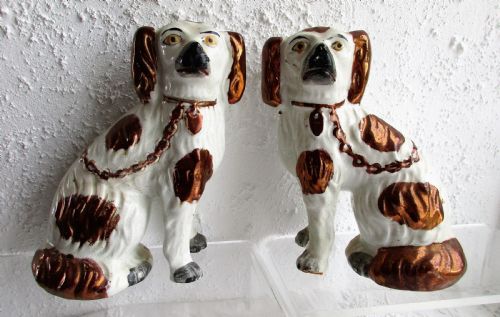
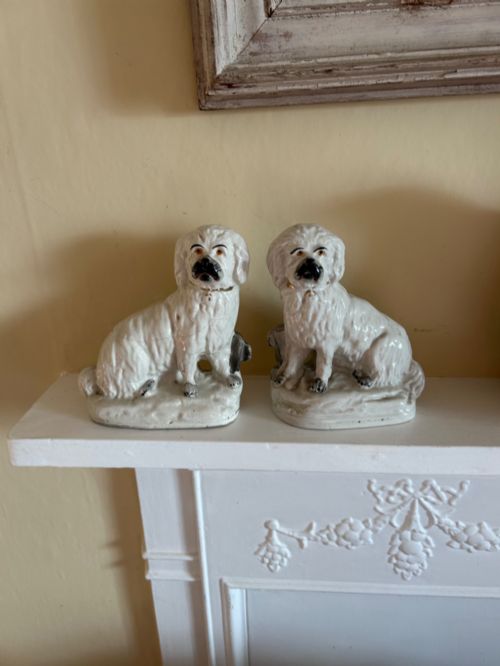


White Staffordshire Dog Pair
When buying a white staffordshire dog pair, collectors acquire traditional ceramic mantel figures embodying nineteenth-century domestic companion animal portraiture.
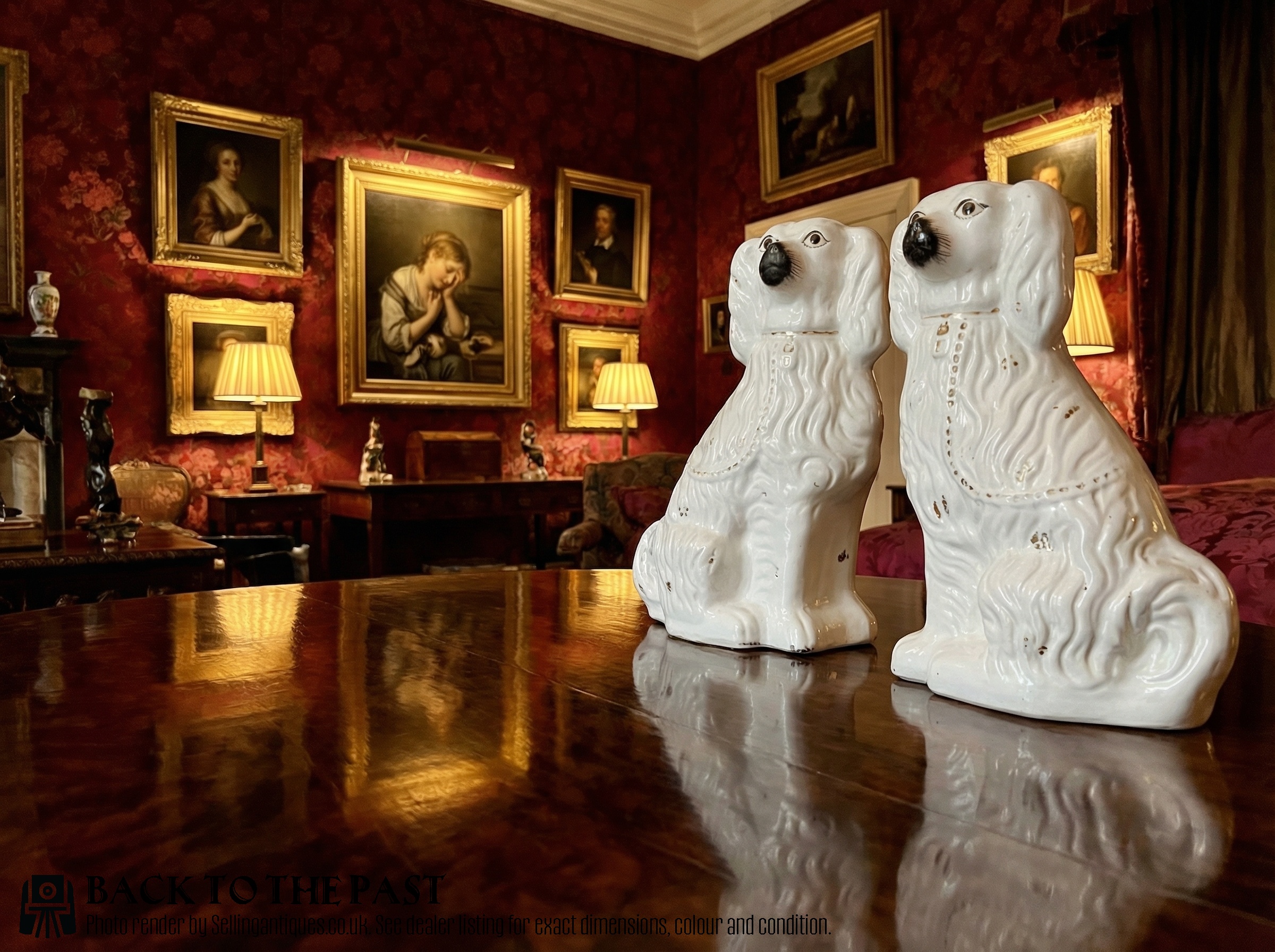
White Staffordshire Dog Pair
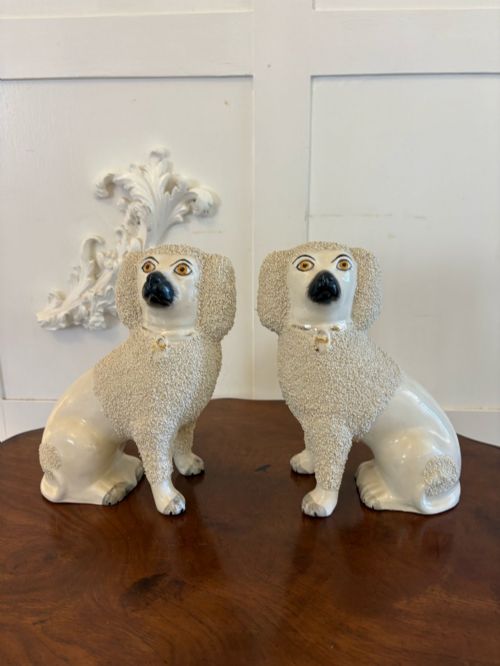
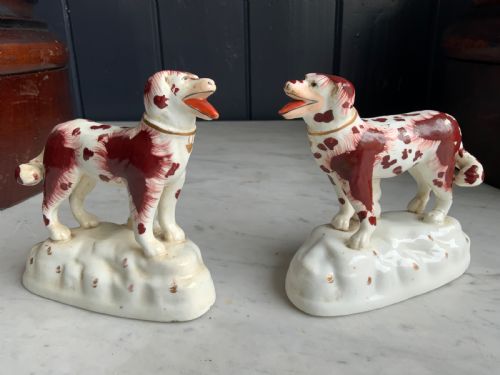
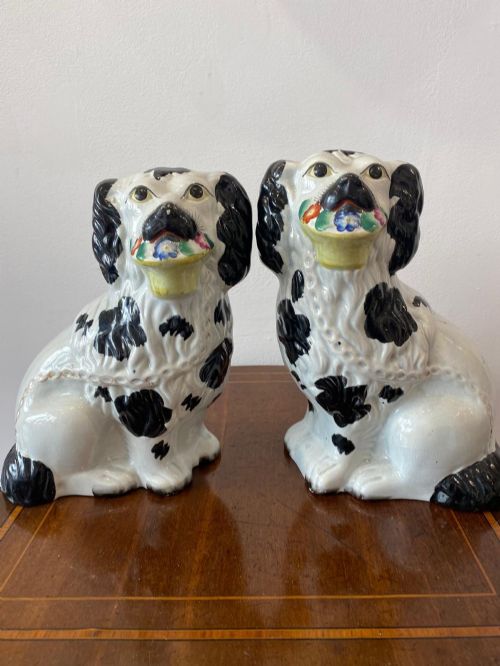
A white staffordshire dog pair comprises symmetrical ceramic figures modelled as spaniels, poodles, greyhounds, and terriers, typically designed to sit facing each other upon a fireplace mantelpiece.
Most examples originate from the Victorian era, spanning the mid to late nineteenth century, and frequently feature plain white glazes alongside gilt detailing or painted patches.
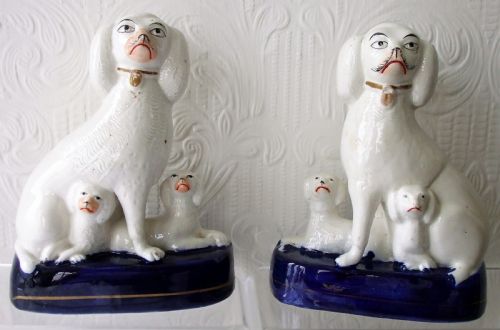
Beyond standard decorative figurines, buyers encounter specialised functional forms including inkwells, quill holders, and models incorporating small pups alongside the adult dogs.
How They Were Made
Potters shaped these figures from earthenware and ceramic bodies, utilising press moulds to produce hollow forms before applying lead glaze and enamel decoration.
Listings demonstrate forms spanning earthenware spaniels, poodles, and greyhounds across the nineteenth century.
What Varies in Quality
Quality rests upon the crispness of the modelling in the clay and the precision of the facial painting, distinguishing master potter output from mass commercial production.
Scale dictates presence, with larger grand pairs or detailed miniature poodles representing distinct tiers of craftsmanship compared to standard intermediate sizes.
Thomas Parr·Royal Doulton
The White Staffordshire Dog Pair Glossary
- Earthenware
- A porous pottery body fired at lower temperatures, commonly used for nineteenth-century figures. It requires a glaze to achieve a waterproof and smooth surface.
- Comforter spaniel
- A traditional term for Staffordshire mantel dogs modelled after King Charles spaniels. Victorian households placed them symmetrically on either side of the fireplace.
- Lead glaze
- A glossy coating containing lead oxide applied to pottery before firing. This technique creates a smooth, reflective finish across the ceramic body.
- Enamel
- Opaque coloured glass fused to the pottery surface during secondary firing. It provides the distinct black, red, and tan markings found on the dog figures.
White Staffordshire Dog Pair: Frequently Asked Questions
Where did these dog pairs sit in Victorian homes?
Victorian households traditionally positioned these ceramic dogs symmetrically on the mantelpiece facing inward toward each other.
They served as domestic ornaments and silent sentinels guarding the hearth in middle-class parlours.
How do you distinguish spaniels from poodles?
Spaniels feature long drooping ears, solemn expressions, and heavy bodies typically marked with patches of colour.
Poodles often display textured or modelled clay curls, pointed snouts, and sometimes include small pups resting beside them.
Did these figures serve any practical purpose?
While primarily decorative mantel ornaments, certain nineteenth-century examples incorporated functional design elements.
Buyers occasionally find variants shaped as inkwells for writing desks or quill holders for holding writing implements.
What periods do these ceramic dogs date from?
The majority originate from the Victorian period during the nineteenth century, particularly around the mid-Victorian decade of eighteen-sixty.
Earlier Regency examples and later late-Victorian productions also appear within the ceramic tradition.