




White Porcelain Spill Vases
White porcelain spill vases are slender ceramic holders made to contain paper spills for lighting fires, and you want one for its charming Regency or Victorian display.
White Porcelain Spill Vases
White porcelain spill vases are decorative vessels designed to hold thin tapers used for carrying flames from the hearth to candles and pipes. When you search this phrase, you encounter pieces originating from the Regency and Victorian periods, often taking the form of figures, animals, or architectural models. These items combine practical domestic utility with the ornamental character typical of nineteenth-century ceramics.
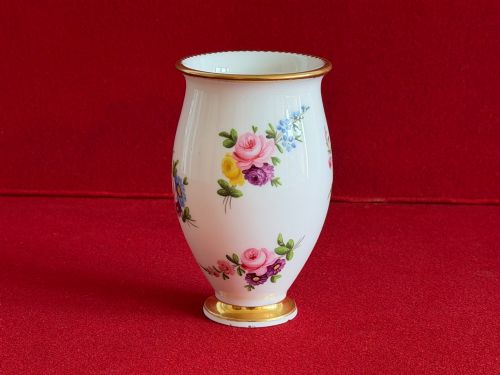
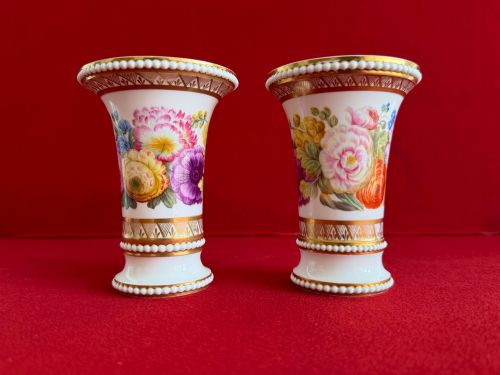
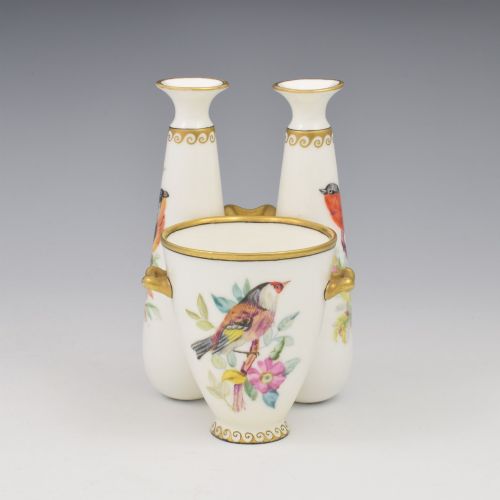
The selections on this page span the nineteenth century, including Georgian, Regency, and Victorian eras, alongside specific dates from 1860 to 1880. Forms range from simple vases to ornithological triple vases and figural groups featuring sheep, swans, and human figures. Makers such as Spode and Flight Barr and Barr appear among the English porcelain examples.
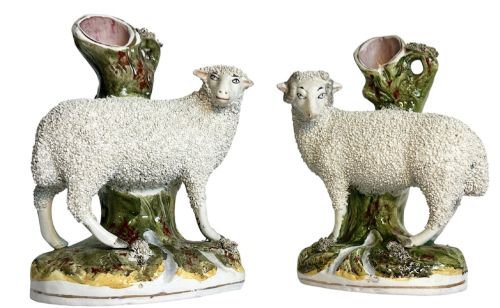
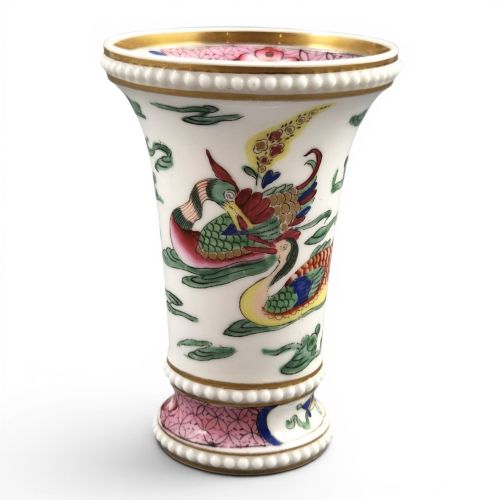
Many of these objects are earthenware or porcelain, occasionally incorporating glaze, enamel, and gilding. Pairs are common, particularly among animal groups like sheep and swans, which reflect the domestic taste of the period. Buyers will find both functional spill holders and sculptural figure groups adapted for the same purpose.
Materials and construction
These pieces are constructed from ceramic bodies such as porcelain and earthenware, shaped into vessels, animals, and architectural forms. Workshops applied glazes to seal the ceramic body, providing a smooth surface that was often subsequently decorated with enamel paint.
Gilding and enamel were utilised to highlight details on the porcelain and pottery surfaces, adding colour and contrast to the white ground. Lead glaze and standard glazes protected the underlying material and created the glossy finishes seen across the Regency and Victorian examples.
White Porcelain Spill Vases Retail Price Guide 2026
Typical asking prices for white porcelain spill vases among the pieces listed under this phrase on Sellingantiques today, from the lower quarter to the upper quarter. They describe what is for sale here now, not the wider market.
Harvesters, swans, ducks, and sheep populate these mantelpiece vessels, bringing the entire farmyard indoors.
Evaluating craftsmanship and detail
The application of enamel and gilding also separates the work. Precision in pattern work and well-preserved surface decoration indicate superior workshop output compared to heavier, more rudimentary applications.
Spode·Flight Barr and Barr·Royal Worcester·John Hopewell
The White Porcelain Spill Vases Glossary
- Spill Vase
- A narrow container designed to hold paper spills used for lighting fires before the invention of safety matches. These objects sit on mantelpieces for easy access.
- Porcelain
- A ceramic material made by heating materials, generally including kaolin, in a kiln to a high temperature. It provides a dense, white body suitable for fine detail.
- Earthenware
- A porous pottery material fired at lower temperatures than porcelain. It requires a glaze to become impermeable to liquids.
- Gilding
- The application of gold leaf or powder to the surface of ceramics. This technique enhances decorative elements with metallic lustre.
- Lead Glaze
- A glossy coating containing lead compounds applied to pottery before firing. It produces a transparent finish that brings out the colour of the body.
White Porcelain Spill Vases: Frequently Asked Questions
What is a spill vase used for?
These vessels held thin rolled papers called spills, which were lit from the fire and used to transport a flame to candles or tobacco pipes.
In the nineteenth century, before matches were common, they sat permanently on the mantelpiece for daily domestic convenience.
How do I date a spill vase?
Dating relies on stylistic clues, ceramic bodies, and recorded patterns from manufacturers active in the Regency and Victorian eras.
Marks on the base or known historical patterns help narrow the period down to specific decades between 1815 and 1880.
Are these vases usually found in pairs?
Many examples, particularly the animal groups and figural pieces, were produced as symmetrical pairs for mantelpiece display.
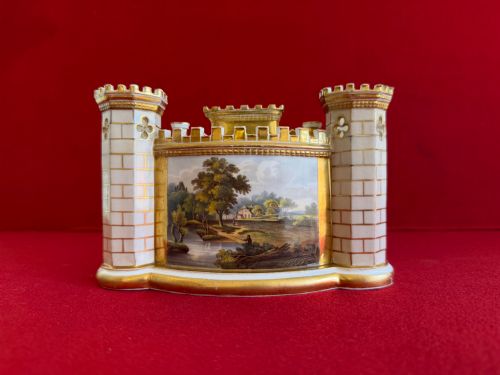
Single pieces also exist, representing individual decorative figures or specific architectural models like castles.
What materials were used?
The pieces utilise porcelain and earthenware bodies, finished with glazes, enamel colours, and gilding.
Decoration ranges from simple hand-painted patterns to complex figural modelling depicting animals, birds, and human scenes.