



White Porcelain Planter
A white porcelain planter brings weight and crisp botanicals to a room, ranging from grand fish bowls to delicate posy holders.
White Porcelain Planter
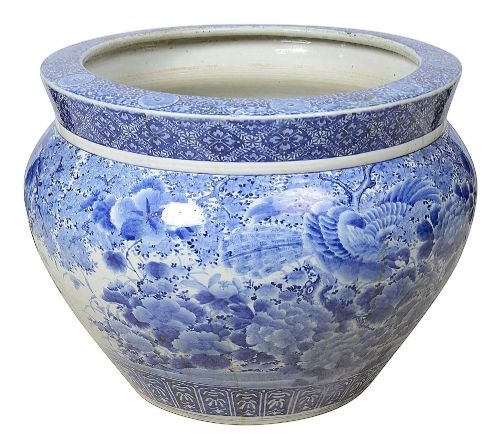
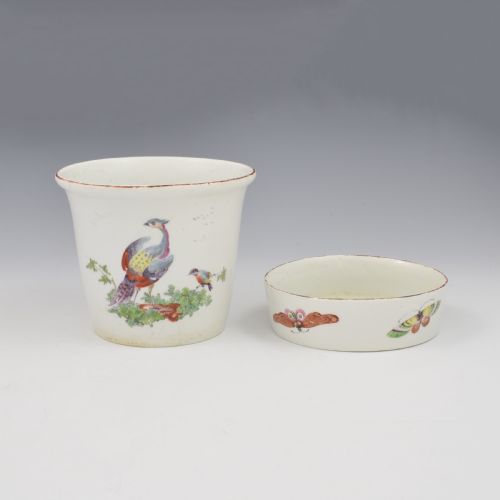
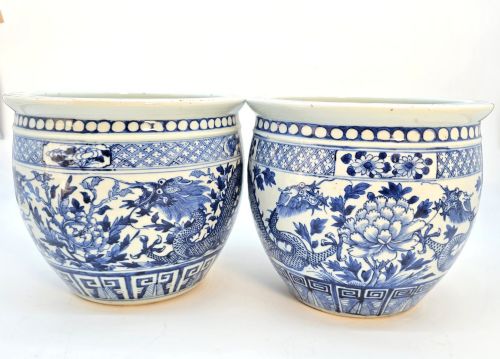
When you search for a white porcelain planter, you encounter a variety of vessels designed to house indoor greenery, from substantial nineteenth-century Chinese fish bowls to eighteenth-century Derby flower pots. The selection spans distinct periods including the eighteenth century, the Victorian era, and Japanese Meiji productions.
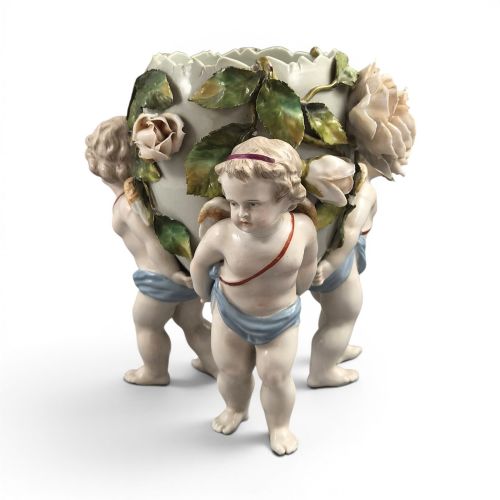
The forms extend beyond standard plant pots to encompass jardinieres, cachepots, and footbaths utilised for floral displays. Many examples feature blue and white decoration, whilst others incorporate polychrome enamels or figural elements such as cherubs.
Materials and construction
The pieces on this page utilise ceramic bodies ranging from soft-paste porcelain to standard porcelain and earthenware, often finished with a clear glaze. Decoration relies on cobalt underglaze pigments and enamel colours applied by hand.
Larger vessels such as jardinieres and fish bowls require robust firing techniques to support heavy walls, whilst smaller items like posy holders and vases display finer moulded details.
Several porcelain children and cherubs guard these vessels, occasionally pushing wheelbarrows or peering out from floral posy holders.
Quality and execution
Quality rests upon the crispness of the porcelain body and the precision of the hand-painted or transfer-printed decoration. Fine pieces show well-defined brushwork in the cobalt pigment and smooth, even glazes without excessive pooling or firing flaws.
The sophistication of the modelling, particularly in figural elements like cherubs or applied foliage, separates standard production from superior examples. Structural stability in larger forms like jardinieres and footbaths also marks the upper tier of quality.
Derby Porcelain·Sitzendorf Porcelain·Krister KPM Waldenburg·Heathcote·Staffordshire Adams·Copeland
The White Porcelain Planter Glossary
- Jardiniere
- A large ornamental pot or stand designed to hold a plant or flower arrangement. These pieces often feature wide rims and substantial ceramic walls.
- Cachepot
- An ornamental container used to conceal an ordinary flowerpot. The term translates from French as hiding pot.
- Soft-Paste Porcelain
- A ceramic material composed of white clay and fritted glass, fired at lower temperatures than hard-paste porcelain. This body appears slightly softer in texture and warmer in tone.
- Cobalt Underglaze
- A blue pigment applied to the ceramic body before glazing and high-temperature firing. The glaze seals the colour permanently beneath a glossy surface.
- Imari
- A style of ceramic decoration originating in Japan, typically employing underglaze blue, iron red, and gold. Pieces in this manner often display intricate floral and geometric motifs.
White Porcelain Planter: Frequently Asked Questions
How do I use a jardiniere?
A jardiniere holds potted plants or functions as a decorative basin for cut flower arrangements. Placing a protective saucer inside prevents moisture from contacting the interior ceramic surface.
Larger vessels sit directly on the floor or on low wooden stands, whilst smaller cachepots rest on tables and window sills.
What is a footbath used for?
Footbaths originate as utilitarian vessels for personal hygiene during the Georgian and Victorian periods. Today they serve primarily as deep planters or wine coolers.
Their substantial handles and oblong or oval shapes accommodate generous floral displays.
How do I date white porcelain?
Dating relies on stylistic markers, potting techniques, and factory marks stamped or painted on the base. Eighteenth-century pieces often display softer body textures and hand-painted blue pigments.
Nineteenth and early twentieth-century examples frequently incorporate transfer printing or distinct maker stamps corresponding to known registry periods.
How do I clean antique porcelain?
Cleaning requires warm water and mild soap applied with a soft cloth. A gentle brush removes dust from recessed carved areas or intricate moulded details.
Harsh chemical cleaners and abrasive scouring pads damage historic glazes and enamel decorations.