





Chinese Porcelain Planter
A Chinese porcelain planter brings vibrant hand-painted colour and sculptural weight to a room, holding everything from ferns to trailing ivies.
Chinese Porcelain Planter
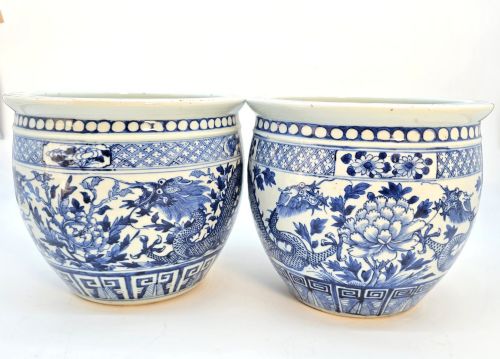
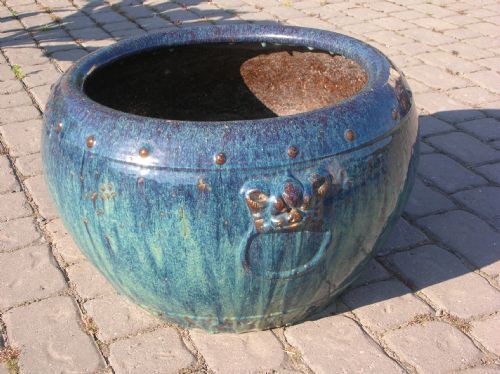
A chinese porcelain planter takes several forms across the inventory, appearing most frequently as robust jardinières, fish bowls, and bough pots designed to display plants or stand alone as decorative vessels. These pieces span centuries of production, taking shapes that range from traditional circular bowls to hexagonal planters complete with drip trays and lobbed rectangular bowls.
The aesthetic bridges multiple periods and regional tastes, drawing heavily on Qing Dynasty conventions alongside eighteenth-century Chinese export designs. Buyers encounter both large fish bowls intended for floor placement and smaller table-standing jardinières that display rich floral or avian iconography.
Makers utilised traditional forms that adapted over time, preserving classical motifs while accommodating changing interiors. Whether searching for a blue and white fish bowl or a famille rose hexagonal planter, the pieces consistently marry utility with intricate ceramic artistry.
Materials and construction
The foundation of these vessels lies in high-fired porcelain and glazed ceramic, providing a sturdy body capable of holding damp earth and water without degrading. Artisans applied cobalt underglaze for deep blue designs before firing, or added enamel and gold leaf in subsequent decorative stages.
Surface decoration relies on precise brushwork and controlled kiln temperatures, with vibrant famille rose and famille verte palettes appearing across many examples. Gilt highlights and four-character seal marks frequently punctuate the finished glaze, marking the careful hand of the ceramicist.
Pieces span the eighteenth, nineteenth, and early twentieth centuries, incorporating Qing Dynasty styles and Chinoiserie export designs.
Differentiating quality across the range
Quality rests in the crispness of the underglaze cobalt and the precision of the hand-painted enamel details, where finer examples display sharp definition and balanced composition. The weight of the porcelain and the evenness of the glaze application distinguish robust, master-thrown vessels from simpler commercial wares.
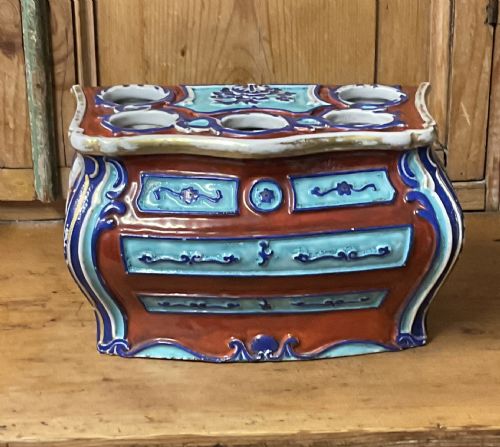
Execution of complex forms, such as lobbed rectangular bodies, hexagonal trays, and bombe commode shapes, reveals the potter's skill in preventing warping during the high-temperature firing process. Superior pieces retain vibrant colour saturation and crisp seal marks that remain clear through generations of use.
The Chinese Porcelain Planter Glossary
- Jardnière
- A large ornamental pot or bowl designed to hold a plant or flower arrangement, frequently placed on the floor or a dedicated stand.
- Famille Rose
- A palette of opaque rose-pink enamel introduced in the eighteenth century, used to render delicate floral and figurative scenes.
- Cobalt Underglaze
- A blue pigment applied directly to the raw porcelain body before glazing and firing, producing deep, permanent cobalt tones.
- Bough Pot
- A specialised vessel designed for holding cut flowering branches, often featuring perforated lids or shaped bodies.
- Qing Dynasty
- The final imperial dynasty of China, spanning from sixteen-forty-four to nineteen-twelve, known for prolific porcelain innovation.
Chinese Porcelain Planter: Frequently Asked Questions
How were these planters used historically?
These vessels served primarily to house live plants, ferns, or cut branches inside wealthy residences, protecting fine surfaces from moisture while adding natural decoration to formal rooms.
Larger fish bowls also accommodated aquatic life or served as dramatic freestanding basins in courtyards and grand hallways, combining functional horticulture with display.
Can I plant directly inside the ceramic?
Many owners place potted plants inside the vessel rather than filling the ceramic body directly with soil and water, which prevents moisture retention issues against the unglazed interior base.
Using a nursery pot with a matching drip tray preserves the interior glaze and makes watering and rearranging much simpler.
How do I identify a Qing Dynasty piece?
Examination of the glaze, brushwork, and overall heft often points toward nineteenth-century or earlier Qing production methods, where cobalt underglaze and enamel colours show distinct hand-painted irregularities.
Certain examples feature four-character seal marks on the base, providing a direct reference to the era of manufacture.
What is the difference between a jardinière and a fish bowl?
A jardinière generally refers to a standard planter bowl used for terrestrial plants, whereas a fish bowl describes a wider, deeper vessel traditionally built to hold goldfish.
In practice, both terms frequently overlap in descriptions due to their similar rounded forms and heavy porcelain construction.