



White Porcelain Imari Bowl
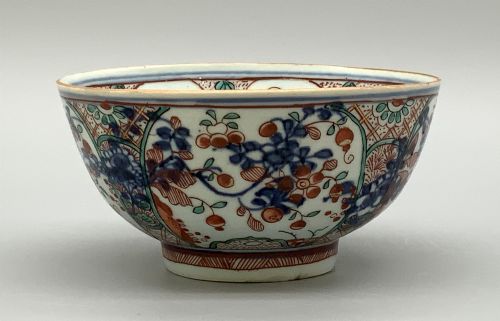
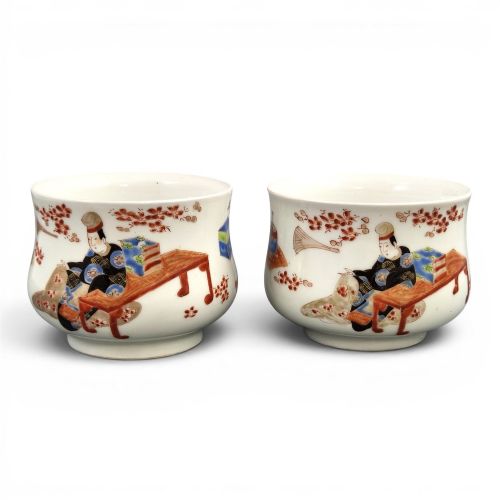
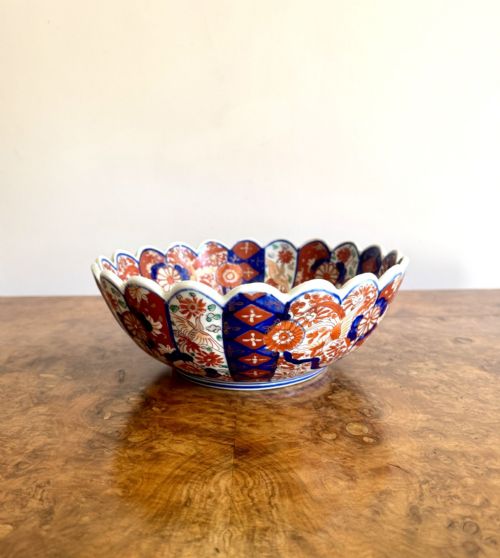
These white porcelain imari bowl examples bring traditional blue and iron-red palettes into any room with enduring presence.
White Porcelain Imari Bowl
A white porcelain imari bowl bridges Japanese and Chinese traditions alongside later European adaptations from the seventeenth century onwards. Buyers searching for a white porcelain imari bowl encounter pieces spanning the Edo and Meiji periods alongside Chinese export items and English factory interpretations.
The selection ranges from large Arita jardinieres and scalloped tableware to lidded broth cups and tripod vessels. Most examples rely on the classic pairing of cobalt underglaze blue and iron-red enamel, often accented with gold leaf or gilt.
Origin points diverge across distinct historical workshops, linking eighteenth-century Chinese Kangxi production with Japanese export porcelain and nineteenth-century English Worcester output. Each iteration demonstrates how regional makers reinterpreted traditional palettes upon white ceramic bodies.
Materials and production methods
Potters shaped these vessels from refined white porcelain and soft-paste porcelain, applying cobalt underglaze for foundational blue motifs. Artisans then added enamel colours by hand before firing the pieces to fix the pigments.
Detailing frequently incorporates gold leaf or gilt highlights, applied to edges and handles to frame the painted scenes. Surface finishes rely on clear glaze over body and pigment, sealing the iron-red and cobalt elements securely.
Listings span seventeenth-century origins through to early twentieth-century production, incorporating Japanese, Chinese export, Italian, and English factory outputs.
Assessing quality in imari ceramics
Superior examples display crisp hand-painted brushwork where cobalt underglaze lines remain sharp and enamel details sit precisely within their intended borders. Weaker pieces exhibit blurred pigment edges and uneven glaze pooling across the white porcelain body.
The weight of the porcelain and the precision of moulded forms, such as scallop-edged rims or tripod feet, separate standard domestic wares from exceptional studio and factory output. Gilding preservation also marks the distinction between heavily worn tableware and carefully preserved display pieces.
Ginshōtei Gyokushi·Flight, Barr & Barr·Richard Ginori
The White Porcelain Imari Bowl Glossary
- Imari
- A style of ceramic decoration originating in Japan, characterised by a palette of cobalt blue, iron-red, and gold. The term references the port from which these wares were shipped to Europe.
- Arita
- The Japanese town and surrounding region where master potters first produced porcelain using local stone. Arita kilns supplied the bulk of early export imari pieces.
- Cobalt Underglaze
- A blue pigment applied to the raw ceramic body before glazing and firing at high temperatures. This technique ensures the blue decoration remains permanent and protected beneath the glassy surface.
- Soft-paste Porcelain
- A ceramic composition made from white clay mixed with ground glass and other materials, fired at lower temperatures than hard-paste. It creates a warmer, slightly softer white body common in European interpretations.
- Chinoiserie
- European artistic interpretations of Chinese and East Asian decorative motifs. This style appears on various export bowls and tableware produced in domestic kilns.
White Porcelain Imari Bowl: Frequently Asked Questions
How do I identify genuine imari bowls?
Authentic pieces rely on a distinct palette combining cobalt blue underglaze with iron-red enamel, frequently enhanced by gilt highlights. Hand-painted brushwork shows subtle variations under close inspection.
Examine the base of the vessel for unglazed foot rims and potential kiln marks. Traditional Japanese and Chinese export items display distinct potting characteristics absent in later European copies.
Were these bowls used for food?
Many historical vessels served functional roles at the dining table, including sauce tureens, broth cups, and general tableware. Larger examples functioned as decorative jardinieres or display bowls.
Their sturdy porcelain construction suited daily dining, though surviving antique pieces are frequently reserved for display due to age and delicate gilding.
How do I care for antique porcelain?
Wash porcelain bowls by hand using lukewarm water and mild soap, avoiding automatic dishwashers entirely. Harsh detergents can damage fragile overglaze enamels and gold leaf.
Display the vessels away from direct sunlight and sudden temperature shifts to protect the glaze and prevent stress fractures in the ceramic body.
What distinguishes Edo period pieces?
Edo period ceramics reflect the specific aesthetic priorities of Japanese craftsmen working between the seventeenth and nineteenth centuries. These items often feature Arita porcelain bodies with dynamic hand-painted floral or geometric compositions.
Comparing potting weight and pigment saturation helps separate Edo examples from later Meiji period production or European imitations.