
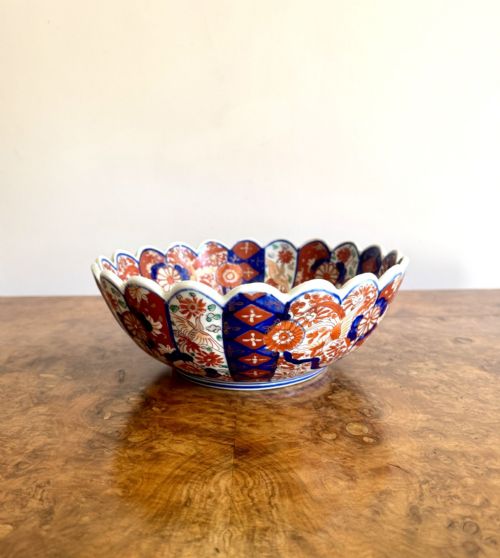


Imari Ceramic Fruit Bowl
These imari ceramic fruit bowl examples bring rich cobalt and iron-red palettes straight from centuries of kiln tradition to your dining table.
Imari Ceramic Fruit Bowl
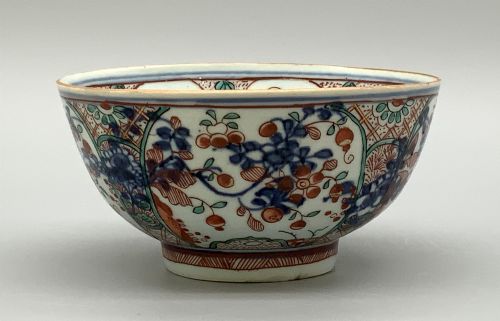
When you search for an imari ceramic fruit bowl, you find footed bowls, comports, and large decorative vessels spanning the eighteenth, nineteenth, and early twentieth centuries. The selection encompasses Japanese production from the Edo and Meiji periods alongside Chinese Kangxi porcelain and English interpretations from factories like Chamberlain Worcester and Mason's.
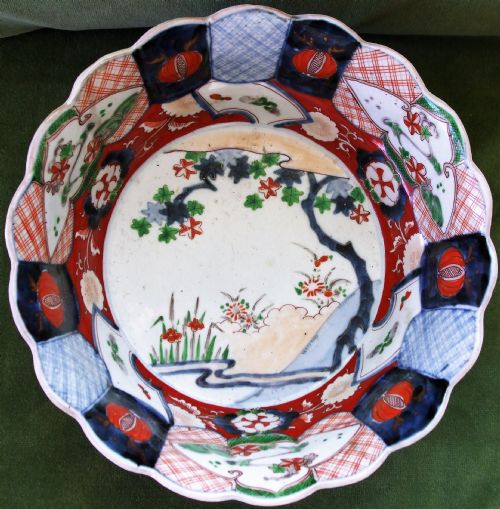
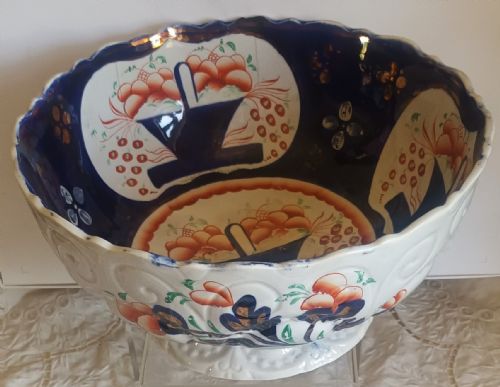
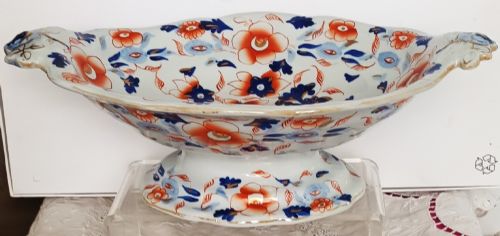
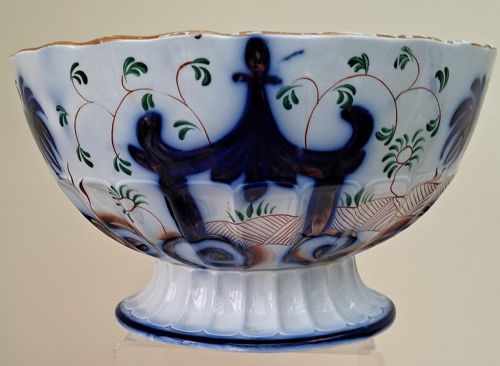
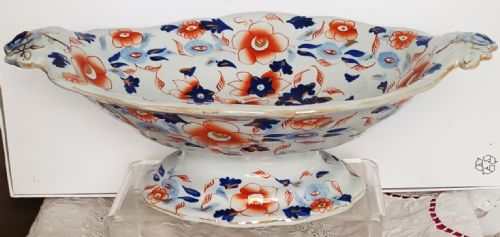
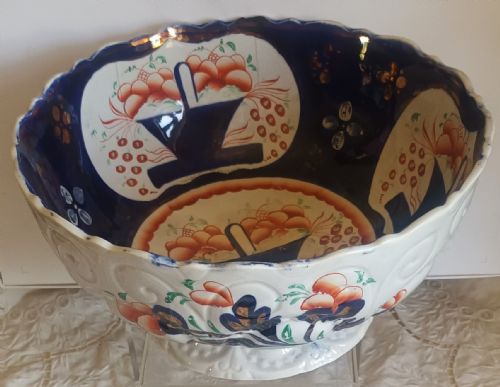
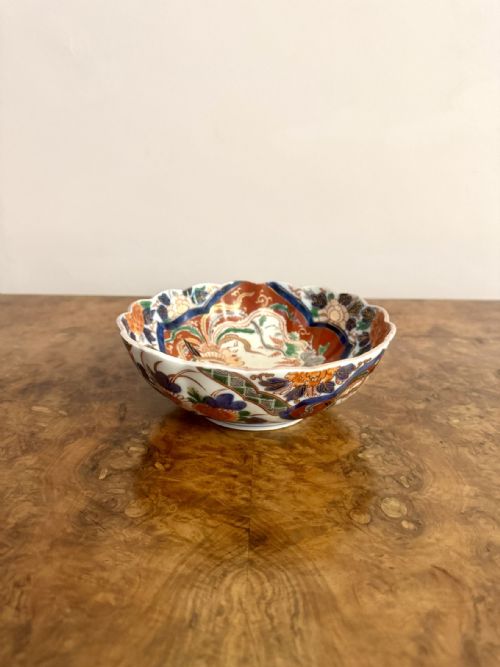
You are most likely to meet Japanese Meiji period examples featuring scalloped or fluted edges and characteristic panelled designs. English makers translated this aesthetic onto ironstone and earthenware, producing robust footed bowls decorated with patterns like the Japan pattern or Gaudy Welsh motifs.
The forms serve varied purposes, from centrepieces and pedestal bowls to specific comports designed for presenting fruit. Whether porcelain, ironstone, or earthenware, these pieces reflect a long-standing cross-cultural exchange in ceramic decoration.
How they were made
Potters shaped porcelain, ironstone, and earthenware bodies on the wheel or pressed them into moulds to create fluted and scalloped edges. Some items incorporate components like mahogany stands alongside ceramic bowls.
Decoration relied on underglaze blue combined with iron-red enamel and gold leaf accents applied over the glaze. Firing fixed these pigments to the porcelain or ceramic substrate, producing the saturated palette characteristic of the style.
Object forms include decorative bowls, pedestal bowls, comports, and centrepieces, with both Chinese Kangxi and Japanese Edo or Meiji origins represented.
What varies in quality
Execution of the hand-painted enamel work dictates visual success, where crisper cobalt outlines and cleanly separated compartments separate finer examples from simpler production. The crispness of moulded edges, particularly on scalloped or fluted rims, indicates the precision of the original forming process.
Material choice also distinguishes the pieces, with translucent hard-paste porcelain sitting at one end and heavy ironstone or earthenware serving utilitarian strengths at the other. Preservation of the applied gold leaf and surface enamels without rubbing maintains the visual impact of the design.
The Imari Ceramic Fruit Bowl Glossary
- Imari
- A style of ceramic decoration originating in Japan, characterised by a palette of cobalt blue, iron-red, and gold. This aesthetic was later copied and adapted by European and Chinese potteries.
- Comport
- A footed dish or bowl elevated on a pedestal, traditionally used for serving fruit at the table. These pieces often feature scalloped or shaped rims.
- Ironstone
- A type of durable earthenware developed in nineteenth-century England to imitate porcelain. It provides a heavy, robust body suitable for footed bowls and tableware.
- Gaudy Welsh
- A style of nineteenth-century British pottery featuring bright, hand-painted floral and geometric patterns inspired by Imari designs. It is typically found on earthenware bodies.
- Meiji Period
- The era in Japanese history spanning from 1868 to 1912, known for prolific ceramic production exported to Western markets. Pieces from this time frequently utilise scalloped edges and detailed panelled motifs.
Imari Ceramic Fruit Bowl: Frequently Asked Questions
How do I identify a Japanese Imari bowl?
Look for the characteristic combination of underglaze cobalt blue and iron-red enamel, frequently enhanced with gold leaf details. Many examples from the Meiji period also feature distinct panelled compartments and scalloped or fluted rims.
European factories like Mason's and Chamberlain Worcester produced similar patterns on ironstone and porcelain, often referred to as Japan patterns. Checking the paste, whether translucent porcelain or heavier ironstone, helps distinguish Asian exports from British interpretations.
Were these bowls used for fruit?
Many large bowls, pedestal bowls, and comports served specifically to present fruit at the dining table. Their elevated feet and wide basins placed the contents centrally for display.
Other examples functioned purely as decorative centrepieces or display dishes rather than active tableware. Their robust construction in ironstone or porcelain allowed them to handle daily domestic use.
Can I display fruit in an antique bowl?
Using these bowls for display fruit is generally acceptable provided the surface glaze is stable and free from active flaking. Hard-paste porcelain and ironstone withstand gentle contact with fruit well.
Avoid acidic fruits sitting directly on compromised enamels or areas where the glaze has worn thin. Soft liners can protect delicate interior surfaces from potential scratching.