


White Porcelain Dog Figurines
White porcelain dog figurines bring the quiet charm of Victorian parlours and continental kilns straight to the mantelpiece.

White Porcelain Dog Figurines
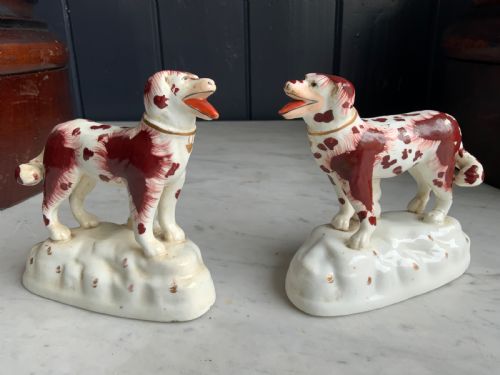
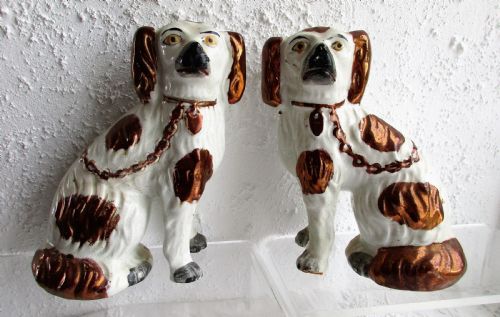
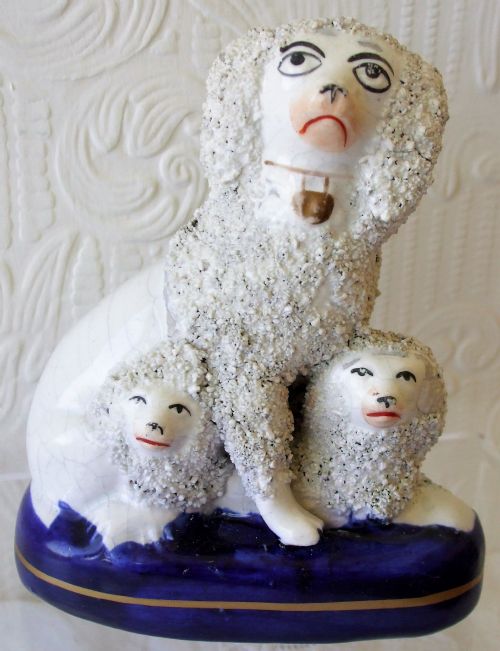
When you search for white porcelain dog figurines, you encounter ceramic sculptures originating from British potteries, continental factories, and Japanese kilns. The most common iteration on this page is the Staffordshire spaniel or poodle, often modelled as a seated pair meant to flank a fireplace. These figures range from utilitarian mantel ornaments to finely sculpted parian sculptures and glazed ceramic groups.
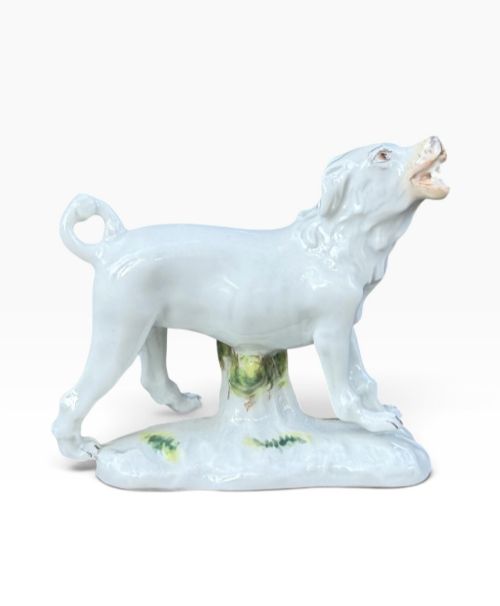
The selections span the nineteenth century into the early twentieth century, taking the form of single hounds, pairs of spaniels on cushions, and playful groups of puppies. Alongside Staffordshire pottery and earthenware, the offerings include German porcelain, Japanese Hirado and Kutani porcelain, and majolica pieces. Buyers find everything from miniature mantle ornaments to grand scale decorative sculptures.
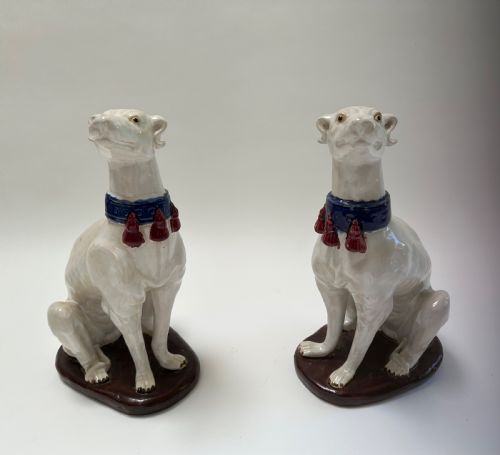
Beyond the classic spaniel, the selection encompasses greyhounds, poodles, gundogs, and guardian lion dogs. These objects served primarily as interior ornamentation, though some examples functioned as lamp bases or quill holders. Each piece reflects the domestic tastes and ceramic capabilities of its specific period of origin.
Materials and technique
Moulding and slip-casting predominated for the Staffordshire pairs, allowing workshops to produce uniform canine figures that were subsequently hand-painted or glazed. Japanese works such as Hirado porcelain involved skilled throwing and hand-modelling of intricate details like fur texture and facial expressions. Firing took place in traditional kilns, resulting in distinct surface lustres and crackle effects on the glaze.
Several poodles arrive complete with tiny ceramic pups nestled at their feet or quirky basket quill holders ready for stray feathers.
Assessing quality
The distinction between ordinary production pieces and high-end output involves the purity of the ceramic body and the sophistication of the glaze. Finer sculptures show careful attention to anatomical proportions and posture, capturing the characteristic stance of spaniels, poodles, or gundogs with naturalism. Maker attributions and well-preserved surface finishes further elevate the standing of individual figures.
Thomas Parr·Minton·James Dudson·Royal Doulton·Beswick
The White Porcelain Dog Figurines Glossary
- Parian ware
- A fine-grained unglazed porcelain resembling marble. It gained popularity during the nineteenth century for classical and animal sculptures.
- Staffordshire pottery
- Ceramic wares produced in the pottery districts of Staffordshire, England. These factories specialised in popular figures including spaniels and poodles.
- Majolica
- Low-fired earthenware glazed with tin enamel and painted with metallic oxides. This technique produces vibrant, glossy surfaces found on decorative animal figures.
- Blanc de chine
- White porcelain originating from China, characterised by a milky, ivory glaze. European factories later sought to replicate this distinct finish.
- Bisque
- Porous unglazed ceramic fired once before any subsequent decoration or glazing. It offers a matte texture that highlights fine sculptural details.
White Porcelain Dog Figurines: Frequently Asked Questions
Where were these dog figures displayed?
These ceramic dogs traditionally sat upon mantelpieces, often arranged as pairs facing inward toward the hearth. Owners also placed them on side tables and dressers within nineteenth century parlours.
Today, they suit similar domestic settings, bringing traditional character to shelves, sideboards, and occasional tables throughout the home.
What is the difference between porcelain and earthenware dogs?
Porcelain uses refined white clay fired at high temperatures to create a dense, sometimes translucent material. Earthenware is a heavier, more porous ceramic that requires a glaze to become impermeable.
Most traditional Staffordshire figures utilise earthenware bodies, while continental and Asian pieces more frequently employ fine porcelain.
How should I clean my ceramic dog figurines?
Dust these figures gently with a soft, dry cloth to prevent the accumulation of dirt on glazed or unglazed surfaces. Avoid harsh chemical cleaners that might damage delicate gilt highlights or enamel paint.
For stubborn dust, a slightly damp cloth may be used on glazed areas, provided the piece lacks chips or unsealed fissures where moisture could enter.