




White Glaze Porcelain Dogs
White glaze porcelain dogs bring character and period charm into a room, spanning German workshops to Staffordshire potteries.
White Glaze Porcelain Dogs
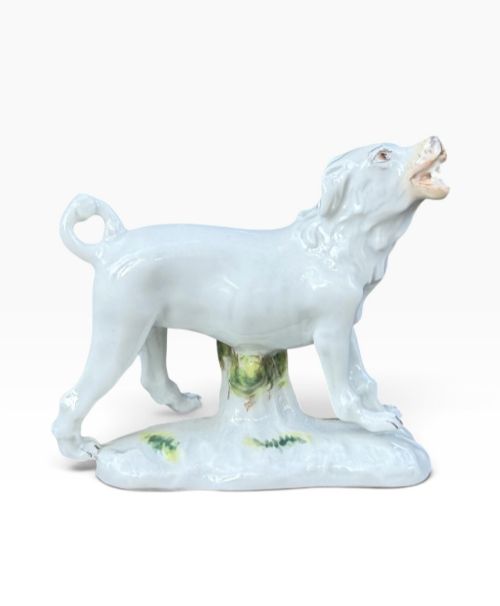
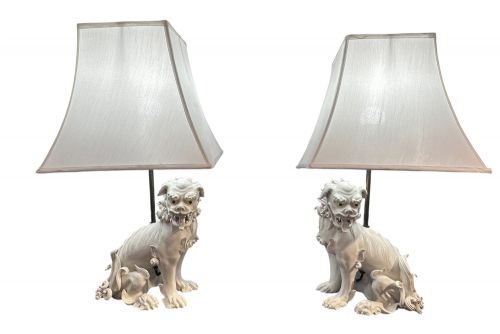
White glaze porcelain dogs encompass decorative figures, lamps, and ornaments originating from European and Asian traditions. When searching for white glaze porcelain dogs, buyers encounter pieces ranging from Victorian mantel spaniels to early twentieth-century German spitz lamps and Chinese blanc de chine Foo dogs.
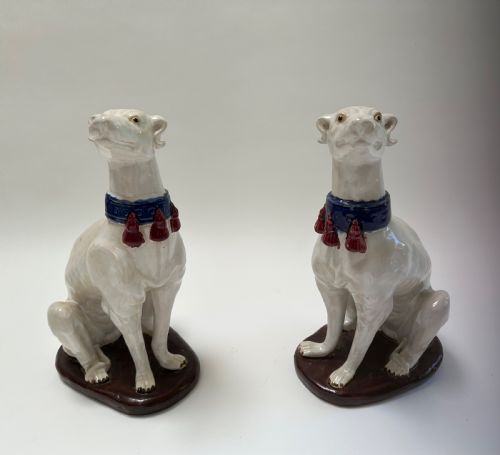
The selection includes pairs of seated spaniels, greyhounds, and Shi Lion figures modelled in various ceramic bodies. Most examples date from the nineteenth and early twentieth centuries, reflecting the enduring popularity of canine subjects across different stylistic periods.
Materials and manufacture
Makers utilised porcelain, earthenware, and ceramic bodies, applying glossy glazes to create smooth, reflective surfaces. Some figures incorporate hand-painted details or enamel decoration over the white ground, whilst others rely entirely on the purity of the monochrome glaze.
Production techniques varied from European factory moulding, such as German porcelain work, to traditional Staffordshire pottery methods and East Asian ceramic traditions. Firing processes determined the final texture and density of the ceramic, with specialised glazes sealing the clay body.
Listings feature porcelain, earthenware, and ceramic glaze across Victorian, Art Deco, and 19th Century periods.
Judging quality in ceramic figures
The weight and balance of the figure, alongside the subtlety of any underglaze painting or enamel work, distinguish standard production wares from finer sculptural examples produced by established potteries and continental factories.
Meissen·Thomas Parr·Beswick
The White Glaze Porcelain Dogs Glossary
- Blanc de Chine
- A Chinese white porcelain produced at Dehua, prized for its ivory or milk-white glaze.
- Majolica
- A type of earthenware decorated with opaque coloured glazes over a tin-oxide base.
- Shi Lion
- A traditional guardian lion figure, also known as a Dog of Fo, frequently rendered in ceramic or porcelain.
- Spitz
- A northern breed of dog with thick fur and pointed ears, popular as a subject for nineteenth-century porcelain lamps and figures.
White Glaze Porcelain Dogs: Frequently Asked Questions
How do I date an antique porcelain dog?
Dating relies on examining the ceramic body, glaze characteristics, and any factory marks stamped or painted on the base. Stylistic clues from the modelling also help place the piece within periods such as the Victorian era or early twentieth century.
Comparing the weight and potting technique to known examples from makers like Meissen or Staffordshire potteries provides further confirmation of age.
Were these figures meant for display or use?
Most ceramic dogs served as decorative ornaments, placed on mantelpieces or tables to display taste and status. Some later nineteenth-century examples were adapted as table lamps, combining illumination with sculptural form.
Pairs were commonly arranged symmetrically on either side of a fireplace or central decorative object.
What is the difference between porcelain and earthenware dogs?
Porcelain is a vitrified ceramic material made from specific clays fired at high temperatures, resulting in a dense, non-porous body that often appears translucent. Earthenware is more porous and requires a thorough glaze to become waterproof, typical of traditional Staffordshire figures.
Both materials were utilised for dog figures, though they create distinct visual and tactile qualities.
How should I clean white glazed ceramics?
Maintenance requires gentle dusting with a soft cloth to prevent the accumulation of dirt on the glazed surface. If washing is necessary, use lukewarm water and mild soap, avoiding harsh abrasives that could damage the glaze or any hand-painted enamel details.
Ensure the piece is completely dry before placing it back on display.