
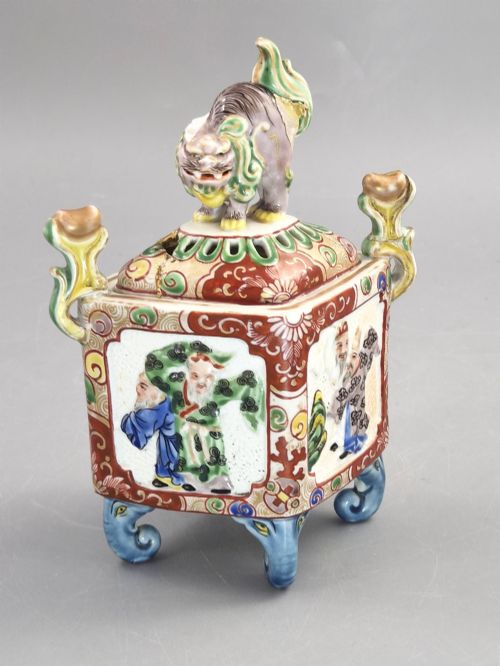


Antique Japanese Porcelain Dogs
These antique japanese porcelain dogs bring guardian lions and domestic puppies into the room, modelled in porcelain with enamel and cobalt underglaze.
Antique Japanese Porcelain Dogs
When you search for antique japanese porcelain dogs, you encounter guardian lions, temple figures, and domestic puppies modelled from clay. These pieces span the nineteenth century, including the Edo and Meiji periods, taking the form of figurines, sculptures, and decorated vessels.
The most common versions on this page are figures of the shishi or karashishi, often functioning as finials on koro incense burners or standing alone as guardian creatures. You also find sets of puppies and figures of deities accompanied by these lions, rendered in Japanese Imari style or Kutani porcelain.
Materials and manufacture
The makers formed these dogs from porcelain and ceramic glaze, applying cobalt underglaze for blue tones before firing. Many pieces incorporate enamel, gold leaf, and gilding to highlight details on the surface.
Vessels and figures often display Japanese Imari decoration or Kutani styling, combining moulded porcelain bodies with hand-painted polychrome pigments and gilt highlights.
Listings feature pieces from the nineteenth century, spanning the Edo and Meiji periods, executed in porcelain, enamel, and gold leaf.
Assessing quality
The application of gold leaf and gilding differentiates standard production from finer work, as does the balance of the glaze across complex forms like lidded koro incense burners and figural groups.
The Antique Japanese Porcelain Dogs Glossary
- Shishi
- A mythical guardian lion or dog of Buddhist origin, frequently depicted with swirling mane and fierce expression. These creatures guard temples and domestic spaces.
- Karashishi
- Another term for the Chinese-derived guardian lion dog, popular in Japanese decorative arts. They often appear atop incense burners or as standalone sculptures.
- Kutani
- A style of Japanese pottery and porcelain known for bold colours and extensive use of gold leaf. Pieces from this tradition often feature figural subjects and mythical beasts.
- Imari
- A traditional style of Japanese porcelain featuring a palette of cobalt blue, iron red, and gold. These wares were produced for both domestic use and export.
- Koro
- A traditional Japanese incense burner, frequently fitted with a pierced cover and supported on feet. They often feature guardian lion finials.
Antique Japanese Porcelain Dogs: Frequently Asked Questions
What is a shishi dog?
A shishi is a mythical guardian lion, often referred to as a lion dog in Japanese art. These figures were placed to protect sacred spaces and homes.
In porcelain, they appear as standalone sculptures, supports for figures, or finials on incense burners.
How do I date these figures?
Dating relies on stylistic markers from the Edo and Meiji periods alongside the characteristics of the porcelain body and enamel palette. Nineteenth-century examples often exhibit specific Kutani or Imari decorative conventions.
Examining the glaze and the wear on any gold leaf helps place the piece within the nineteenth century.
What are koro incense burners?
A koro is a vessel designed for burning incense, typically comprising a bowl, a pierced lid, and decorative feet. They frequently incorporate guardian lion dogs as finials.
These pieces combined practical function with ornamental display in Japanese interiors.
Where were these porcelain pieces made?
These pieces originate from Japanese kilns producing Kutani, Hirado, and Imari wares during the nineteenth century. Many were created for export markets during the Meiji period.
The regional styles dictate the specific palette and modelling techniques used by the makers.