
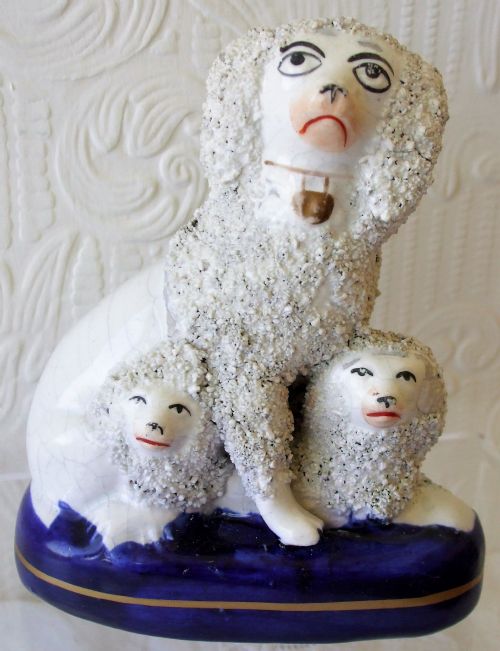


Antique White Dog Ornaments
These antique white dog ornaments bring nineteenth-century hearths and parlours vividly to life through charming ceramic figures of spaniels, poodles and terriers.
Antique White Dog Ornaments
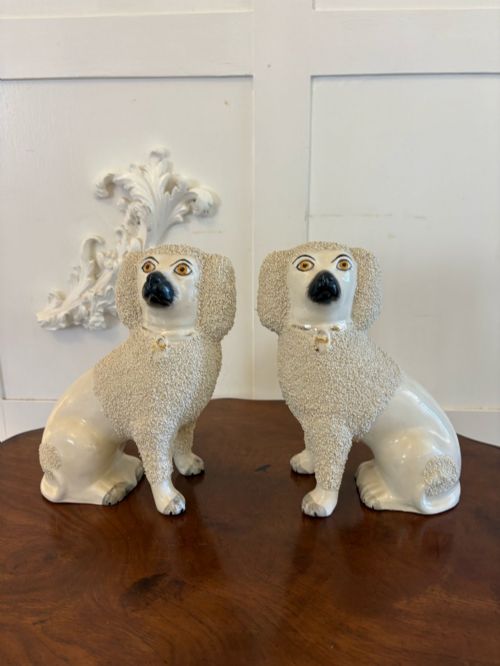
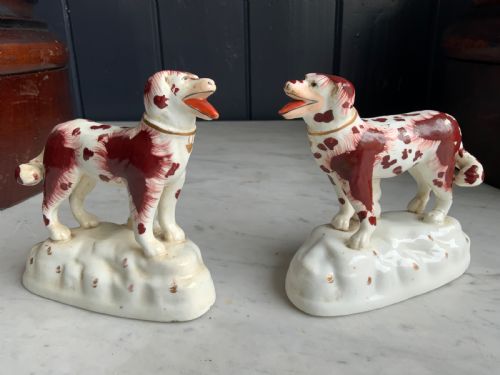
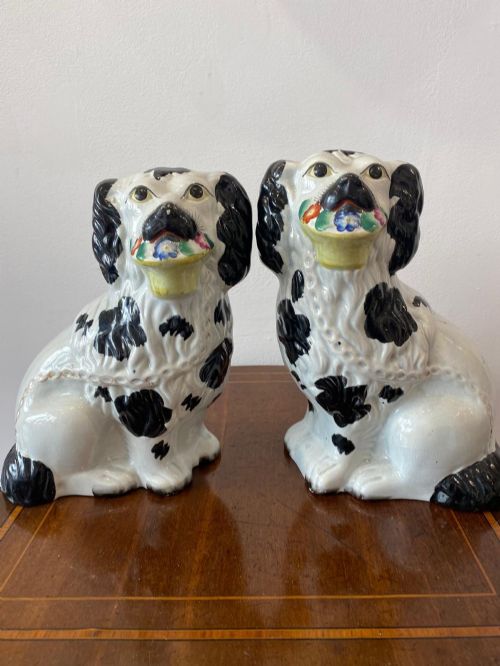
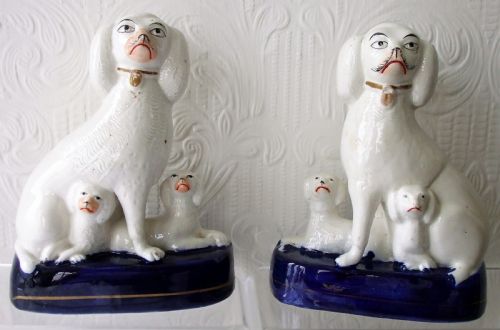
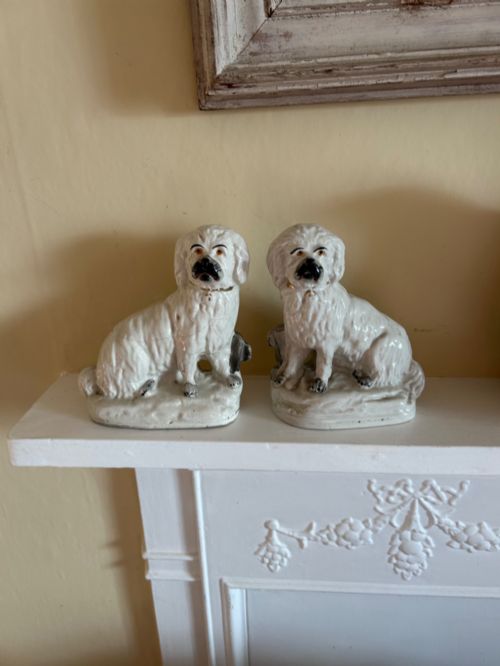
These pieces encompass decorative figures, sculptural groups and inkwells modelled as poodles, spaniels, greyhounds and terriers. Staffordshire pottery pairs dominate the selection, often depicted as seated comforter dogs destined for mantelpieces.
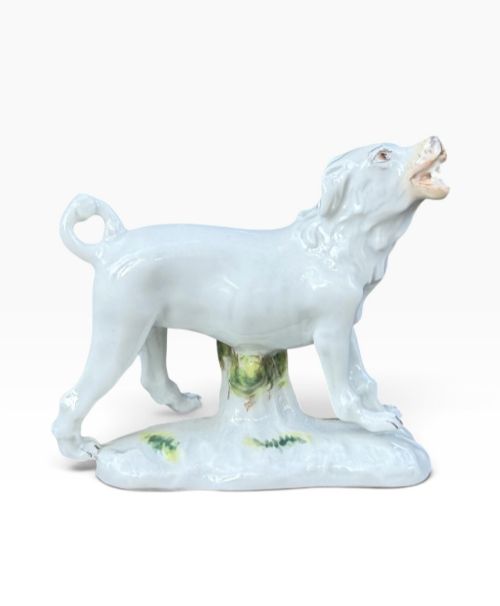
Originating largely from the nineteenth century, the figures span periods from Regency and Victorian eras into the early twentieth century. Continental porcelain factories also contributed seated and lamp-mounted dogs to this tradition.
The assortment ranges from miniature poodles to large sculptural pairs. Many feature white glazes highlighted with gilt or enamel details, capturing domestic canine companionship from past eras.
Materials and production methods
Moulds formed the hollow bodies of Staffordshire pottery dogs and continental porcelain sculptures alike. Artisans then refined the clay surfaces before firing and glazing, adding individual brushwork to hair and eyes.
Some nineteenth-century poodles emerge with woolly textured clay coats that mimic actual curly fur.
Assessing craftsmanship and execution
The finesse of the hand-painted enamel work and gilding sets superior figures apart from simpler mass-produced output. Crisp moulding that clearly defines facial expressions and fur texture indicates higher artisanal skill.
Proportion and stance within pairs demonstrate the care taken during production. Well-matched pairs with uniform glaze coverage and subtle detailing represent the finest examples of the pottery and porcelain modeller's art.
Thomas Parr·Meissen
The Antique White Dog Ornaments Glossary
- Staffordshire pottery
- Earthenware figures produced in the Staffordshire potteries of England. These works include the iconic mantle dogs and spaniels found in nineteenth-century homes.
- Parian ware
- A type of unglazed biscuit porcelain resembling marble. Sculptural figures from the Victorian period frequently utilised this smooth white material.
- Lead glaze
- A glossy coating applied to earthenware before firing. This technique creates the shiny surface characteristic of many antique ceramic dogs.
- Comforter spaniel
- A ceramic dog model placed on nineteenth-century mantelpieces. These figures represent the lapdogs kept by Victorian owners.
- Enamel
- Opaque vitreous material fused to pottery surfaces through firing. Painters applied these coloured pigments to add eyes, collars and spot markings.
Antique White Dog Ornaments: Frequently Asked Questions
What are Staffordshire comforter dogs?
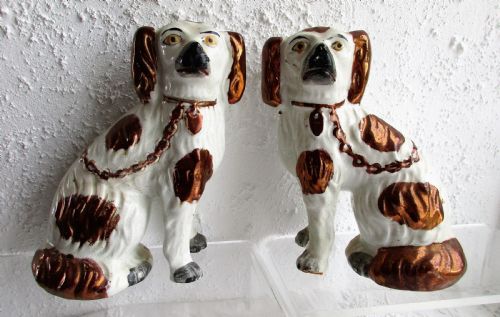
Staffordshire comforter dogs are ceramic spaniels modelled to sit on either end of a fireplace mantelpiece. Potters designed them in pairs to watch over the hearth of a nineteenth-century home.
These figures often feature white glazes with gold leaf or copper lustre highlights. They became staple ornaments in Victorian parlours across Britain.
How do I date an antique dog ornament?
Dating relies on examining the ceramic body, glaze characteristics and stylistic traits of the period. Nineteenth-century Staffordshire pieces typically show crazing in the lead glaze and hand-painted enamel details.
Marked pieces or specific modelling styles help narrow the decade of production. Comparative study with documented works from makers like Thomas Parr provides further chronological clarity.
How should I clean porcelain dog figures?
Cleaning requires gentle dusting with a soft, dry brush to protect fragile enamel and gilt details. Moisture can damage old earthenware bodies and vulnerable glaze surfaces.
Harsh cleaning agents must be avoided entirely. Regular, careful maintenance preserves the hand-painted decoration on these historic ceramics.