





White Porcelain Bird Dish
A white porcelain bird dish brings hand-painted plumage and historic European or Asian kilncraft straight to the table.
White Porcelain Bird Dish
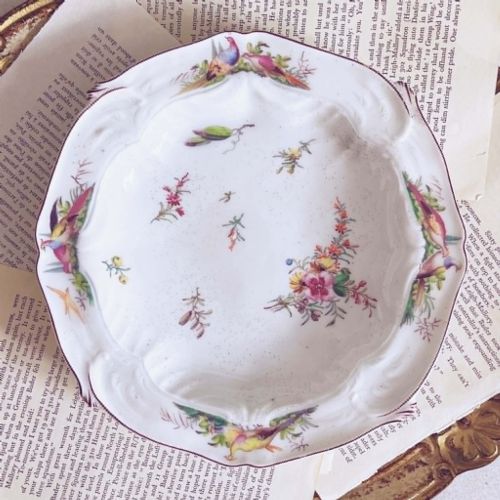
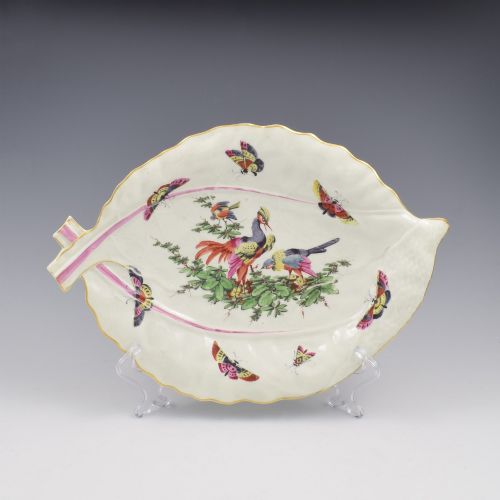
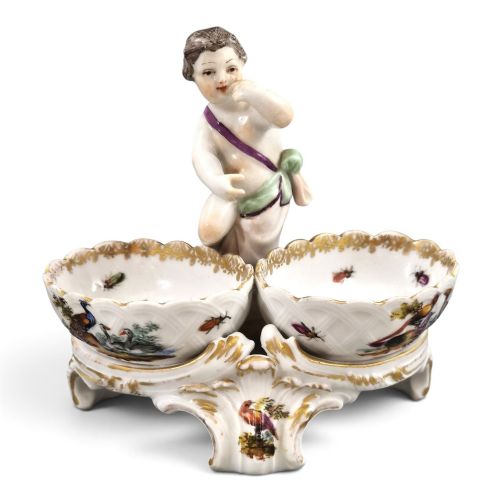
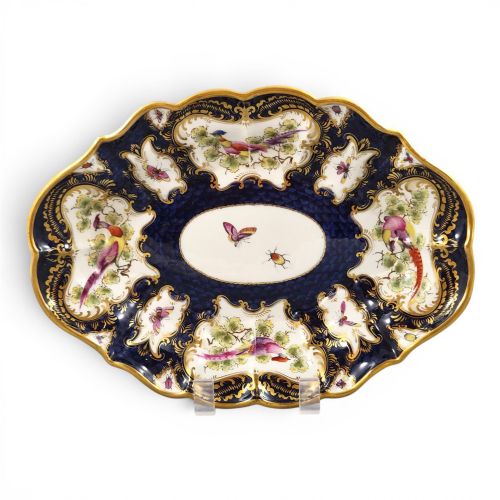
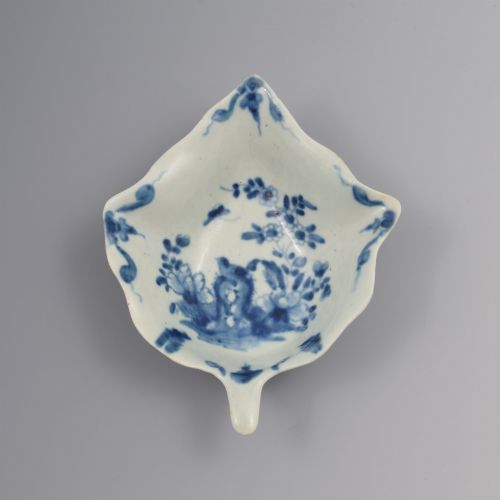
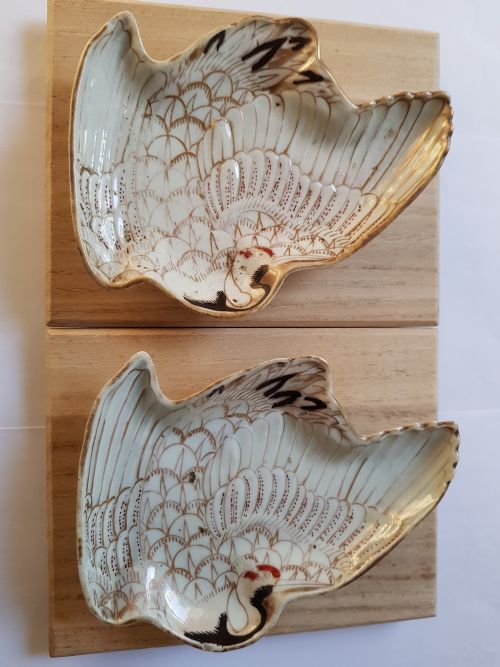
A white porcelain bird dish encompasses small pickle leaves, scalloped shells, dessert platters, and figural butter vessels shaped or painted with avian subjects. These items emerge from eighteenth-century English factories like Worcester and Chelsea, alongside nineteenth-century German and Japanese workshops.
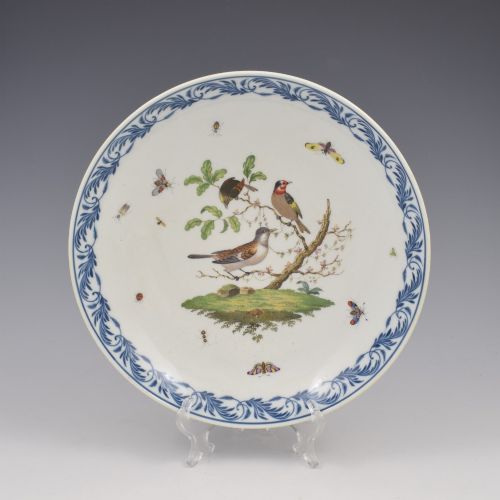
The selection ranges from early soft-paste porcelain leaf dishes featuring transfer or hand-painted rock-bird patterns to later hard-paste Meissen and Dresden ornithological plates. Japanese Meiji chargers and Imari plates also appear alongside larger Chinese export wares decorated with floral and bird motifs.
Buyers encounter everything from simple blue-and-white table components to heavily gilded Rococo revival service pieces. Each example demonstrates how historic potters combined utility with natural history illustration.
Assessing the work
Quality rests primarily in the precision and vibrancy of the hand-painted bird motifs, where delicate brushwork and naturalistic feather details distinguish master painters from standard factory output. The crispness of the porcelain moulding, particularly on relief-shaped leaf and shell dishes, further defines the tier of the piece.
The preservation of original gilding and enamel colours without excessive rubbing elevates certain items above heavily worn examples. Factory attribution, such as documented early Worcester periods or crossed swords marks, provides an additional benchmark for high-level ceramic manufacture.
An imperial Russian butter dish shaped entirely like a bird proves that historic breakfast tables took avian imitation very seriously.
Dr Wall Worcester·Chelsea·KPM Berlin·Meissen·Royal Worcester·Coalport·Dresden·Flight Barr And Barr·Kuznetsov
The White Porcelain Bird Dish Glossary
- Soft-paste porcelain
- An artificial ceramic body composed of white clay, glass, and ground minerals, fired at lower temperatures than true hard-paste porcelain. This material often reveals a warmer, creamier glaze texture.
- Hard-paste porcelain
- A true ceramic compound of kaolin and petuntse fired at extreme heat to create a dense, vitrified, and bright white body. It resists scratching and takes enamel colours brilliantly.
- Rococo Revival
- A nineteenth-century design style mimicking the asymmetrical curves, C-scrolls, and naturalistic motifs of the mid-eighteenth century. It frequently appears on heavily moulded German and English porcelain dishes.
- Imari
- A traditional Japanese porcelain style featuring rich underglaze blue combined with iron red, green, and gold detailing. These pieces were widely exported to Europe from the seventeenth century onward.
- Pickle dish
- A small, specialised tableware vessel, often shaped like a leaf or shell, originally designed for serving small condiments at the dining table. Eighteenth-century English factories produced them in quantity.
White Porcelain Bird Dish: Frequently Asked Questions
What were bird dishes used for?
These pieces functioned as decorative table service items for serving sweetmeats, desserts, condiments, or small portions during formal meals.
Over time, many transitioned into cabinet display pieces meant to showcase the owner's taste and the manufacturer's artistic skill.
How do I identify early Worcester porcelain?
Look for characteristic soft-paste bodies that display a warm translucency when held to the light, often paired with hand-painted peony and rock-bird motifs.
Early pieces frequently lack factory marks or feature disguised crescent and workman symbols rather than printed script.
Can I use these antiques daily?
While structurally sound, historic porcelain requires careful hand washing and protection from sudden thermal shock to preserve fragile enamels and gold leaf.
Most collectors prefer to display them safely or reserve them for very occasional light dining use.
What is the difference between Meissen and Dresden?
Meissen refers to the foundational eighteenth-century German state porcelain manufactory identified by crossed sword marks.
Dresden encompasses a collective group of later decorator studios and independent workshops operating in the same region during the nineteenth century.