


Polychrome Bird Porcelain Dish
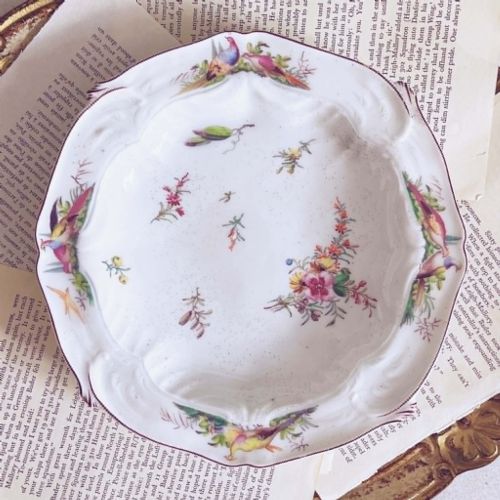
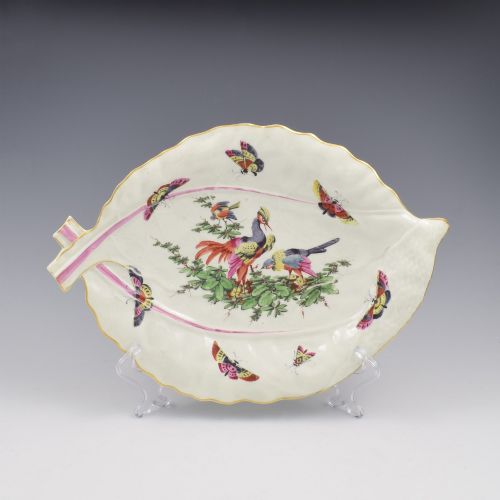
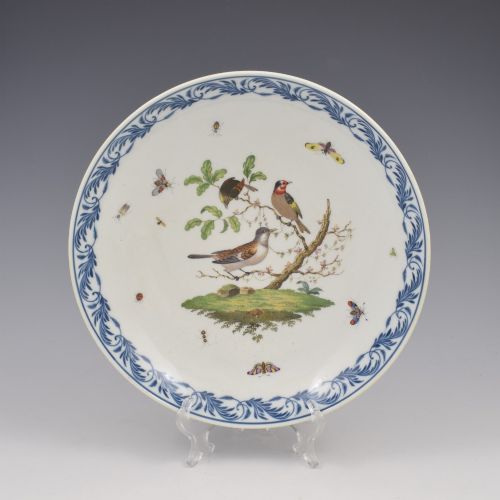
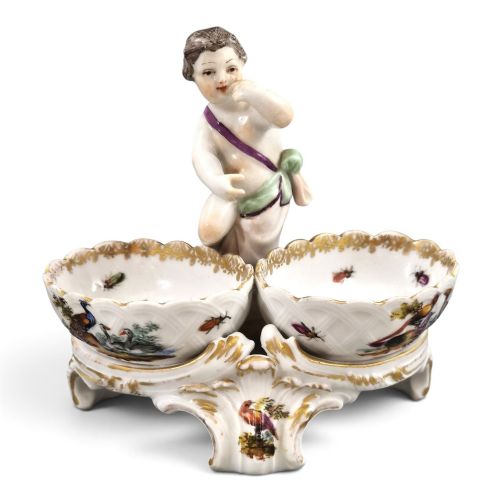
These polychrome bird porcelain dish examples offer hand-painted avian scenes across eighteenth-century leaves, nineteenth-century plates, and decorative chargers.
Polychrome Bird Porcelain Dish
A polychrome bird porcelain dish brings together hand-painted bird motifs and ceramic bodies spanning the eighteenth and nineteenth centuries. Buyers searching this phrase encounter forms ranging from cabinet plates and leaf dishes to shell centrepieces and double salt cellars.
The selection includes English factories such as Worcester and Chelsea alongside continental European makers like Meissen and KPM Berlin. Alongside European porcelain, the inventory extends to Chinese Export, Qing Dynasty, and Japanese Meiji period examples.
Most pieces date from the 18th century and 19th century, with later nineteenth-century styles including Rococo Revival alongside Chinoiserie and Chinese Famille Rose designs.
How they were made
Maker workshops utilised both soft-paste porcelain and hard-paste porcelain bodies to form dishes, plates, and chargers, occasionally employing ironstone for heavier domestic service. Artisans shaped these ceramic bases into naturalistic forms like leaves, shells, and reticulated rims.
Decoration relied upon overglaze enamels and handpainted polychrome pigments to render detailed ornithological scenes of exotic birds and floral patterns. Artisans frequently applied gold leaf accents to highlight moulded edges, rims, and figural details.
Several plates depict exotic birds gazing intently at painted butterflies, proving that even porcelain fowl appreciate a bit of garden drama.
What varies in quality
Quality rests in the precision and depth of the handpainted polychrome bird imagery, where finer pieces display intricate feather detail and lifelike avian posture. The delicacy of the ceramic moulding, particularly in reticulated plates and naturalistic leaf or shell forms, distinguishes superior examples.
The presence of factory marks, such as crossed swords or anchor motifs, alongside artist signatures on items like Kutani bowls, influences the standing of a piece. The crispness of overglaze enamels and the careful application of gold leaf further separate standard production from exceptional works.
Chelsea·KPM Berlin·Meissen·Mason·Shozo
The Polychrome Bird Porcelain Dish Glossary
- Polychrome
- Decoration employing multiple distinct colours, typically applied through handpainted enamels on ceramic surfaces.
- Soft-paste porcelain
- A ceramic composition fired at lower temperatures than hard-paste, common in early English factories like Chelsea and Worcester.
- Reticulated
- Having an openwork pattern resembling a net or mesh, often seen carved into the borders of plates.
- Overglaze enamel
- Pigments applied on top of a fired glaze and fused in a subsequent low-temperature kiln firing.
- Ornithological
- Pertaining to the scientific or artistic depiction of birds, frequently used to describe detailed bird painting on antique ceramics.
Polychrome Bird Porcelain Dish: Frequently Asked Questions
How do I identify a First Period Worcester dish?
First Period Worcester pieces, often associated with Dr Wall, feature soft-paste porcelain bodies and handpainted motifs like fancy birds set on leaf or shell forms.
Examination of the glaze and underglaze characteristics helps distinguish these eighteenth-century English items from later continental copies.
What is the difference between hard-paste and soft-paste porcelain?
Soft-paste porcelain contains glass frit and white clay, fired at lower temperatures to produce a warmer texture often found in early English factories.
Hard-paste porcelain uses kaolin and petuntse, resulting in a denser, whiter body commonly utilised by European mainland manufacturers.
How should I care for antique porcelain dishes?
Antique porcelain dishes require gentle hand washing in warm water with mild soap, avoiding dishwashers and harsh abrasive sponges.
Displaying these items away from direct sunlight and temperature fluctuations protects both the delicate overglaze enamels and gold leaf accents.
What does Meissen crossed swords mark indicate?
The crossed swords mark represents the Meissen porcelain manufactory in Germany, serving as a primary indicator of authenticity for nineteenth-century wares.
Variations in the blue underglaze swords help specialists date specific plates, dessert dishes, and reticulated service pieces.