

White Pearl Strand
A white pearl strand brings timeless elegance to the neckline, combining lustrous organic gems with intricate precious metal clasps.
White Pearl Strand
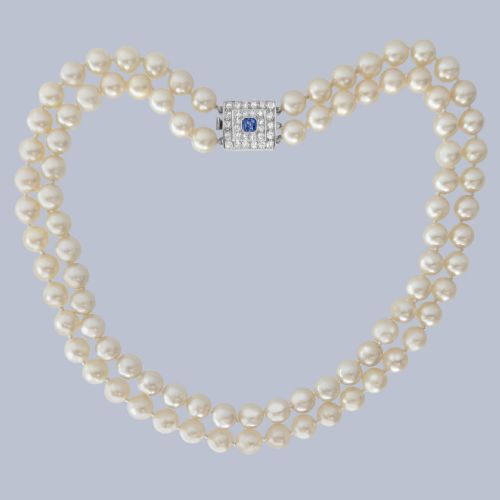
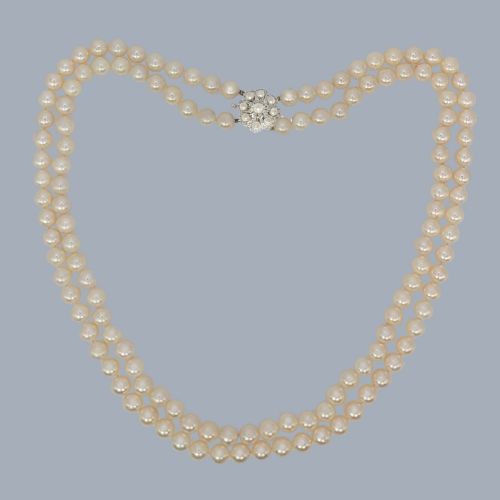
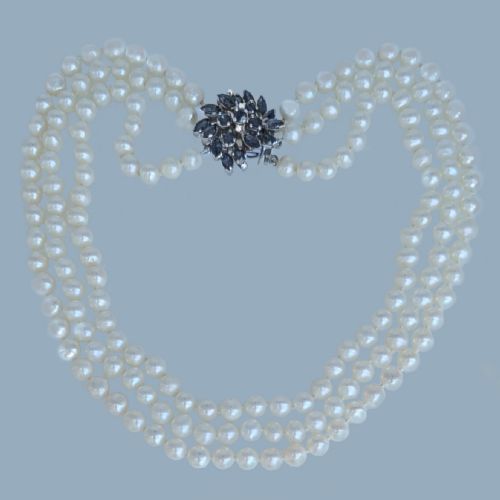
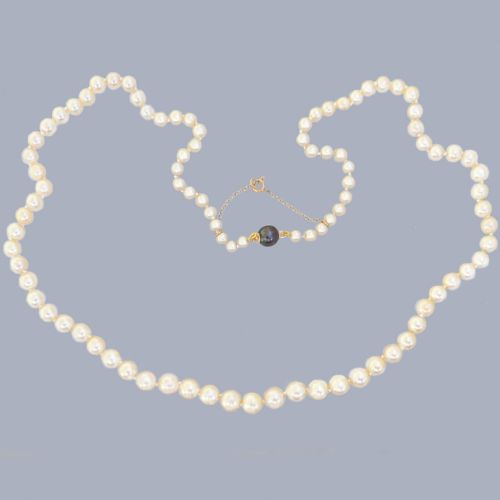
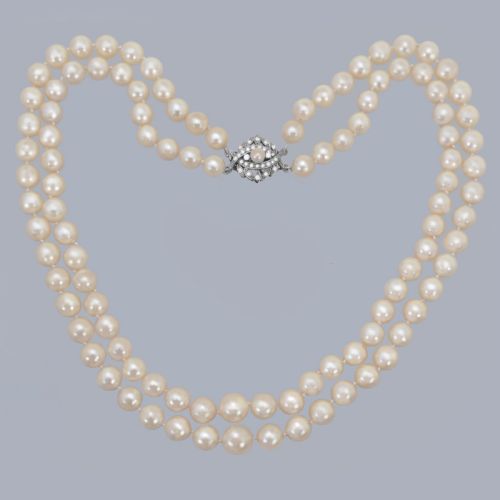
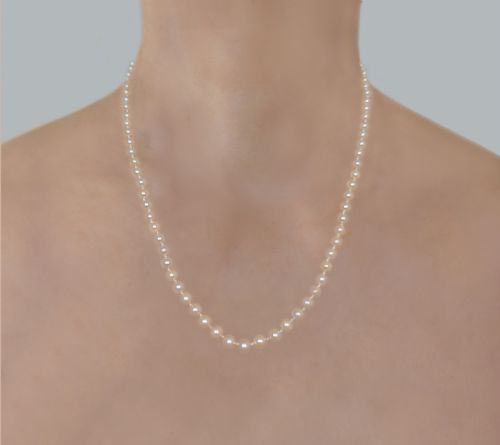
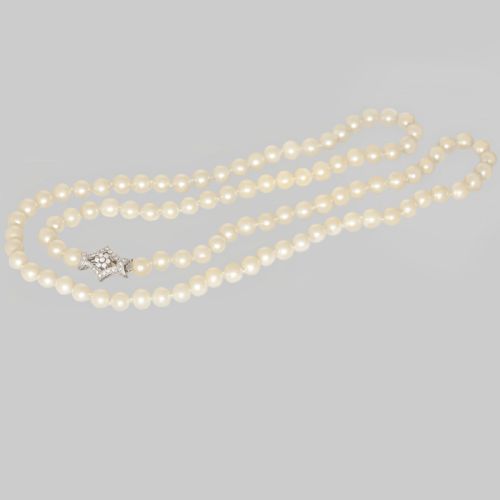
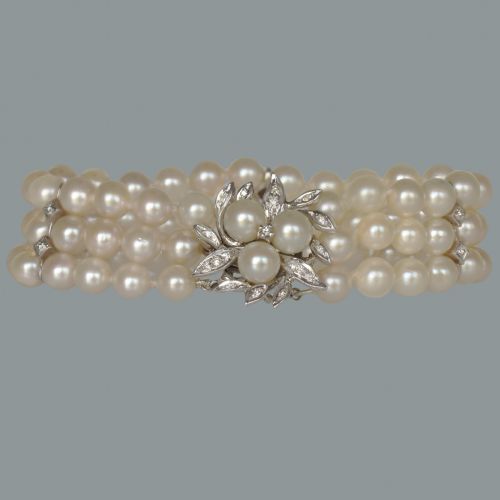
A white pearl strand encompasses single and multi-row necklaces as well as bracelets featuring lustrous organic spheres. These adornments range from delicate Edwardian single rows to substantial multi-strand mid-century statements.
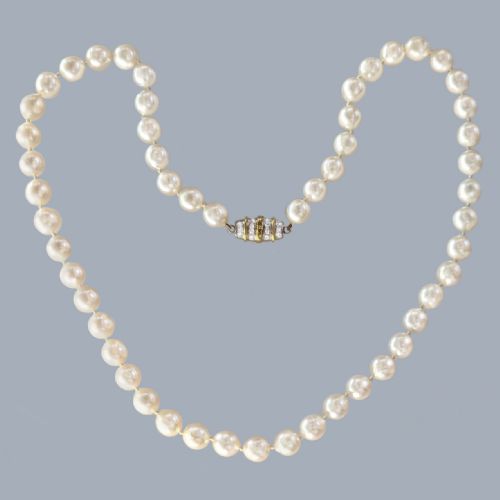
The most common examples on this page date from the 1950s and 1960s, typically presenting cultured pearls paired with secure gold or white gold clasps. Pieces span multiple eras, including Victorian, Edwardian, and Art Deco designs.
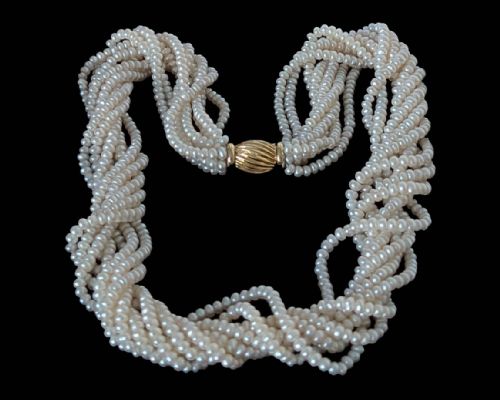
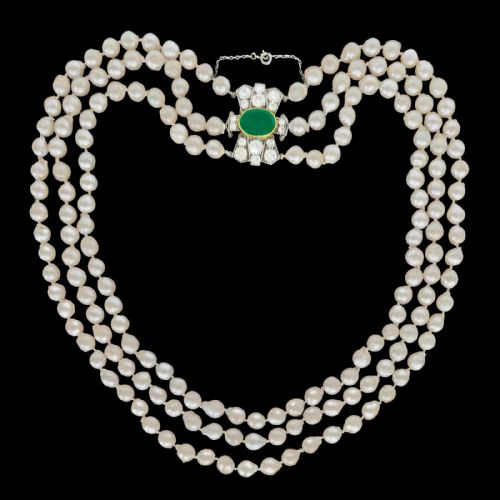
Makers and designers incorporated varied configurations such as double, triple, and multi-strand rope lengths. Alongside classic round pearls, selections include seed pearls and freshwater variations.
How they were made
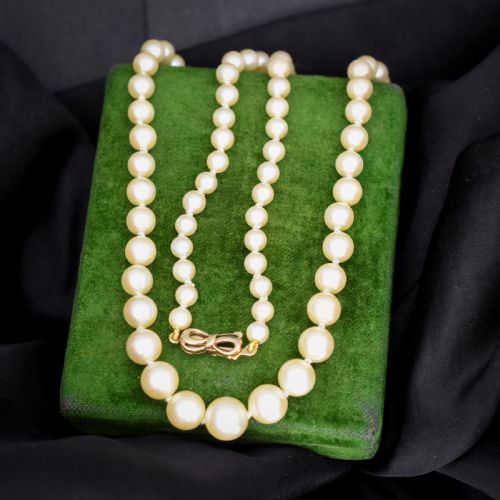
Craftsmen built these pieces using cultured or natural saltwater and freshwater pearls, frequently stringing them as graduated or uniform lengths. Silk or specialised thread secured each pearl with individual hand-knotted intervals to prevent loss.
Clasps served as functional works of art, fashioned from nine-carat, fourteen-carat, and eighteen-carat yellow or white gold, alongside silver settings. Goldsmiths embellished these mountings with diamonds, sapphires, rubies, emeralds, jadeite, and turquoise.
Listings feature periods spanning from the Victorian era through the 1960s, utilising white gold, yellow gold, and silver.
What varies in quality
Quality rests primarily on the lustre, skin surface, and matching of the pearls themselves, alongside the complexity of the clasp. Superior strands display deep orient and even nacre across every pearl.
The metalwork and gemstone selection of the clasp distinguish standard pieces from high-end examples. Intricate platinum or white gold mountings set with certified diamonds and fine coloured gemstones elevate the piece significantly.
Mikimoto·Cropp And Farr
The White Pearl Strand Glossary
- Cultured pearl
- A pearl created by oyster farmers who insert a nucleus into the mollusc to encourage nacre formation. These form the majority of mid-century strands found in collections today.
- Graduated
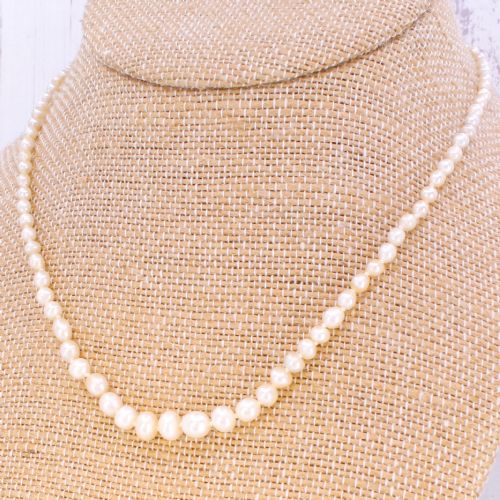
- A design where pearls increase in size progressively from the clasp towards the centre front. This traditional arrangement ensures a balanced drape around the neck.
- Nacre
- The crystalline substance secreted by oysters that forms the outer layer of a pearl. Thick nacre provides deep lustre and longevity.
- Seed pearl
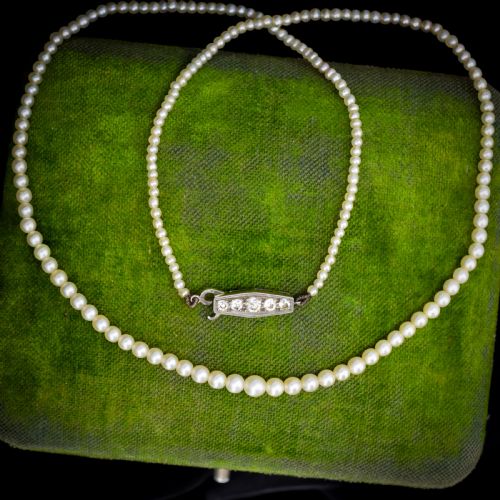
- A tiny, naturally occurring small pearl measuring under two millimetres. These are often used in multi-strand Victorian and Edwardian cluster designs.
- Rope
- An extra-long necklace measuring over forty-five inches in length. This versatile style can be doubled or knotted.
White Pearl Strand: Frequently Asked Questions
How should I store a pearl strand?
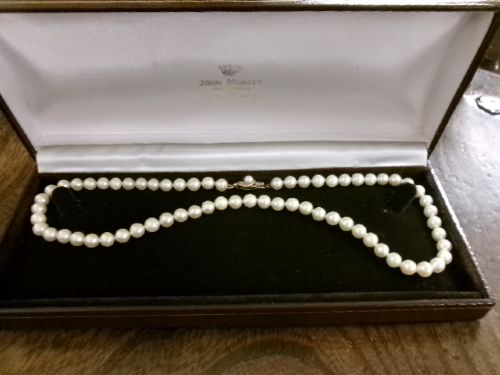
Store your pearls flat in a lined jewellery box away from other pieces to prevent scratching. Keep them separate from cosmetics, perfumes, and hairsprays which can dull the delicate nacre over time.
Avoid hanging necklaces for long periods, as this stretches the silk thread. Periodic professional re-stringing ensures the knots remain secure between each pearl.
Can I wear a pearl necklace daily?
Pearls are softer than diamonds or precious metals, requiring a degree of care during regular wear. Putting them on last after applying makeup helps protect their natural lustre.
Wiping the pearls gently with a soft damp cloth after wearing removes skin oils and residues. With mindful handling, a sturdy multi-strand or single row suits frequent rotation.
How do I identify Art Deco pearl clasps?
Art Deco clasps often feature geometric motifs, platinum or white gold settings, and calibre-cut gemstones. Calibre cutting shapes coloured stones like sapphires or emeralds to fit tight architectural channels.
These mechanical box clasps frequently incorporate millegrain edges and old-cut diamonds. They sit flush against the back of the neck or serve as a decorative side feature.
What is the difference between saltwater and freshwater pearls?
Saltwater pearls, including Akoya and Tahitian varieties, typically grow in marine oysters and exhibit sharp, mirror-like lustre. Freshwater pearls develop in mussels and often display organic, slightly off-round shapes with softer sheens.
Both types appear across vintage jewellery, with saltwater examples traditionally commanding higher esteem for their uniform roundness and brilliance.