

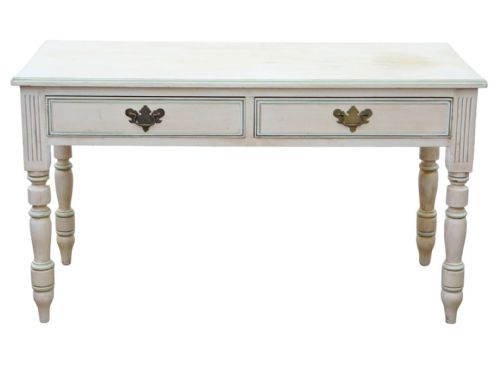


White Painted Pine Table
These white painted pine table pieces offer genuine utility and regional character, built from solid wood and finished in surface coats that buyers prize for rustic interiors.
White Painted Pine Table
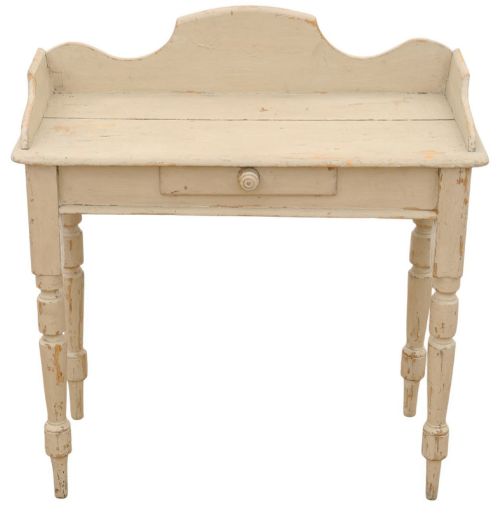
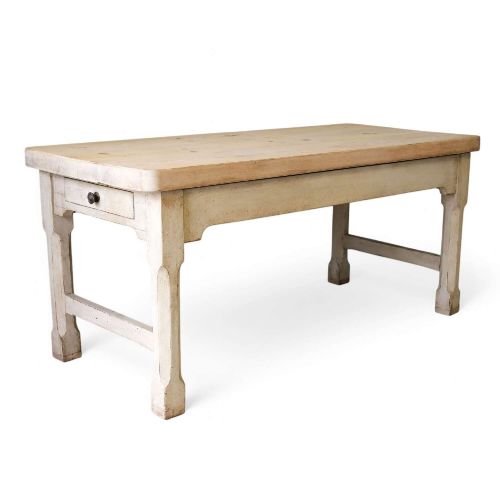
A white painted pine table brings straightforward utility and regional character into a room, drawing on forms made for work, dining, and storage. When searching for a white painted pine table, buyers most often encounter 19th-century and Victorian examples alongside early 20th-century Swedish, English, and French country pieces.
The selection ranges from large kitchen preparation tables and work tables to smaller side tables, writing desks, and occasional tables. Many display practical additions such as drawers, drop leaves, or potboards beneath.
Origins stretch across English, Swedish, Hungarian, and French workshops, reflecting both utilitarian domestic use and shop fittings. These forms suit modern kitchens, hallways, and living spaces where painted wooden surfaces provide a softened, lived-in aesthetic.
How they were made
Makers constructed these pieces using solid pine timber, selected for its workability and strength in everyday furniture. Surfaces received coats of paint, frequently applied in multiple layers over decades of use, creating the characteristic worn finishes seen today.
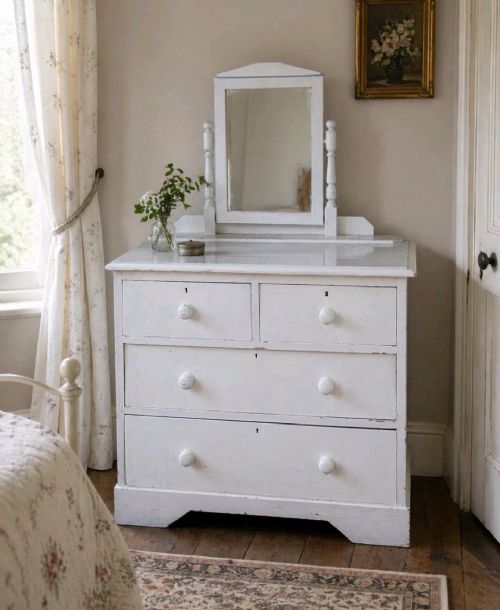
Certain pieces incorporate additional materials such as brass fittings, metal details, or marble tops for enhanced function and durability. Joinery methods relied on traditional carpentry suitable for robust tables, dressers, and workbenches.
Listings feature 19th-century and Victorian pieces alongside early 20th-century items, constructed primarily from solid pine with painted finishes, marble, and brass.
What varies in quality
Quality in these pieces rests upon the integrity of the original construction and the character of the surface finish. Tables built with solid proportions and substantial tops stand apart from lighter forms.
The nature of the paint layer dictates much of the visual appeal. Original or early layers showing natural wear hold greater interest than flat, modern re-paintings, as patination tells the history of the object.
The White Painted Pine Table Glossary
- Prep table
- A sturdy work table historically used in kitchens or sculleries for food preparation. These pieces typically feature heavy pine tops and robust frames designed for daily labour.
- Gateleg table
- A table with hinged drop leaves supported by swing-out legs that pivot like a gate. This construction allows the surface area to expand or contract according to space.
- Potboard
- An open slatted lower shelf fitted beneath a dresser base or table. It was originally intended for storing heavy pots, pans, and earthenware.
- Drop-leaf
- A hinged table leaf that folds down when not in use. It provides flexibility in smaller rooms by reducing the footprint of the furniture.
- Patina
- The surface texture and coloration developed by wood and paint over long periods of handling and use. It serves as an indicator of age and history.
White Painted Pine Table: Frequently Asked Questions
Where were these tables used?
These tables served primarily utilitarian roles in domestic kitchens, sculleries, and country houses. They functioned as surfaces for food preparation, daily dining, and general household tasks.
Over time, many migrated from working spaces into more formal rooms as interior tastes shifted toward country house and rustic styles.
How do I clean a painted pine table?
Maintain the surface by dusting regularly with a soft, dry cloth to prevent dirt accumulation. Avoid harsh chemical cleaners that can strip or soften historic paint layers.
For routine care, a slightly damp cloth followed by immediate drying preserves both the pine timber and the character of the finish.
Are these tables suitable for daily dining?
Solid pine construction provides the sturdiness required for everyday use in kitchens and dining rooms. Their robust frames handle regular seating and family meals without difficulty.
Consider the height and leg clearance of specific work or prep tables to ensure comfortable seating arrangements for daily dining.
How can I tell the age of the paint?
Examine the surface for multiple underlying layers, craquelure, and natural wear around edges where hands and chairs made contact. Historic paint often shows subtle variations in sheen and texture.
Later repainting typically presents a uniform thickness and lacks the integration with the underlying pine grain found in older finishes.