


White Marble Top Credenza
A white marble top credenza brings weight and cold polish to a room, pairing dense timber with heavy stone.
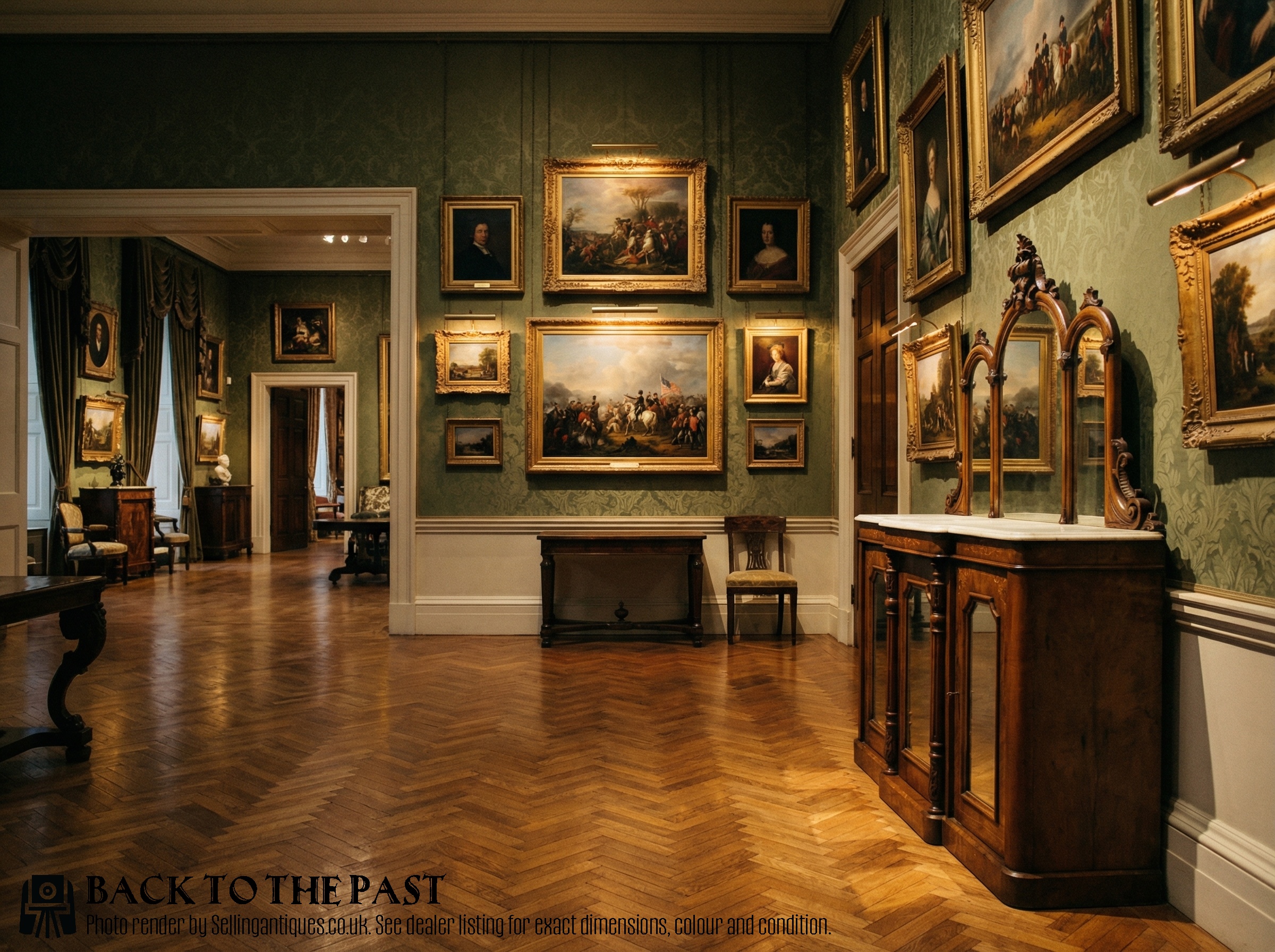
White Marble Top Credenza
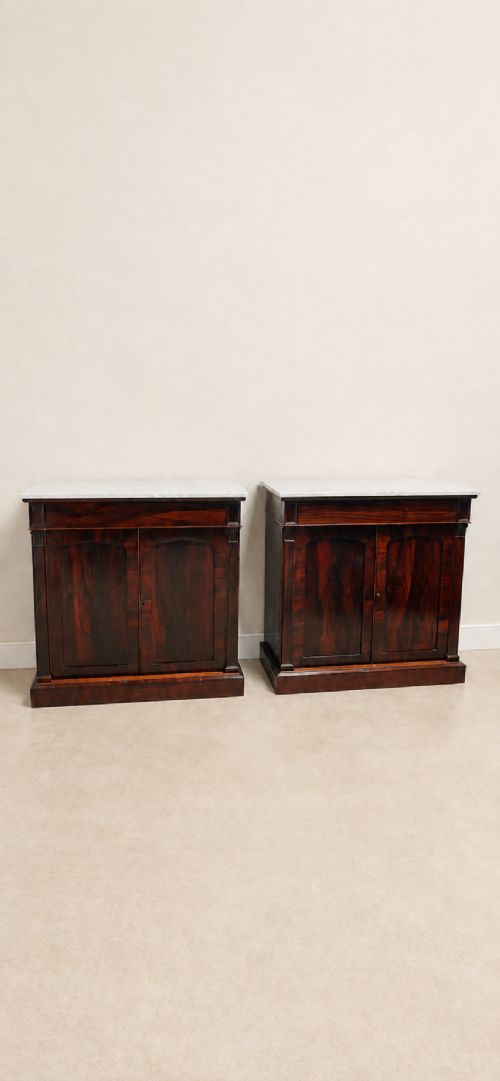
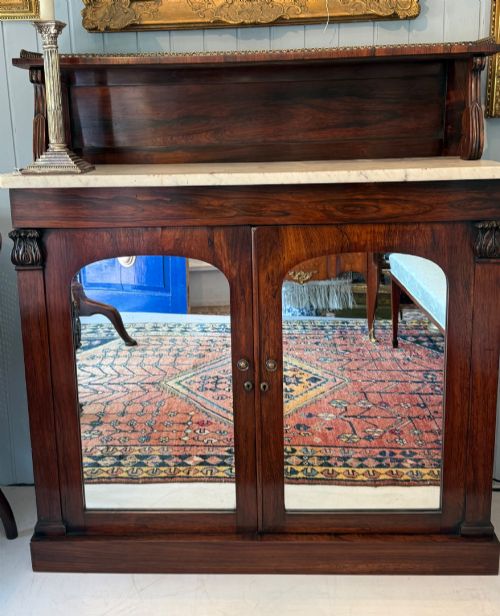
When you search for a white marble top credenza, you look at low timber cabinets built to anchor a dining room or parlour. The pieces found here span Victorian burr walnut and mahogany, French cabinets, and Regency rosewood side cabinets.
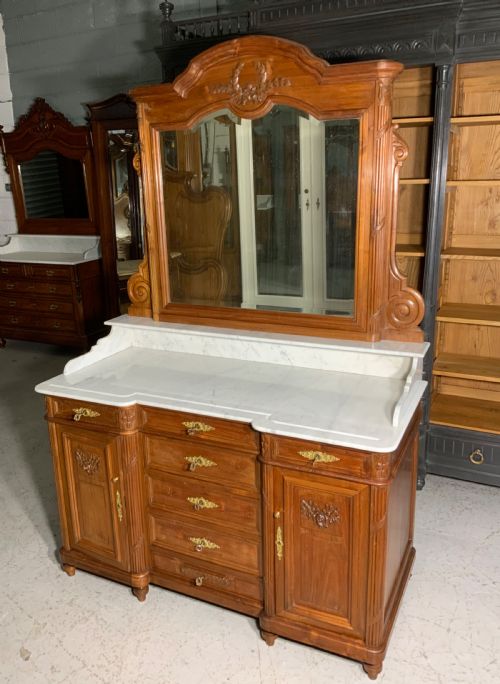
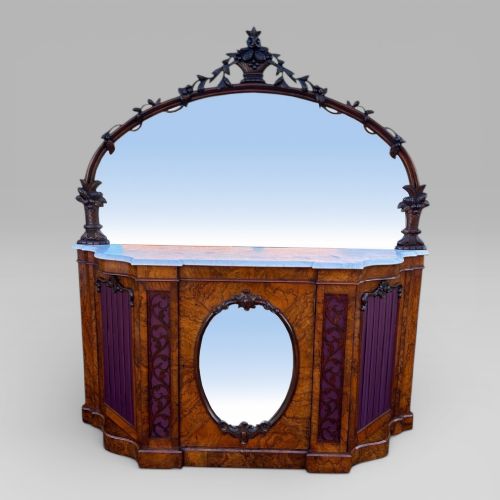
Most examples you meet on this page take the form of Victorian credenzas and sideboards featuring heavy figured walnut or mahogany, often paired with mirror backs and carved details. Alongside these sit French washstands and chiffoniers that share the heavy stone surface.
The stone itself defines the group, appearing as slabs of white marble or Carrara marble fitted neatly to the timber carcass. These low storage pieces combine enclosed cabinet space with a flat stone surface designed to hold display items.
Materials and Construction
The carcases rely on dense timbers such as mahogany, walnut, burr walnut, and rosewood, often enhanced with marquetry inlay or French ormolu mounts and brass details. Cabinetmakers selected figured veneers to cover curved doors and panel fronts.
Heavy white marble and Carrara marble slabs sit directly upon the timber frames, secured by their own weight or simple rebates. Glass panels appear in doors and mirror backs rise behind the stone surfaces on taller Victorian examples.
White Marble Top Credenza Retail Price Guide 2026
Typical asking prices for white marble top credenza among the pieces listed under this phrase on Sellingantiques today, from the lower quarter to the upper quarter. They describe what is for sale here now, not the wider market.
Heavy marble slabs meant nineteenth-century delivery men required strong tea and sturdy backs to hoist these credenzas up parlour stairs.
Distinguishing Quality
Quality rests in the selection of timber veneers and the crispness of the carved ornamentation on the walnut and mahogany carcases. Figured burr walnut and intricate marquetry inlay separate finer parlour pieces from simpler utility cabinets.
The thickness and finish of the white marble top also mark the grade of the piece, alongside the integration of ormolu mounts, brass grilles, and fitted interior shelving.
The White Marble Top Credenza Glossary
- Credenza
- A low cabinet or sideboard used for display and storage, typically standing against a dining room wall. These pieces often feature glass doors and marble tops.
- Carrara Marble
- A type of white or blue-grey marble from Italy used extensively for furniture tops. It provides a cool, durable surface for serving or display.
- Burr Walnut
- Timber taken from the wart or growth on a walnut tree, yielding swirling grain patterns. Cabinetmakers sliced this wood into veneers for decorative cabinet doors.
- Ormolu
- Gilded bronze used for decorative mounts on furniture. Makers applied these metal fittings to corners, feet, and friezes.
- Marquetry
- Inlaid wood patterns forming pictures or geometric designs on the surface of a cabinet. Craftsmen used contrasting timbers to achieve tonal depth.
White Marble Top Credenza: Frequently Asked Questions
What is a white marble top credenza?
A white marble top credenza is a low timber storage cabinet fitted with a heavy stone slab on the upper surface. These pieces combine enclosed shelving with a solid stone top.
They appear across Victorian, Regency, and French styles, utilising woods like walnut, mahogany, and rosewood.
How were these credenzas used?
Victorian households used these low cabinets in dining rooms and parlours to store silver, linen, and glassware. The stone surface provided a sturdy table for serving food or displaying decorative objects.
Today, they function as sideboards in dining spaces or media consoles in living rooms.
How do I care for the marble top?
White marble requires gentle cleaning with a damp cloth and mild soap to avoid staining the porous stone. Acidic liquids like wine or lemon juice should be wiped away immediately.
Polishing the stone helps maintain its smooth finish over decades of use.
How do I tell Victorian from Regency pieces?
Regency pieces often display cleaner classical lines with rosewood and brass inlay, reflecting earlier 19th-century tastes. Victorian examples tend to feature heavier carved walnut, mirror backs, and serpentine fronts.
Examining the internal secondary timbers and construction methods helps confirm the era.