


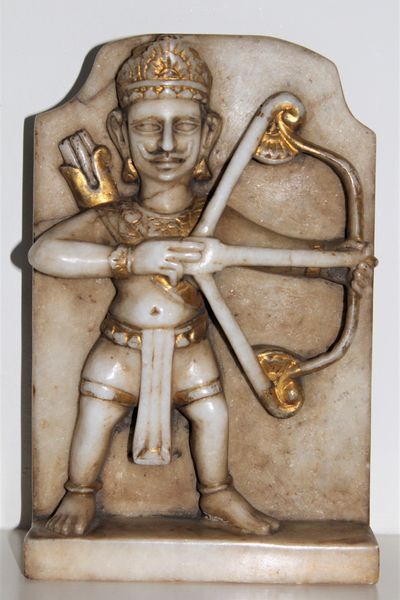

White Marble Plaque
These white marble plaque examples bring classical sculpture indoors, offering carved profiles, memorials and mythological reliefs for the wall.
White Marble Plaque
A white marble plaque takes the form of a wall-mounted relief sculpture, often circular or rectangular in format, depicting human profiles, historical figures or mythological scenes. Buyers seeking a white marble plaque encounter subjects ranging from Roman emperors and literary figures like Virgil and Dante to memorial carvings and equestrian studies.
The pieces appearing here span from the eighteenth century through the Victorian period and Edwardian era, showing influences from Neoclassical and Victorian Classical Revival styles. Makers from various European workshops and traditions produced these works, using both pure white stone and composite materials to achieve classical depth.
Materials and construction methods
Carvers shaped these works primarily from white marble and Carrara marble, using chisels and fine abrasives to achieve smooth facial contours and crisp drapery. Some later or alternative pieces utilise marble dust bound in plaster, capturing the dense weight and appearance of carved stone through moulded relief.
Mounting often involved framing the stone within dark wood surrounds to contrast the pale surface, while select details received applications of gold leaf for emphasis. Sculptors worked directly from classical precedents, translating antique coins, busts and larger reliefs into portable wall formats.
One listed plaque serves as an Edwardian pet memorial, proving that even Victorian sentimentality occasionally needed a carved stone tribute.
Distinguishing quality in carving
Quality rests upon the depth of the relief and the anatomical precision of the carving, where master sculptors rendered hair, expression and musculature with clarity rather than soft, generalized contours. Pieces originating from documented workshops or bearing artist signatures demonstrate a higher level of artistic ambition in the profile rendering.
The choice of material similarly dictates the calibre of the piece, with flawless fine-grained statuary marble standing apart from composite marble dust mixtures. The subtlety of the polish across the background versus the matte finish of the carved subject reveals the sculptor's hand.
Thorvalsen Workshop·Kasper Hendrik Roskam
The White Marble Plaque Glossary
- Bas-relief
- A sculptural technique where the figures project only slightly from the flat background. This shallow depth creates a distinct shadow profile ideal for wall plaques.
- Neoclassical
- A Western cultural movement drawing inspiration from the art and culture of classical antiquity. It heavily influenced the subject matter and composition of nineteenth-century relief sculptures.
- Profile
- A view of a head or portrait from the side rather than the front. Many classical wall plaques utilise this format to echo ancient Roman coins and cameos.
- Relief
- A wall-mounted sculpture in which the sculpted elements remain attached to a solid background of the same material. It bridges the gap between two-dimensional painting and three-dimensional statuary.
White Marble Plaque: Frequently Asked Questions
How were marble plaques displayed historically?
These pieces were designed to hang directly on interior walls, often arranged alongside paintings or collections of classical antiquities in studies and libraries.
Their substantial weight required secure wall fixings, and many featured wooden backings or frames to distribute the load evenly.
What subjects appear on these plaques?
Common subjects include classical literary figures, Roman emperors, mythological horse riders and historical portraits in profile.
Memorial plaques and religious or traditional Indian subjects also appear across the nineteenth-century examples.
How do I distinguish marble from marble dust?
Genuine marble displays natural crystalline veining and feels cold to the touch, possessing the natural hardness of mined stone.
Compositions made from marble dust and plaster often reveal a uniform texture without natural veining under close inspection.
How should I clean a marble plaque?
Dust the surface gently with a soft, dry brush or microfiber cloth to prevent dirt accumulation within the carved crevices.
Avoid using water, chemical cleaners or abrasive materials, which can damage the porous surface and historical finish.