


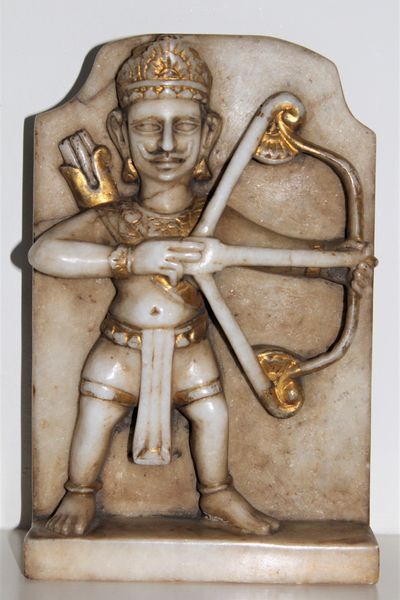

Carved Marble Relief
These carved marble relief pieces bring neoclassical elegance and classical portraiture directly into your interior.

Carved Marble Relief
A carved marble relief presents sculpted figures, profiles, and heraldic crests raised from a flat stone background, capturing centuries of classical and neoclassical design. When you search for carved marble relief, you encounter wall plaques, framed panels, and sculptural inserts that range from Italian Grand Tour souvenirs to monumental crests.
The selections available here lean heavily towards nineteenth-century interpretations alongside earlier seventeenth and eighteenth-century examples. You will frequently find profile portraits of Roman emperors, literary figures like Virgil and Dante, and mythological scenes rendered in white, sienna, or breccia marble.
Beyond standalone wall plaques, the forms extend to integrated architectural elements and cabinetry featuring inset stone panels. These pieces reflect diverse cultural traditions, encompassing European classical revivals as well as Indian traditional motifs.
Materials and construction
These works rely on various grades of marble, including white marble, sienna marble, and breccia marble, occasionally paired with supporting mounts of walnut, dark wood, or slate. Artisans shaped these dense stones using chisels and drills to create varying depths of bas-relief and high-relief carving.
Surviving examples demonstrate meticulous hand-finishing, from the smooth contours of profile portraits to the intricate detailing of crests and animal figures like the St Mark's lion.
Rome proved irresistible to travellers, leaving us with centuries of emperors carved in stone to hang above modern sideboards.
Judging quality in stone relief
The integration of the relief into its surrounding frame or backing board, whether carved walnut or slate, indicates the overall standard of craftsmanship and original intent.
Thorvalsen Workshop·Kasper Hendrik Roskam
The Carved Marble Relief Glossary
- Relief
- A sculptural technique where the sculpted elements remain attached to a solid background of the same material. The degree of projection determines whether it is classed as low relief or high relief.
- Grand Tour
- A cultural journey of Europe undertaken by upper-class young European men of the eighteenth and nineteenth centuries. Souvenirs from these trips frequently included small carved marble plaques and portraits.
- Breccia marble
- A composite stone made of broken fragments of rock cemented together by a fine-grained matrix. It produces striking, multicoloured patterns highly valued in decorative panels.
- Sienna marble
- A yellow-brown Italian marble marked with dark purple or black veins. It provides a warm, dramatic background for carved reliefs and wall panels.
- Bas-relief
- A form of projection where the design stands out only slightly from the background plane. It requires immense skill to achieve a sense of depth within a shallow profile.
Carved Marble Relief: Frequently Asked Questions
How were carved marble relief plaques displayed originally?
Historically, these plaques were mounted directly onto interior walls as decorative art or set into wooden cabinetry and architectural boiserie. Wealthy collectors displayed them in galleries and libraries to signal their classical learning and taste.
Today, they function brilliantly as focal points in both traditional and contemporary interiors, mounted securely on walls or integrated into existing shelving.
What is the difference between white marble and sienna marble pieces?
White marble pieces typically emphasise classical form, shadow, and pure sculptural detail, often mirroring ancient Roman and Greek statuary. They were favoured for realistic portraiture and mythological scenes.
Sienna marble introduces rich yellow and brown tones with dark veining, turning the background itself into a decorative feature. These coloured stones were particularly popular during the Grand Tour period.
How do I care for a marble relief?
Dust the surface regularly with a soft, dry cloth to prevent particulate buildup in the carved recesses. Avoid using chemical cleaners, acidic substances, or excess water, which can damage the stone surface and any wooden backing.
Ensure the piece is mounted securely to wall studs, as marble and slate carry considerable weight that requires proper structural support.
How can I tell an older relief from a later copy?
Examine the tool marks and the crispness of the carving under natural light, noting the natural weathering and patination acquired over centuries. Earlier works often display hand-chiseled irregularities and subtle wear on high points.
Context also helps, as materials like walnut backings, slate mounts, and specific historical subjects align closely with nineteenth-century and earlier manufacturing techniques.