



Carved Coat of Arms
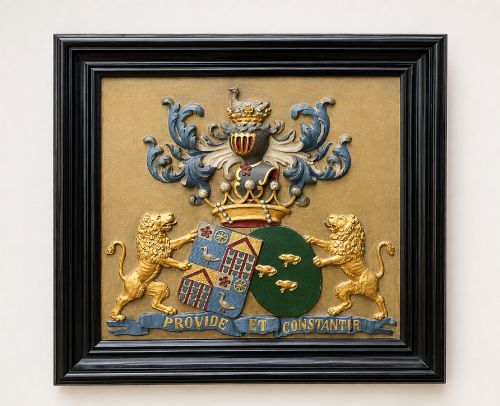
These carved coat of arms pieces bring heraldic history into domestic interiors through centuries of woodworking tradition.

Carved Coat of Arms
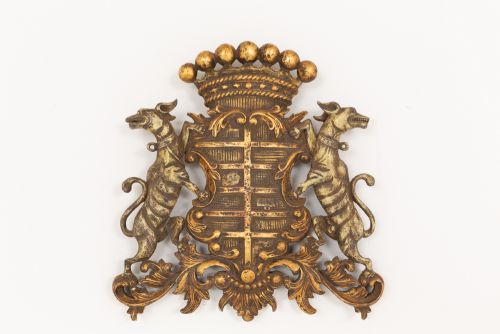
A carved coat of arms represents family lineage, civic pride or royal identity through traditional heraldic symbols rendered in timber, metal and stone. You will encounter these most frequently as wall plaques, shields and fire screens from the nineteenth and seventeenth centuries.
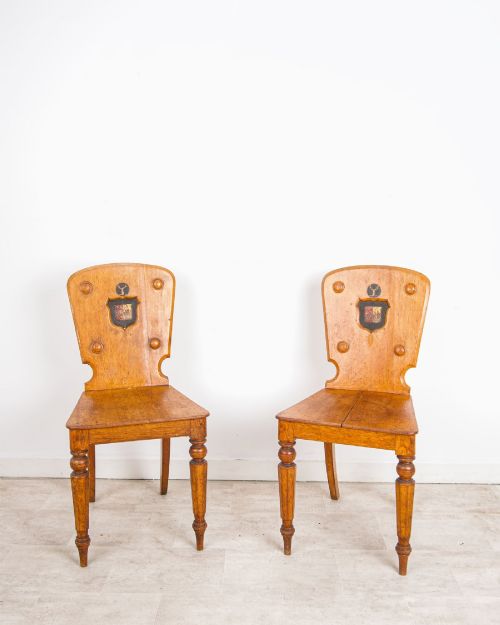
Makers integrated armorial bearings into functional household objects such as hall chairs, console tables, fire screens and hall cupboards. These pieces bridge the gap between fine art and utilitarian furniture, bearing the crests of British, Dutch, French and Italian families.
Oak, brass and polychrome paint
Oak and mahogany served as the primary timbers for substantial armorial panels, chairs and fire screens, allowing deep relief carving of lions, unicorns and heraldic shields. Artisans also utilised limewood, walnut and hardwood for intricate crests and miniature panels.
Metalwork played a key role, with embossed and chased brass incorporated into frames and fire screens alongside carved wood elements. Polychrome paint and gold leaf frequently highlighted specific heraldic tinctures on nineteenth century and earlier pieces.
Unicorns and griffins frequently stand guard beside the family shield, keeping a watchful eye over the ancestral drawing room.
Depth of carving and heraldic precision
Quality rests upon the crispness and depth of the chisel work, distinguishing sharp, anatomically convincing beasts and mantling from soft, superficial moulding. Superior panels show confident undercut details in the foliage and supporters.
Historical and heraldic accuracy separates ordinary decorative items from significant armorial pieces. Pieces bearing specific family attributions, documented lineage or precise execution in materials like Italian marble command greater attention from collectors.
Van Rijckevorsel and Verheijen·Pugin Design
The Carved Coat of Arms Glossary
- Armorial
- Relating to heraldry or armorial bearings. This term describes items decorated with family crests or coats of arms.
- Crest
- The component of a heraldic display situated on top of the helmet in a full achievement. People often use this word loosely to describe an entire coat of arms.
- Mantling
- The ornamental foliage depicted draping from the helmet around the shield in a coat of arms. It originates from the cloth hung over helms to protect against the sun.
- Chased
- Metal ornamented by hammering or punching from the front to create a raised design. This technique appears on brass frames and screens surrounding wooden or metal crests.
- Polychrome
- Painted in several colours. This finish appears on historical wooden crests to denote accurate heraldic tinctures.
Carved Coat of Arms: Frequently Asked Questions
How were carved coats of arms displayed?
Owners mounted armorial plaques directly onto walls or incorporated them into architectural panelling within country houses and civic buildings. They served to declare lineage and status to visitors entering the hall.
Smaller panels and framed miniatures hung in private rooms, while functional items like fire screens placed heraldic imagery near the hearth.
What timber is most common?
Oak appears most frequently in these listings, utilised for heavy wall plaques, hall chairs and structural panels. Its grain and durability suited deep relief carving.
Mahogany, walnut and limewood also feature, particularly in nineteenth century items and detailed smaller shields.
How do I date a wooden crest?
Dating relies on stylistic clues, tool marks and the timber species used in construction. Seventeenth century pieces often display heavier proportions and distinct regional carving styles compared to Victorian revivals.
Inscribed dates or documented family alliances inscribed on the woodwork provide direct chronological markers.
Can I identify the family from the arms?
Many pieces retain specific family names or mottoes within the carving, such as Seton or Maclellan. Heraldic dictionaries help match the charges on the shield to historical families.
Civic pieces display town or city arms, like the City of Paris or Colchester.