
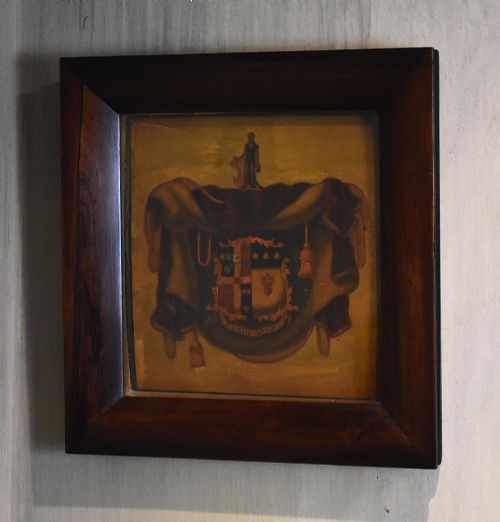


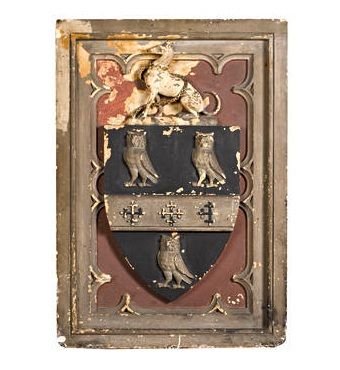
Antique Armorial Shield
An antique armorial shield carries the carved timber and painted crests of old families, bringing centuries of heraldic history straight to your walls.
Antique Armorial Shield
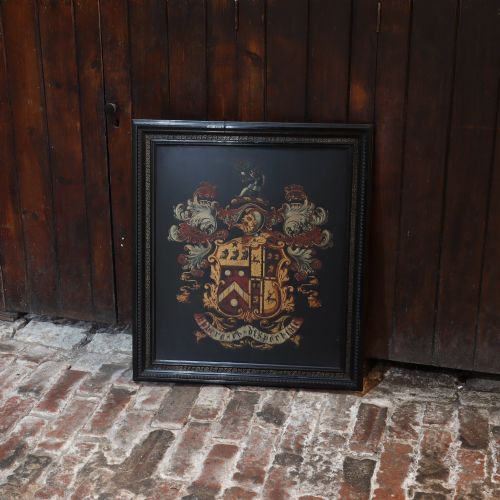
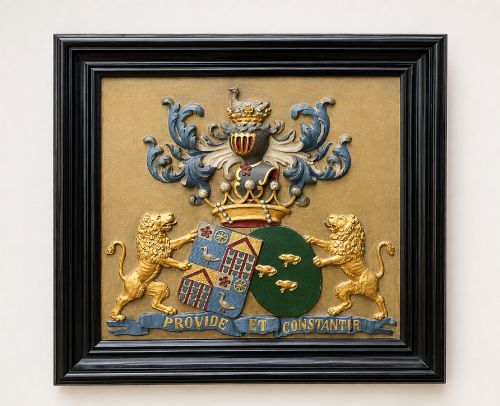
An antique armorial shield encompasses wall plaques, carved panels, and painted heraldic devices spanning from the seventeenth century through to the mid-twentieth century. Buyers searching this phrase meet everything from Regency coach panels and Victorian Gothic wall plaques to carved oak stair elements and painted marriage plaques.
The materials and forms vary widely between domestic decoration and architectural salvage, with wooden shields, painted glass, and carved panels dominating the available selections. Pieces range from large nineteenth-century heraldic heralds representing specific family lines to smaller twentieth-century wall shields and cast metal plaques.
Origins stretch across Britain, the Netherlands, Italy, and Germany, including specific regional pieces like Welsh family coats of arms and Scottish painted coach panels. These items function primarily as wall art and architectural reliefs, preserving distinct family lineages and historical civic symbols.
Materials and construction methods
Carvers shaped many armorial shields from solid hardwoods like oak, utilising deep relief carving techniques to render the rampant lions, cherubs, and intricate crests. Workshops frequently applied polychrome paint or pigments directly onto the carved wood, plaster, or fabric flags to highlight the specific tinctures of the coat of arms.
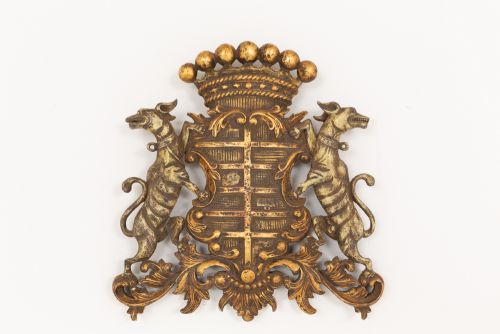
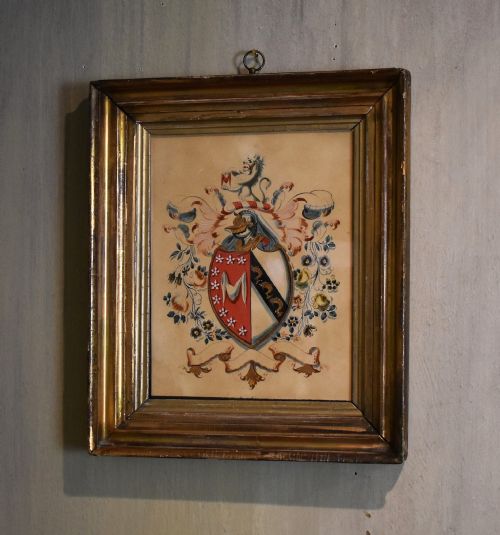
Painters worked on diverse surfaces including glass, canvas, and wooden panels, employing oils and watercolours to depict detailed heraldic devices and marriage panels. Metalworkers also contributed cast iron, bronze, and brass elements, sometimes inset with wooden crests or framed for wall display.
Object forms range from architectural salvage wall plaques and marriage panels to embroidered flag bearer shields and coach panels.
Distinctions in quality
The standard of carving and the precision of the heraldic painting set the finer panels apart from simpler decorative items. Master carvers achieved deep, crisp relief work with expressive detail in figures and scrollwork, whereas lesser examples show softer, shallower execution.
Provenance and documentation strongly influence the standing of a piece, particularly when specific noble families, makers, or historic locations are identified. Original pigments and untouched historic surfaces retain greater artistic integrity than heavily restored or later repainted shields.
Edward Pearce
The Antique Armorial Shield Glossary
- Armorial
- Relating to heraldry or armorial bearings. These are the hereditary designs displayed on shields and coats of arms.
- Coach panel
- A wooden panel painted with a family crest or coat of arms. These were originally mounted on the sides of horse-drawn carriages.
- Polychrome
- Painted, printed, or decorated in several colours. This finish brings out the traditional tinctures specified in heraldry.
- Heraldic device
- A symbolic design on a shield or coat of arms used to identify a family or institution. Such devices follow strict rules of heraldic composition.
- Relief
- A sculptural technique where the sculpted elements remain attached to a solid background of the same material. High relief projects significantly from the backing board.
Antique Armorial Shield: Frequently Asked Questions
What is an antique armorial shield?
An antique armorial shield is a decorative or architectural wall piece displaying a family coat of arms, crest, or heraldic device. These items were produced across several centuries using carved wood, painted panels, or metal.
They serve primarily as wall art and historical display pieces, reflecting the genealogy and status of past families and institutions.
How were armorial shields used?
Historically, armorial shields and painted panels were displayed inside great halls, upon staircases, or mounted on carriages to signify family lineage and authority. Some originated as marriage plaques or civic wall reliefs.
Today, collectors hang them as statement art pieces in studies, libraries, and living spaces to anchor historic interior schemes.
How do I date an armorial shield?
Dating relies on examining the wood species, carving style, pigment composition, and any associated inscriptions or family records. Seventeenth-century pieces often feature heavy oak and deep structural carving, while Victorian examples lean towards Gothic Revival or heraldic revival styles.
Backboards, framing methods, and signs of historical wear also provide vital clues to a piece's true age.
Are painted glass shields fragile?
Painted glass armorial crests require careful handling due to the delicate nature of historic glass and reverse-paint techniques. They need stable wall mounting away from direct sunlight and heavy vibrations to protect the pigment.
When properly secured, they offer a remarkably luminous and well-preserved alternative to wooden panels.