


Gilded Heraldic Crest
A gilded heraldic crest brings centuries of lineage and craft to a wall, offering rich coats of arms rendered in gold leaf, porcelain, and carved wood.
Gilded Heraldic Crest
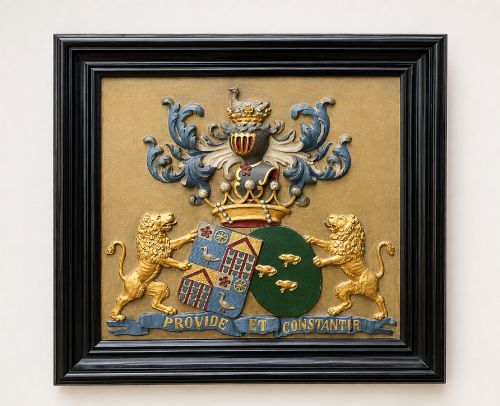
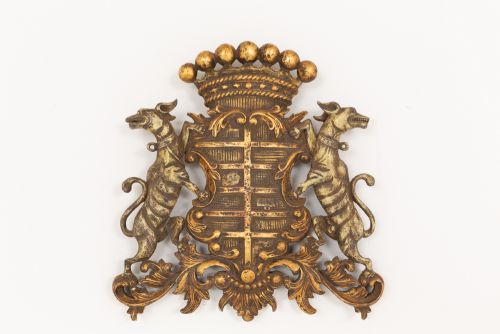
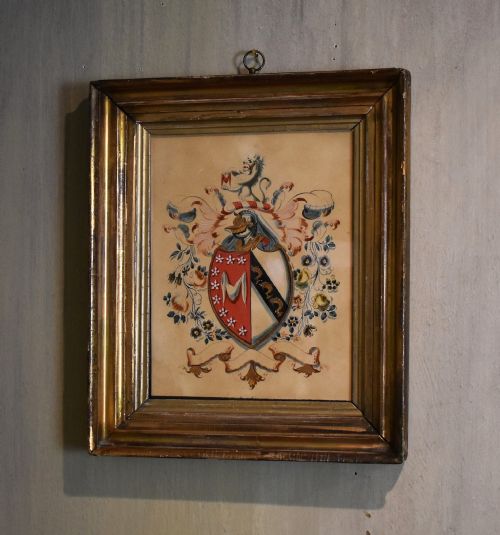
When searching for a gilded heraldic crest, buyers encounter a diverse range of armorial objects spanning wall plaques, painted glass, and porcelain tablewares. These pieces display heraldic devices, coats of arms, and family crests originating from the Georgian, Victorian, and Regency periods.
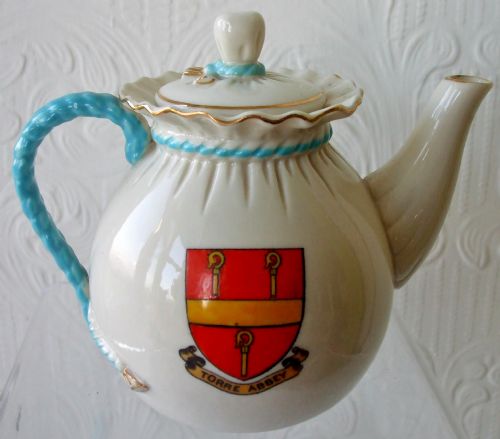
The selection on this page most frequently presents wall plaques and decorative panels alongside armorial porcelain, including cabinet plates, teapots, and jugs. Examples range from carved hardwood armorial shields to enamelled German roemers and nineteenth-century Dutch marriage plaques.
Originating across Britain, continental Europe, and South Africa, these objects reflect distinct regional styles including Baroque, Victorian Colonial, and German Historicism. Each piece records ancestral identity through painted, carved, or enamelled heraldic motifs.
How they were made
Makers utilised traditional techniques involving carved wood, gesso, and gold leaf to construct substantial wall plaques and armorial shields. Paint and enamel were applied directly to glass, canvas, and porcelain surfaces to render intricate heraldic colours and devices.
Porcelain items and cabinet plates were hand-painted and gilded in prominent potteries and factories, incorporating detailed armorial crests within the glaze. Cast iron and carved hardwood served for heavier architectural and railway plaques requiring durable relief work.
Listings feature items from the Georgian, Victorian, and Regency periods, constructed from porcelain, glass, carved wood, and cast iron.
What varies in quality
The refinement of the hand-painted armorial detail and the precision of the heraldic engraving set finer examples apart from simpler commercial wares. High-quality pieces display crisp linework in the enamel and gold leaf, accurately capturing the complex components of a coat of arms.
The integrity of the underlying material, whether porcelain, carved hardwood, or cast iron, dictates the longevity and physical presence of the object. Superior execution shows careful preservation of the original gilding and paintwork without heavy modern intervention.
Van Rijckevorsel and Verheijen·W.H. Goss·Chamberlain Worcester·Copeland Porcelain·Samson Of Paris
The Gilded Heraldic Crest Glossary
- Armorial
- Relating to heraldry or bearing a coat of arms. Armorial porcelain and shields display these formal hereditary symbols.
- Gilt
- Covered thinly with gold leaf or gold paint. Gilt decoration highlights the raised elements of a heraldic crest.
- Gesso
- A plaster mixture used as a base for moulding or painting. Gesso underpins the gilded relief details found on many period wall plaques.
- Historismus
- A nineteenth-century German revival style drawing on historical periods. Historismus roemers often feature enamelled heraldic motifs.
- Roemer
- A traditional Germanic drinking glass with a wide bowl and decorated stem. These vessels were frequently enamelled with armorial designs.
Gilded Heraldic Crest: Frequently Asked Questions
What is a heraldic crest?
A heraldic crest is a specific component of a coat of arms, traditionally displayed atop a helmet or shield to identify a family or institution.
Over time, these symbols were transferred to decorative panels, porcelain, and glassware as marks of lineage and status.
How were armorial porcelain pieces used?
Armorial plates, teapots, and tureens were commissioned by prominent families for daily dining or formal display within the home.
These ceramic items showcased the owner's coat of arms to guests during meals and gatherings.
Where should I hang a wall plaque?
Wall plaques and armorial shields require sturdy fixings due to materials like cast iron, carved hardwood, and heavy gesso.
They suit studies, libraries, and hallways where their traditional heraldic subjects complement period interiors.
How do I identify the period?
Period identification relies on examining the material, manufacturing technique, and stylistic markers such as Regency or Victorian design traits.
Pottery marks, painted styles, and framing methods also help narrow down the date of creation.