




Baroque Carved Wall Plaque
A baroque carved wall plaque brings the deep relief and dramatic movement of seventeenth and eighteenth century interiors directly onto your wall.
Baroque Carved Wall Plaque
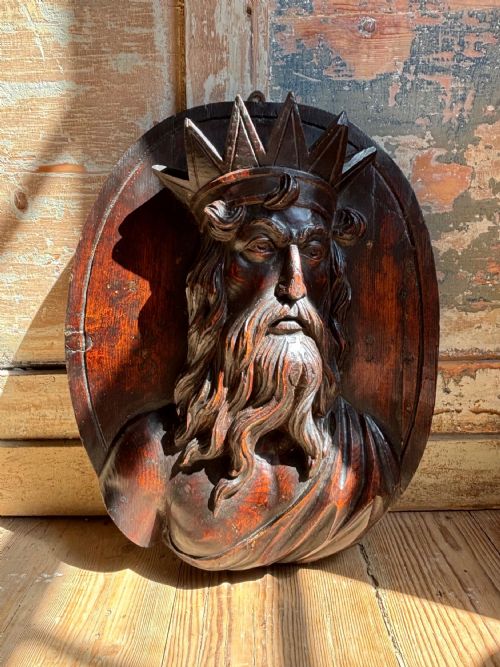
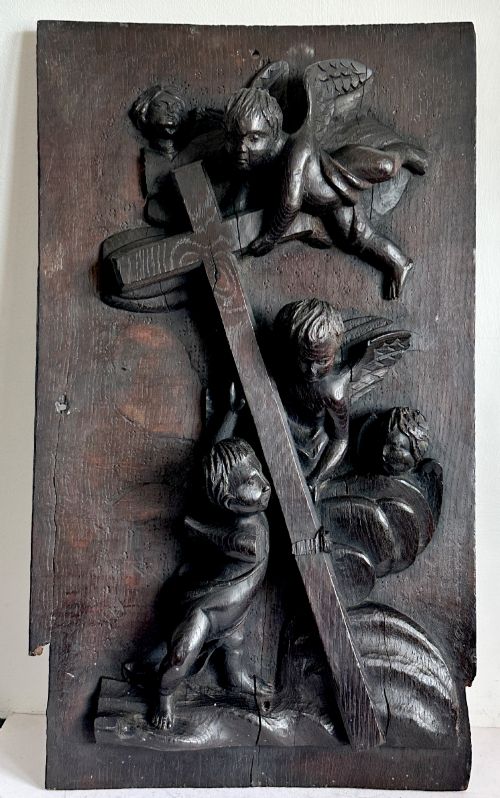
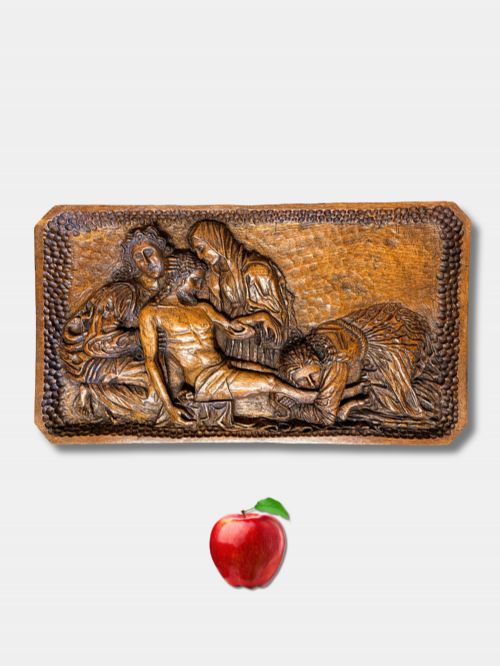
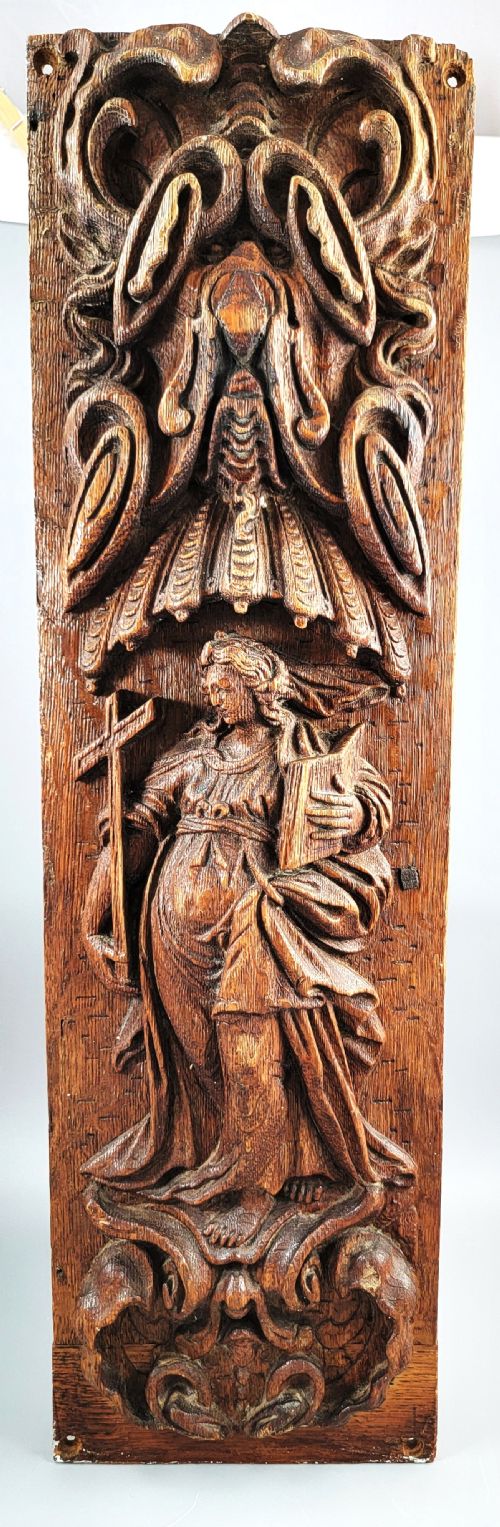
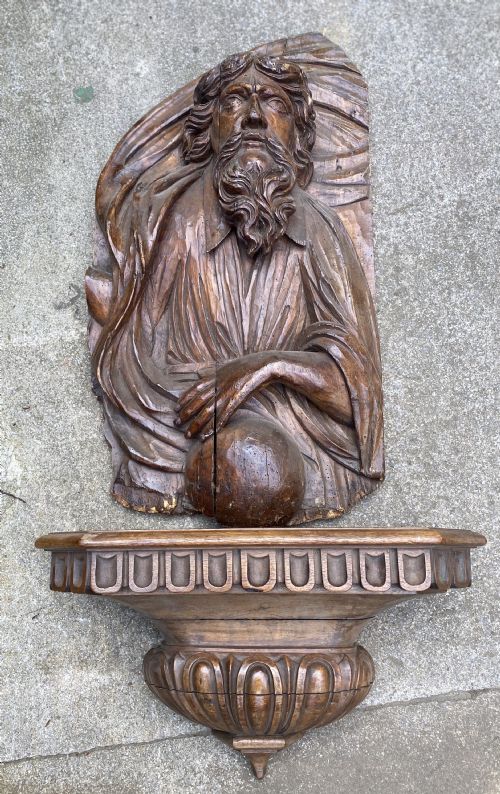
A baroque carved wall plaque encompasses monumental architectural salvage, religious wood carvings, and decorative panels dating from the seventeenth and eighteenth centuries. These heavy timber reliefs often depict figures such as Neptune, God the Father, or allegorical subjects like Faith.
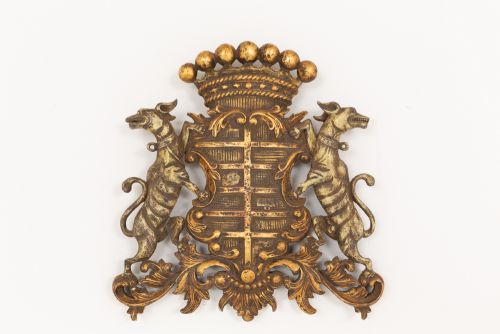
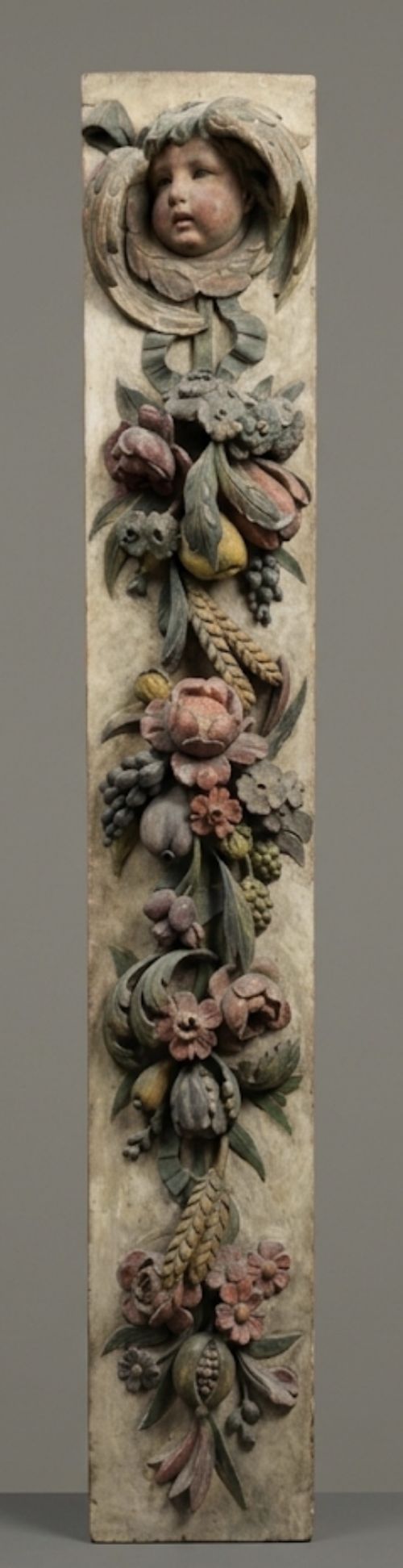
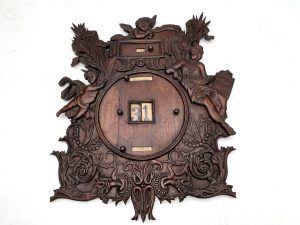
Most examples you encounter on this page are fashioned from oak, walnut, chestnut, or mixed hardwoods, frequently enhanced with polychrome paint or gold leaf. Forms range from armorial shields and calendar panels to pierced acanthus leaves and large figurative scenes.
Materials and construction methods
Carvers shaped these dense woods using hand chisels and gouges to achieve dramatic three-dimensional depth and undercut relief. Oak, walnut, and chestnut provided the stable, heavy substrates necessary for intricate sculptural work that endured across centuries.
Many surfaces received layers of gesso before being gilded with gold leaf or painted in rich polychrome pigments. Pierced work and high relief required exceptional joinery skills to prevent heavy timber panels from splitting as they aged.
Listings feature oak, walnut, chestnut, and hardwood panels spanning the seventeenth century through to nineteen hundred.
Distinguishing quality in wood relief
The integrity of the original wood surface and the preservation of early polychrome or gold leaf layers dictate the historical value. Pieces with minimal later intervention retain the crisp tool marks left by seventeenth and eighteenth century carvers.
The Baroque Carved Wall Plaque Glossary
- Baroque
- A European artistic style of the seventeenth and eighteenth centuries characterised by ornate detail, drama, and movement. This aesthetic defines the dynamic compositions seen on these wall panels.
- Polychrome
- Decorated in a variety of colours. Many older carved panels feature remnants of original painted finishes.
- Acanthus
- A classical leaf ornamentation heavily utilised in architectural carving. Pierced acanthus leaf panels are a recurring motif in seventeenth century woodwork.
- Armorial
- Relating to heraldry or coats of arms. Armorial shields carved in hardwood denote elite lineage and civic or domestic pride.
Baroque Carved Wall Plaque: Frequently Asked Questions
How do I hang a heavy wooden panel?
These dense oak and walnut carvings require robust wall anchors and professional mounting brackets secured directly into wall studs. Because many pieces are substantial in weight, standard picture wire is entirely unsuitable.
Consult a structural specialist if your plaque lacks integrated hanging points. Distributing the load evenly protects both the historic timber and your plaster walls.
Where should I place a wall plaque?
Position these substantial reliefs away from direct sunlight, heating vents, and damp environments to prevent the timber from warping or splitting. A stable interior climate preserves the ancient wood and any surviving gesso.
Allow sufficient wall space around the carving so the deep shadows and three-dimensional relief can be fully appreciated without visual clutter.
How do I clean an antique wood carving?
Dust the crevices gently with a dry, soft-bristled brush or an untreated microfiber cloth. Avoid commercial sprays, oils, or water, as moisture damages aged patinas and vulnerable polychrome surfaces.
Professional conservation is recommended if heavy grime obscures the detail. Aggressive cleaning can strip away centuries of accumulated character and historic finish.
How do I identify seventeenth century work?
Examine the reverse of the panel for hand- adzed tool marks, shrinkage cracks appropriate to age, and early peg construction. Seventeenth century pieces typically utilise heavy regional hardwoods like oak and chestnut.
Stylistic cues such as high relief drapery, deep undercutting, and specific religious iconography also point towards seventeenth and eighteenth century workshops.