





Pair Portrait Reliefs
Pair portrait reliefs are matched likenesses in high or low projection that bring historical figures and private sitters into domestic spaces.
Pair Portrait Reliefs
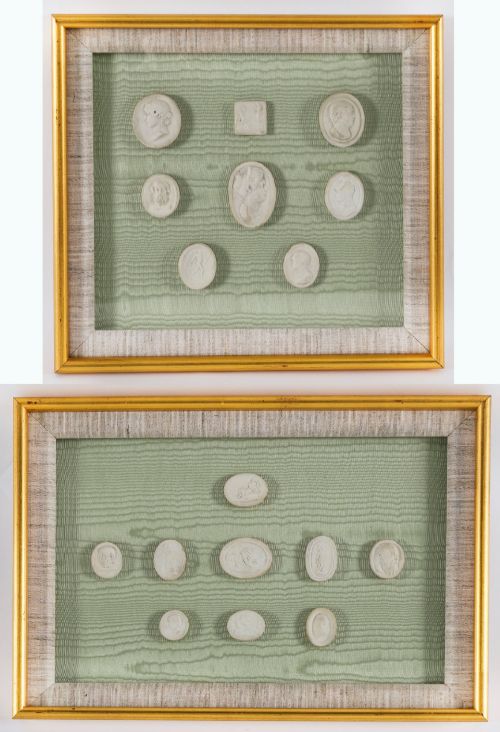
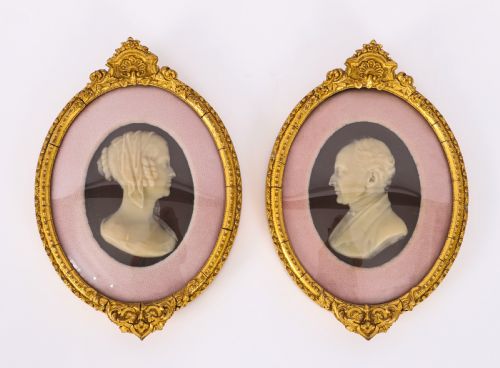
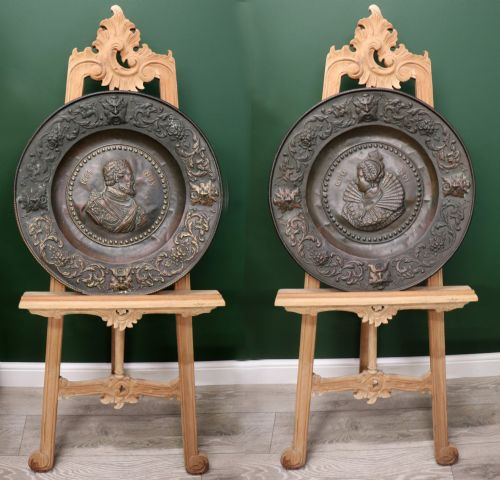
Pair portrait reliefs take many forms across these listings, appearing as framed wax profiles, carved marble roundels, and cast metal wall plaques. When buyers search for pair portrait reliefs, they find companion pieces depicting historical rulers, literary figures, or private couples intended for display together.
The materials span from delicate nineteenth-century plaster intaglios and moulded wax to heavy cast iron, copper, and carved mahogany. Most examples date from the nineteenth century, often reflecting Neoclassical tastes or Grand Tour souvenirs collected during European travels.
What varies in quality
The fineness of the carving or modeling dictates the success of a pair portrait reliefs. Superior examples display crisp facial profiles, clean lettering of sitter names, and sensitive handling of drapery and hair.
Material integration also separates tiers of production, seen in the harmony between the relief panel, its mounting, and the original turned wood or gilded frame.
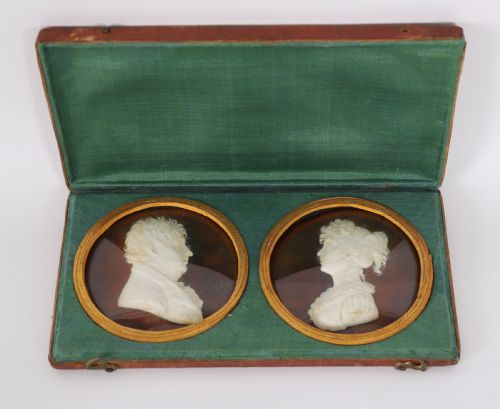
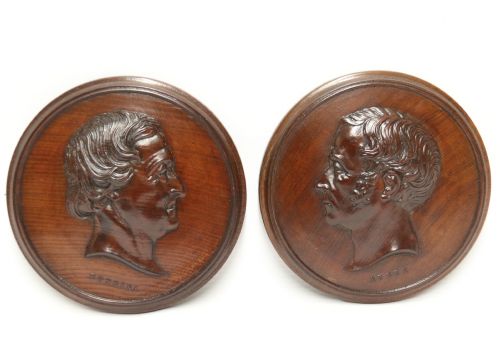
Napoleon and Marie-Louise peer across nineteenth-century French Empire roundels, keeping history alive in mahogany.
Sherwin and Cotton·Gustav Grohe·Kasper Hendrik Roskam
The Pair Portrait Reliefs Glossary
- Relief
- A sculptural technique where the figures project from a flat background. High relief stands out boldly, while low relief remains flatter.
- Intaglio
- A design carved into the material so the impression sinks below the surface rather than projecting outward. These are often seen in Grand Tour collections.
- Roundel
- A circular panel or plaque used for decorative artwork. They frequently house portrait profiles in wood, metal, or marble.
- Grand Tour
- A cultural journey of Europe undertaken by wealthy young men in the eighteenth and nineteenth centuries. Souvenirs included miniature portraits and marble carvings.
- Bas-relief
- A low-relief sculpture where the design projects only slightly from the background plane. It is common in classical profile plaques.
Pair Portrait Reliefs: Frequently Asked Questions
How should I hang heavy iron or marble plaques?
Heavy cast iron or marble wall plaques require secure wall anchors and load-bearing fixings rated for their specific weight. Professional installation into masonry or studs ensures the safety of both the wall and the piece.
Position them at eye level to appreciate the depth of the carving and the interaction between the paired portraits.
Can I separate a matched pair of portraits?
Separating a matched pair diminishes their historical context and visual balance. These pieces were conceived, manufactured, and framed together to tell a dual story.
Keep them side by side on the wall to maintain the narrative intended by the maker.
How do I clean wax and plaster portrait reliefs?
Wax and plaster reliefs require gentle maintenance using a soft, dry brush to remove dust. Avoid moisture, cleaning solutions, or direct sunlight, which can soften wax or discolour plaster surfaces.
Display them behind glass where possible to protect delicate materials from atmospheric grime.
What is the difference between a plaque and a medallion?
A plaque generally functions as a flat wall-hanging art piece meant for permanent display. A medallion is typically portable, often circular, and commemorates a specific person or event.
Both formats appear frequently in nineteenth-century decorative arts.