



White Gold Brooch
A white gold brooch carries the crisp brilliance of diamond and precious metal into everyday wear, bridging historic craftsmanship and modern design.
White Gold Brooch
A white gold brooch spans several distinct periods, with Art Deco and Edwardian examples appearing frequently alongside mid-century creations and Victorian pieces. These ornaments range from floral sprays and geometric bar brooches to convertible pendant brooches and whimsical animal motifs.
Makers utilised various carats of white gold, often paired with platinum, to secure stones and shape intricate filigree frames. The selection on this page demonstrates how jewellers adapted these pins for lapels, scarves, and evening wear across changing decades.
How they were made
Goldsmiths constructed these pieces using 14ct, 18ct, and lower-carat white gold alongside platinum and silver-gilt settings. Stones such as diamonds, rubies, sapphires, emeralds, and seed pearls were hand-set into meticulous geometric and organic designs.
Techniques evolved from delicate Edwardian filigree and millegrain work to the bold lines of Art Deco architecture and the structured floral clusters of the mid-century period.
Among the creatures pinned to lapels here, a terrier stands guard alongside butterflies and floral sprays.
What varies in quality
The standard of a piece rests on the precision of the metalwork and the integration of the gemstones into the design. Master jewellers achieved seamless stone alignment and secure prong or bezel settings that held complex arrangements of diamonds and coloured gems without bulk.
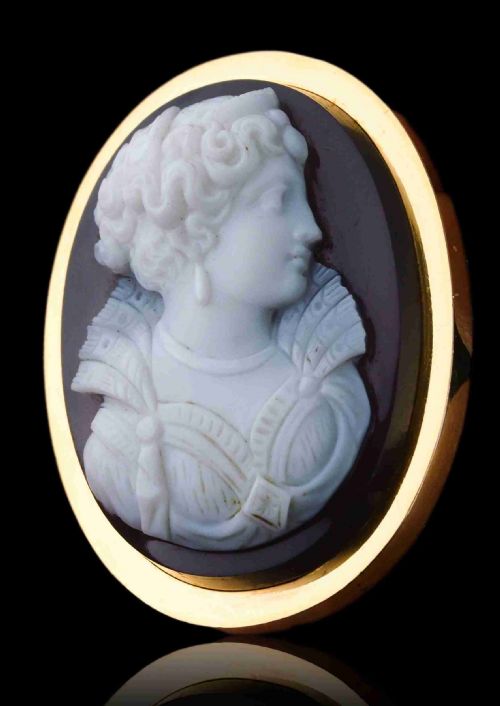
Artistic execution distinguishes exceptional examples, where hand-carved hardstones, rock crystal, or carefully matched emeralds elevate a functional pin into a significant lapel ornament.
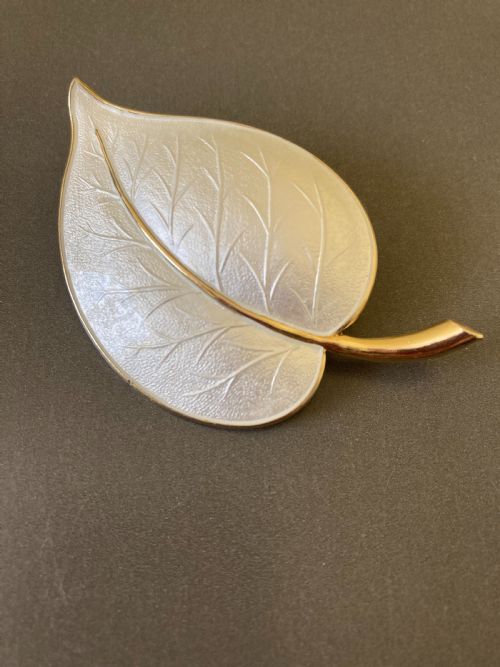
Aksel Holmsen
The White Gold Brooch Glossary
- Bar brooch
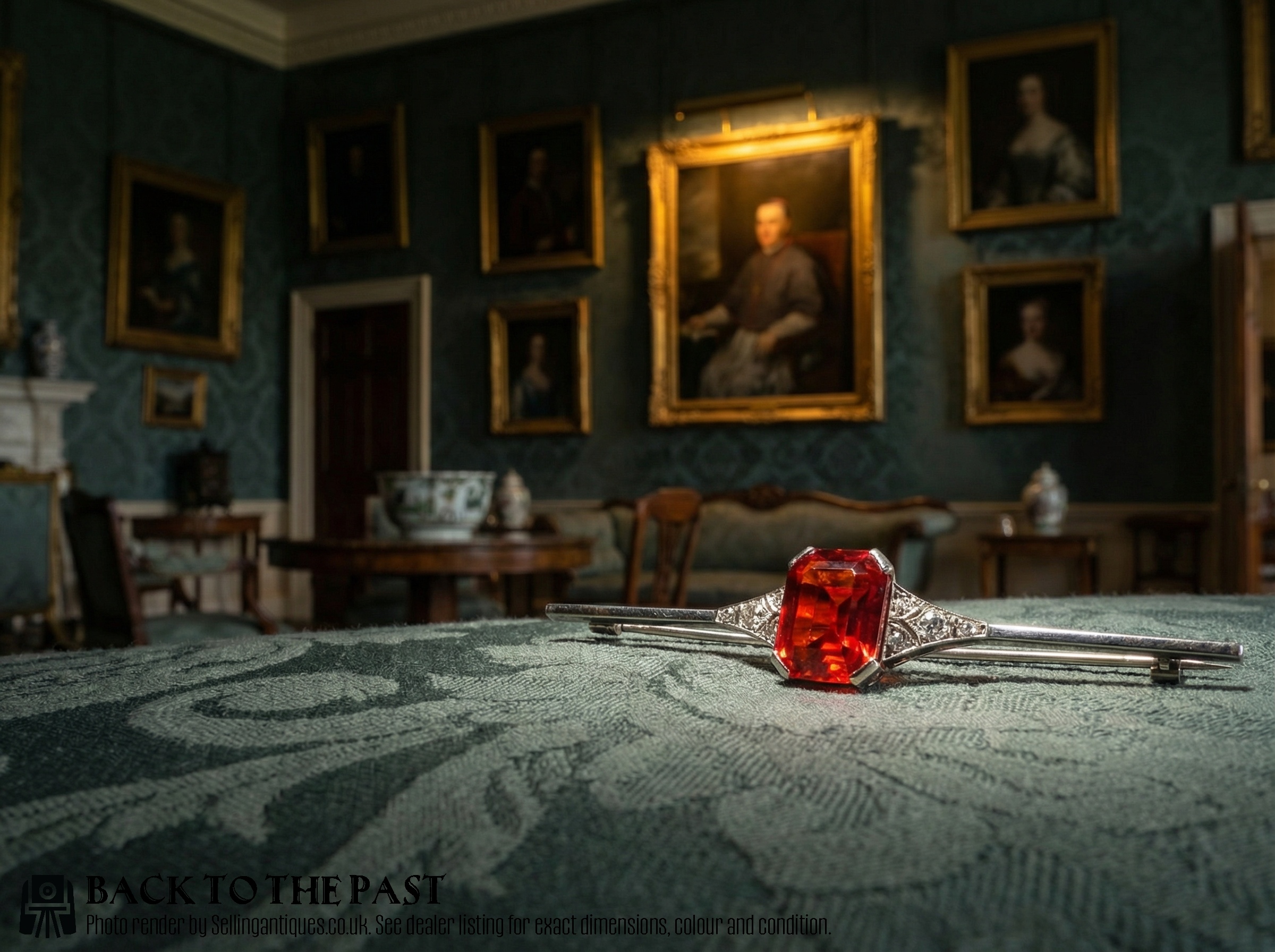
- A narrow, horizontal pin often accented with a central cluster of diamonds or gemstones. This form gained immense popularity during the Edwardian and Art Deco eras.
- Millegrain
- A decorative technique featuring a row of tiny, raised metal beads along the edges of a setting. It softens the transition between metal and stone with subtle texture.
- Old cut diamond
- A precursor to the modern brilliant cut, typically characterised by a smaller table, higher crown, and open culet. These stones catch candlelight with a distinctive, softer glow.
- Pendant brooch
- A versatile jewel fitted with a concealed bail or loop, allowing the wearer to use it either pinned to clothing or suspended from a neck chain.
- Filigree
- Openwork metal formed from fine threads of gold or platinum soldered together into intricate lace-like patterns. It requires immense dexterity to execute by hand.
White Gold Brooch: Frequently Asked Questions
How do I wear a brooch safely?
Secure the pin through heavy fabric or use a backing support if attaching it to delicate silks and lightweight weaves. This distributes the weight and prevents the fabric from sagging.
Ensure the safety catch functions correctly before fastening the piece to a coat lapel, scarf, or evening gown.
Are these brooches convertible?
Many period pieces, particularly from the Edwardian and mid-century eras, feature integrated loops or detachable fittings. These allow the ornament to function as both a lapel pin and a pendant on a chain.
Examine the reverse of the piece to locate hinges, bails, or screw fittings that indicate dual functionality.
How do I date my brooch?
Examine the materials, cut of the diamonds, and overall stylistic motifs to determine the era of manufacture. Art Deco pieces display geometric symmetry, while Edwardian designs favour lace-like platinum and seed pearls.
Maker marks, hallmarks, and specific pin mechanisms on the reverse provide further clues regarding the decade of creation.
Can I clean white gold at home?
Wash your piece gently using warm water and a mild detergent with a soft-bristled brush to remove dust from stone settings. Avoid harsh chemical dips, particularly if the brooch contains pearls, opals, or soft coloured stones.
Dry the item thoroughly with a lint-free cloth before storing it in a padded jewellery box.