
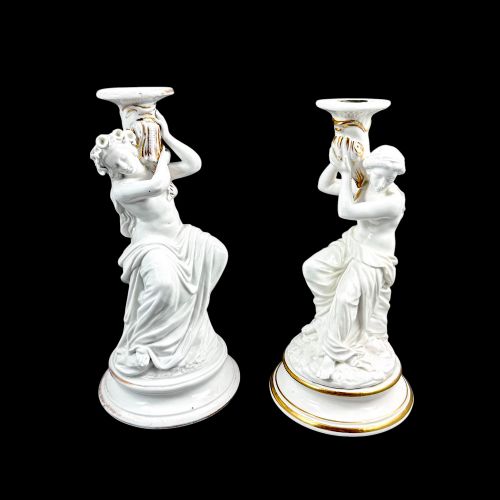


White Glazed Porcelain Figures
White glazed porcelain figures bring the crisp, luminous refinement of ceramic modelling into domestic spaces across the centuries.
White Glazed Porcelain Figures
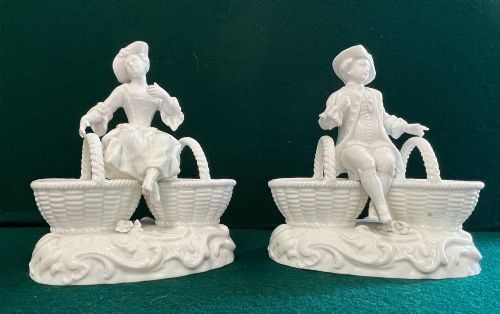
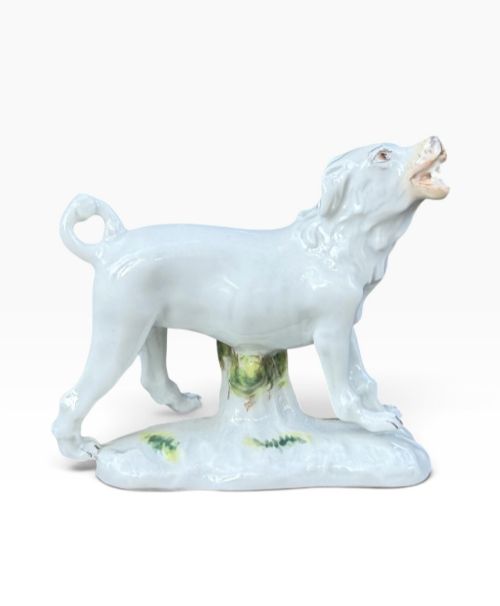
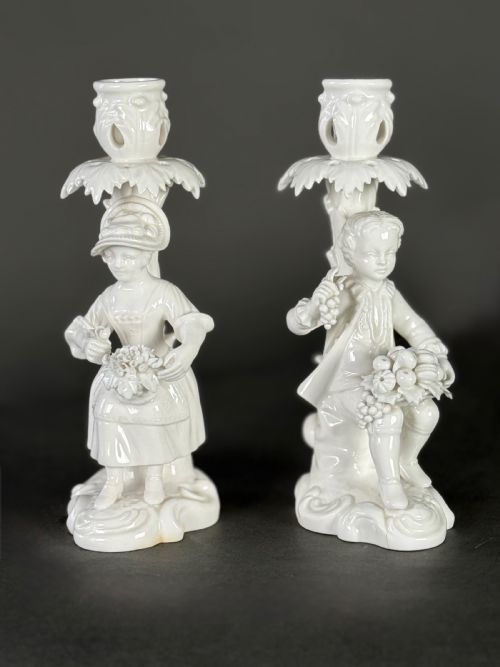
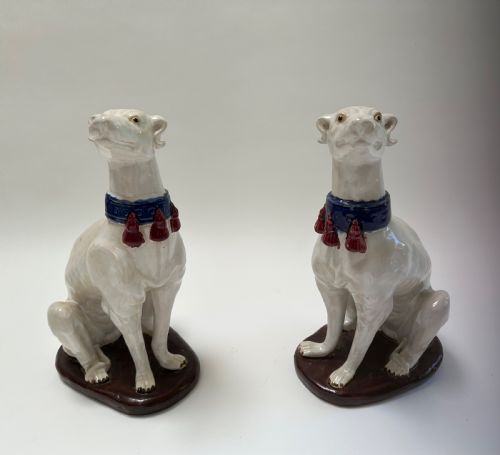
White glazed porcelain figures encompass sculptural works, figurines, and figural candlesticks produced across the eighteenth, nineteenth, and early twentieth centuries in Britain, continental Europe, and Asia. Collectors seeking white glazed porcelain figures encounter everything from classical mythological groups and allegorical representations of the continents to naturalistic depictions of dogs, puppies, and birds. These pieces draw the eye through their pristine monochrome surfaces, which let the modeller's line and the soft sheen of the glaze take centre stage without the distraction of polychrome enamel decoration.
The objects appearing on this page span diverse stylistic movements, including Rococo revivalism, neoclassical restraint, and clean-lined Art Deco forms. English Staffordshire potteries, major German manufactories like Meissen and KPM, and French houses such as Vion et Baury all contributed to this sculptural tradition. Whether cast as utilitarian chambersticks or purely decorative mantle ornaments, these works demonstrate the versatility of hard-paste and soft-paste ceramic bodies when shaped into human and animal subjects.
How they were made
Makers shaped white glazed porcelain figures using either hard-paste or soft-paste ceramic bodies, which were cast from moulds or hand-modelled by skilled sculptors before firing. The application of a clear or translucent glaze gave the porcelain its characteristic smooth finish, sealing the porous biscuit body beneath a glassy layer.
Certain pieces received subtle enhancements through gilding, gold leaf, or restricted enamel touches on eyes and accessories, while others relied entirely on the purity of the unadorned white glaze, often referred to in European traditions as blanc de chine.
Listings feature white glazed porcelain figures spanning the eighteenth, nineteenth, and twentieth centuries, incorporating both hard-paste and soft-paste ceramic bodies.
What varies in quality
The consistency and purity of the glaze layer further distinguish the output of premier continental factories and established English potteries from standard commercial wares. An even, luminous glaze that pools softly in the recessed areas enhances the sculptural depth, while uneven shrinkage or firing flaws detract from the overall harmony of the piece.
Meissen·Staffordshire·Royal Worcester·Vion et Baury·Minton·Royal Dux
The White Glazed Porcelain Figures Glossary
- Blanc de chine
- A French term denoting Chinese white porcelain from Dehua, which inspired European manufactories to produce their own unadorned white glazed figures. The glaze merges seamlessly with the white porcelain body beneath.
- Hard-paste porcelain
- A true ceramic composition combining kaolin and petuntse, fired at very high temperatures to produce a dense, vitrified body. It resists scratching and holds exceptionally sharp modelled details.
- Soft-paste porcelain
- An artificial ceramic compound of white clay, glass frit, and ground materials fired at lower temperatures than hard-paste. It possesses a warmer, slightly creamy appearance under the glaze.
- Biscuits
- Unglazed fired porcelain or earthenware possessing a matte, chalky surface texture. Many figures began as biscuit bodies before receiving a translucent glaze coat.
- Flatback
- A style of Staffordshire ceramic figure designed with an unglazed, flat back intended to be placed directly against a mantelpiece or wall.
White Glazed Porcelain Figures: Frequently Asked Questions
What is blanc de chine?
Blanc de chine translates from French as white from China, originally describing the creamy white porcelain produced in the Fujian province.
European factories subsequently adopted the term to describe their own unpainted white glazed porcelain figures and wares.
How do I care for antique porcelain figures?
Keep white glazed porcelain figures out of direct sunlight to prevent any incidental damage to gilt highlights or enamel touches.
Clean them gently with a soft, dry brush or a damp cloth without harsh chemical detergents.
Were these figures meant for display?
Most white glazed porcelain figures served as decorative mantel ornaments, table centrepieces, or symbols of classical learning in wealthy homes.
Some pieces, such as figural candlesticks and chambersticks, combined sculptural display with everyday household utility.
How can I tell the period?
Dating relies upon examining the paste composition, glaze characteristics, factory marks on the base, and stylistic cues from periods like the Victorian era or Art Deco.
Comparing modelling styles with documented works by known makers helps narrow down the decade of production.