
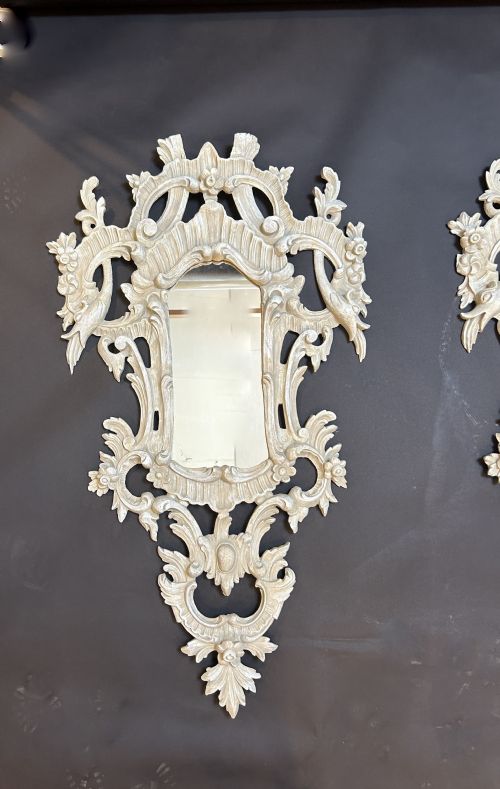


White Gesso Wall Mirror
A white gesso wall mirror brings depth and historic presence to a room, catching the light across carved surfaces.
White Gesso Wall Mirror
A white gesso wall mirror is typically found in nineteenth-century English and French forms, ranging from tall overmantles to arched hall glasses.
The selections span periods from the eighteenth century through to the Edwardian era, incorporating styles such as Rococo Revival and French Provincial.
Most examples combine substantial proportions with decorative arched or shaped tops designed to hang prominently above a fireplace or console.
Materials and construction methods
Carved wood provides the foundational structure, shaped into columns, scrolls, and classical frames before the application of surface layers.
Gesso, a mixture of plaster and binder, coats the wooden base to build up intricate relief ornaments that are then painted or highlighted with gold leaf.
Mirror glass sits within the rabbet, held by timber backing boards, while the exterior paint finish often shows intentional or age-related distressing.
French Chateau and Rococo Revival styles dominate the aesthetic range of these painted wall and overmantle mirrors.
Assessing quality in the finish and frame
Depth and sharpness of the hand-carved wood beneath the gesso layer dictate the structural integrity and sculptural merit of the frame.
Application of the gesso and paint determines the textural nuance, where finer examples maintain crisp relief details without clogging the carved motifs.
Originality of the glass and the stability of the painted or gilt surfaces distinguish pieces that retain their period character from those heavily restored.
The White Gesso Wall Mirror Glossary
- Gesso
- A plaster-based medium applied to carved wood to create a smooth surface for painting or gilding. It allows for intricate decorative mouldings.
- Overmantle
- A large mirror designed specifically to be hung on the wall directly above a mantelpiece. These often feature wide proportions and arched tops.
- Louis Philippe
- A mid-nineteenth-century French style characterised by simple, elegant arched frames with understated classical moulding. It offers a restrained alternative to heavier Victorian designs.
- Rococo Revival
- A nineteenth-century design movement favouring asymmetrical scrolls, floral elements, and elaborate ornamentation. This style appears frequently on continental mirror frames.
White Gesso Wall Mirror: Frequently Asked Questions
Where should I hang an overmantle mirror?
These mirrors traditionally sit above a fireplace mantel, anchored securely to the wall to support their substantial weight.
They also function effectively on large blank walls in reception rooms to reflect natural light and create a sense of space.
How do I clean a painted gesso frame?
Dust the carved surfaces gently with a soft, dry brush to prevent dirt from settling into the intricate relief details.
Avoid liquid cleaners and damp cloths, as moisture can damage aged gesso and lifting paint layers.
Are these mirrors heavy?
Most pieces combine timber frames, thick gesso layers, and heavy glass, resulting in considerable overall weight.
Professional installation using appropriate wall anchors and load-bearing fixings is essential for safe hanging.
How can I tell a nineteenth-century frame apart?
Examine the construction of the timber backing boards and the composition of the gesso layers for signs of natural ageing.
Period pieces often display subtle irregularities in the hand-carved details and uniform craquelure across the painted finish.