
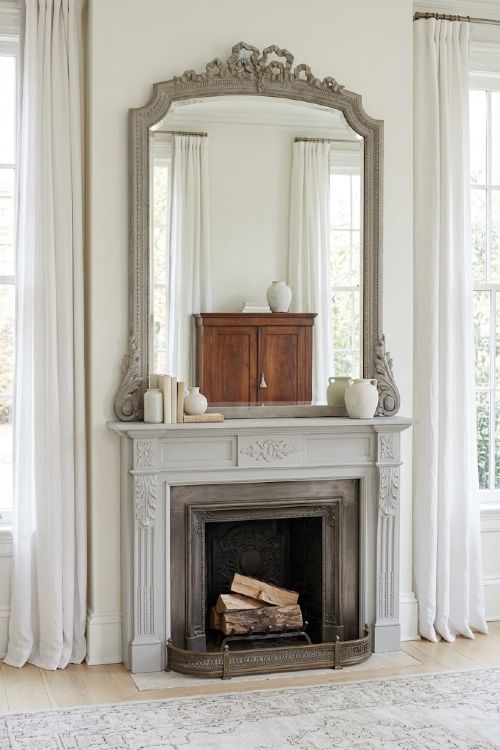
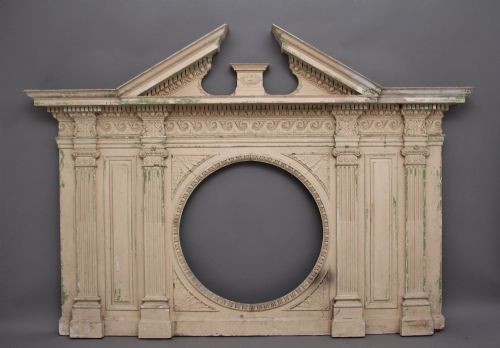


Painted Wood Fireplace Mirror
A painted wood fireplace mirror brings scale and reflection to a chimney breast, shaped by nineteenth-century joinery and decorative paint.
Painted Wood Fireplace Mirror
A painted wood fireplace mirror sits above a mantelpiece, designed to reflect light and fill the expanse of a chimney breast in a principal room. These large-scale looking glasses take the form of overmantels, wall mirrors, and overmantles, spanning centuries of domestic architecture from the Georgian period through to the Edwardian era.
The version most commonly encountered on this page is the nineteenth-century English or French overmantel mirror, often framed in carved wood and gesso. Pieces range from plain rectangular formats to elaborate shaped tops, arched profiles, and column-framed constructions executed in paint, parcel-gilt, and gold leaf.
Materials and construction
Makers constructed these frames from pine or hardwoods, applying layers of gesso to build up decorative moulding and relief details before painting or gilding the surface. Carved wood details add depth to the borders, while glass plates provide the primary reflective surface.
Finishes involve traditional paint layers, sometimes combined with parcel-gilt highlights or gold leaf applied over the gesso ground. Certain examples display black lacquer or distressed paint effects appropriate to their period and style.
Materials recorded across the selection include carved wood, gesso, paint, gold leaf, and glass, spanning English and French regional origins.
Judging the work
Quality rests in the crispness of the carved wood and gesso ornamentation, where deep, clean relief work distinguishes superior frames from simpler mouldings. The harmony of proportions between the mirror plate and the outer frame dictates the visual balance of the piece.
The integrity of the painted surface and the character of the glass plate also separate standard examples from finer works. Original gilding, subtle distressing, and well-executed joinery elevate the standing of an overmantel within its period.
The Painted Wood Fireplace Mirror Glossary
- Overmantel
- A large mirror designed specifically to hang on the wall directly above a fireplace mantelpiece. These pieces often repeat the architectural lines of the chimney breast.
- Gesso
- A plaster-like mixture applied to wood frames to create a smooth surface for subsequent carving, painting, or gilding. It allows for intricate relief ornamentation.
- Parcel-gilt
- A decorative treatment where only specific portions of an object are gilded with gold leaf, leaving the painted wood visible elsewhere.
- Aesthetic Movement
- A late nineteenth-century design style emphasising decorative art and visual beauty over narrative subject matter. Pieces from this movement often utilise black lacquer and simplified forms.
Painted Wood Fireplace Mirror: Frequently Asked Questions
Where should an overmantel mirror be hung?
These mirrors are designed to hang centrally on the wall directly above a fireplace mantelpiece, where they reflect room light and anchor the decorative scheme of the hearth.
Because of their substantial weight and scale, they require secure fixing directly into masonry or structural studs rather than standard plasterboard hooks.
How do I identify a Victorian mirror?
Victorian examples often combine carved wood and gesso frames with arched or shaped tops, frequently finished in paint and parcel-gilt.
They tend to be large in scale, designed to dominate the chimney breast of nineteenth-century reception rooms.
What is the difference between an overmantel and a wall mirror?
An overmantel is specifically proportioned in width and height to sit comfortably above a fireplace surround, often featuring a landscape orientation.
Standard wall mirrors are built for general room placement without the specific architectural constraints of a chimney breast.
How should I clean a painted wooden frame?
Dust the carved wood and gesso surfaces gently with a soft, dry cloth to prevent accumulation in the recesses of the ornament.
Avoid liquid cleaners or harsh chemicals that might damage historic paint, gesso, or gold leaf finishes.