
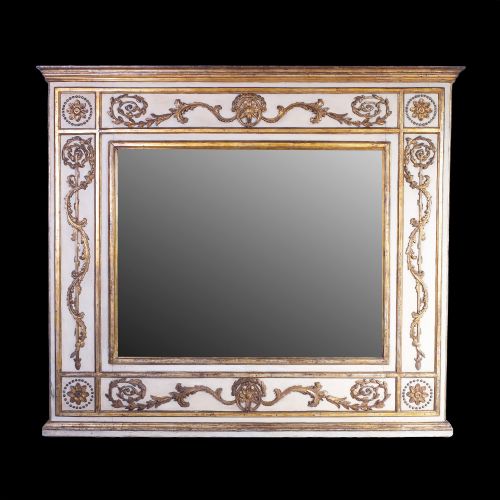
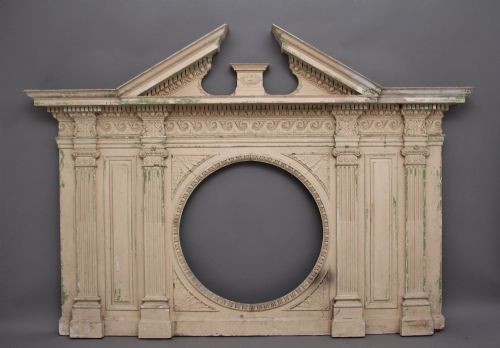
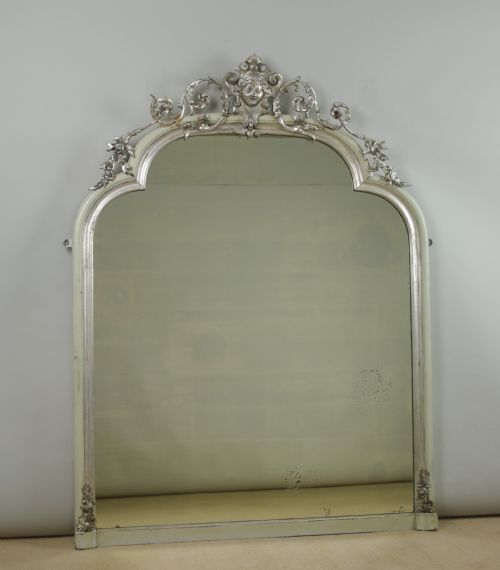
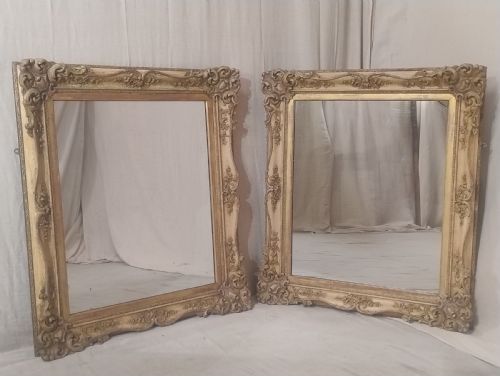


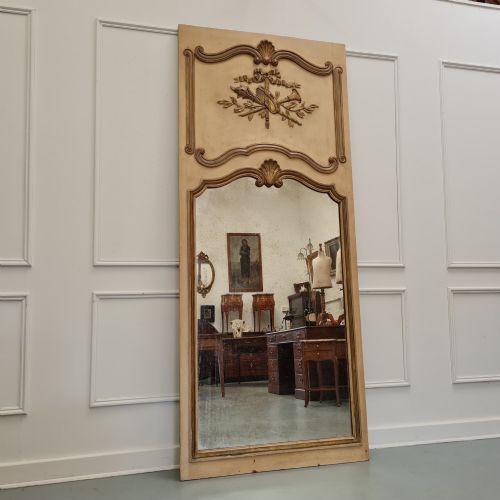


Cream Carved Overmantel Mirror
A cream carved overmantel mirror anchors a chimney breast with height, reflection and architectural presence, drawn from centuries of English and French design.
Cream Carved Overmantel Mirror
A cream carved overmantel mirror brings architectural weight to a chimney breast, designed originally to sit directly above the fireplace mantelpiece. You encounter these most frequently in nineteenth-century interpretations, spanning Victorian, Edwardian and French provincial styles.
The form stretches from arched tops and rectangular frames to trumeau panels and column-framed compositions. Pieces originate across periods from the eighteenth century through to the early twentieth century, utilising painted finishes in muted cream tones.
Makers and workshops construct these large wall-hung objects to reflect light deep into a room while echoing the formal plasterwork or woodwork of historic interiors. The scale ranges from intimate boudoir glasses to massive architectural statements intended for principal reception rooms.
Materials and construction
Carvers shaped wooden foundations from pine or hardwoods before applying layers of gesso to build up high-relief scrollwork, foliage and architectural moulding. Artisans then applied paint finishes, often combined with parcel gilt highlights to accentuate the carved details.
Original mirror glass sits within these frames, secured by traditional backing methods suited to heavy wall-hung furniture. The integration of wood, gesso and paint results in a tactile surface that responds distinctively to age and environmental shifts.
Several mirrors retain faint traces of historical candle soot trapped within the deep recesses of their gesso carvings.
Judging quality and craftsmanship
Depth and crispness in the carved wood and gesso ornamentation separate standard commercial frames from exceptional architectural examples. Sharp undercuts in foliage and scrollwork demonstrate the hand of a skilled carver rather than a mass-produced mould.
The harmony of the proportions and the integration of the painted surface with the underlying gesso dictate the visual weight of the piece. High-grade mercury or early plate glass displays subtle foxing and depth that modern replacements lack entirely.
The Cream Carved Overmantel Mirror Glossary
- Overmantel mirror
- A large wall mirror specifically proportioned to hang on the wall directly above a fireplace mantelpiece. They often feature horizontal or arched formats designed to bridge the gap between hearth and ceiling.
- Gesso
- A plaster mixture applied to wood frames to create a smooth surface for carving, gilding or painting. It allows craftsmen to model intricate three-dimensional reliefs.
- Trumeau mirror
- A decorative wall mirror incorporating a painted panel or oil painting within the upper section of the frame. This French style originated in neoclassical interior decoration.
- Parcel gilt
- A decorative technique where specific raised portions of a carved frame receive gold leaf while the remainder holds a painted finish. This creates contrast between the gilt highlights and the cream background.
- Vitruvian scroll
- A classical repeating ornamental band composed of wave-like scrolls rolling continuously along a frieze or frame border. It frequently appears in neoclassical and Victorian architectural woodwork.
Cream Carved Overmantel Mirror: Frequently Asked Questions
Where should an overmantel mirror hang?
These mirrors hang traditionally centered on the wall directly above a fireplace mantelpiece, where their broad proportions balance the hearth below.
Position them at a height that reflects the opposite side of the room rather than the ceiling or floor.
How do I date a painted mirror?
Dating relies on examining the construction joints, the composition of the gesso beneath the paint, and the characteristics of the mirror plate itself.
Nineteenth-century examples often display hand-beveled edges and backboards secured with old headless screws or hand-cut nails.
Can these mirrors hang without a fireplace?
Although designed for chimney breasts, their substantial scale makes them effective statement pieces on any large, uninterrupted wall.
Ensure the wall fixings engage securely with structural studs or masonry to support the heavy wooden frame.
What defines French provincial style?
French provincial design reinterprets sophisticated Parisian court furniture into simpler, country-house proportions with softer carved details.
These pieces favor muted painted finishes over heavy gilding, prioritizing rustic elegance and balanced symmetry.