

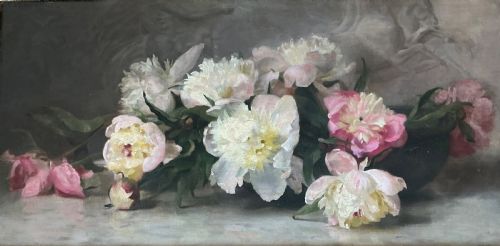


White Floral Oil Painting
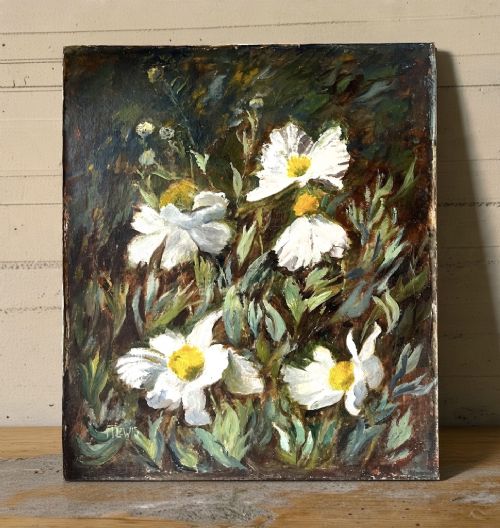
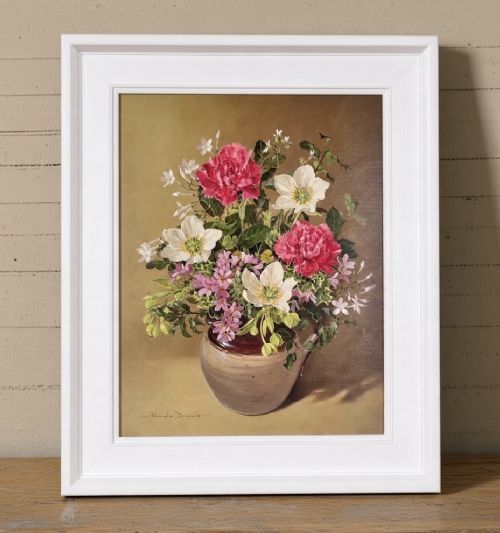
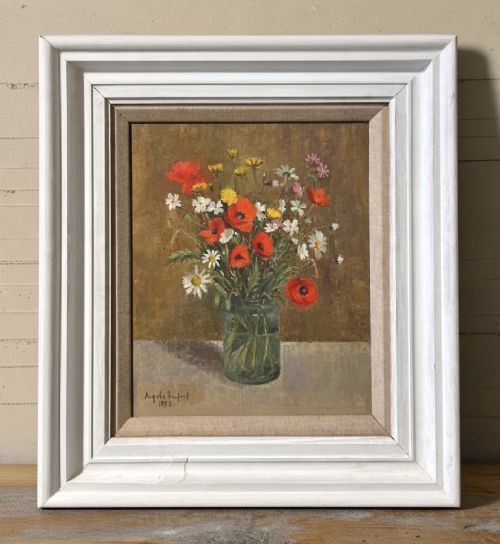
A white floral oil painting brings quiet colour to a room, showing petals and stems captured in oil paint.
White Floral Oil Painting
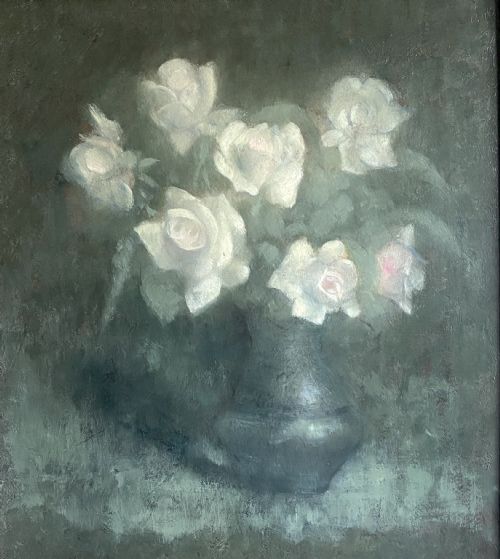
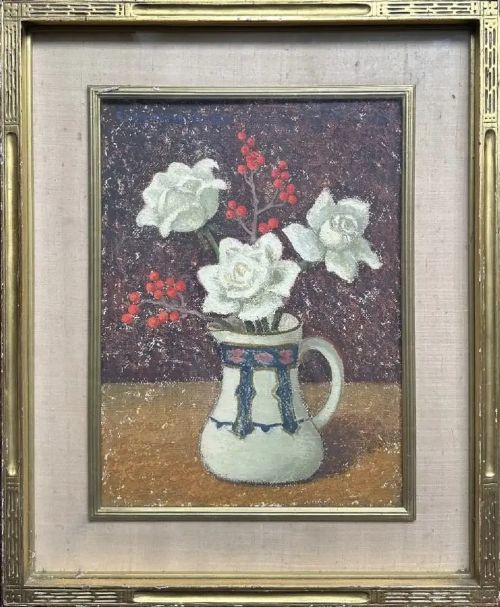
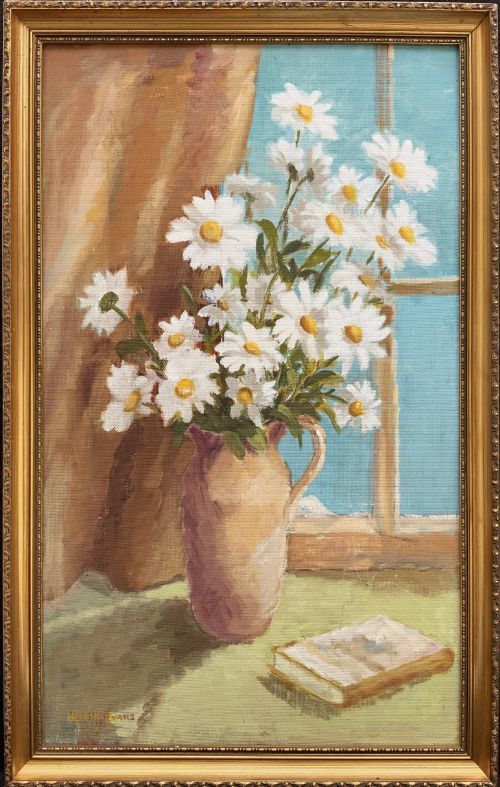
A white floral oil painting depicts botanical subjects such as roses, lilies, daisies, and peonies using oil paint on canvas, board, or metal panel. These works range from Victorian and Edwardian still lifes to mid-century impressionist pieces and earlier botanical studies.
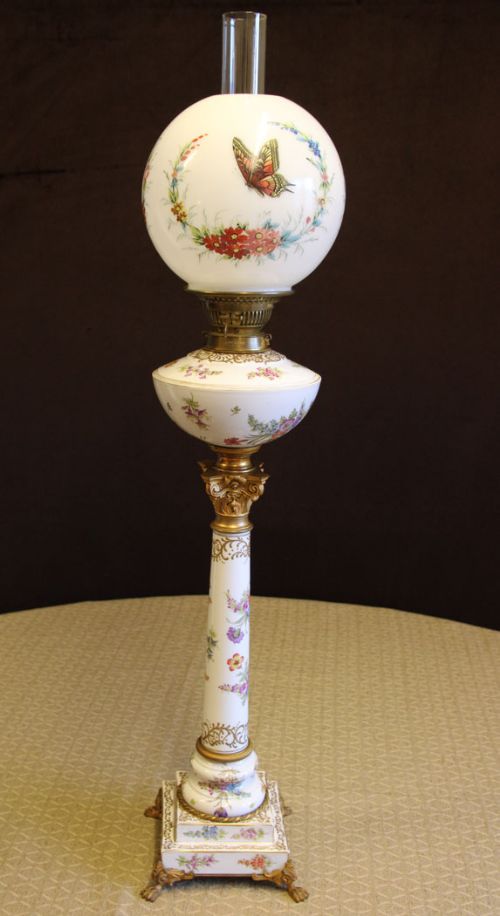
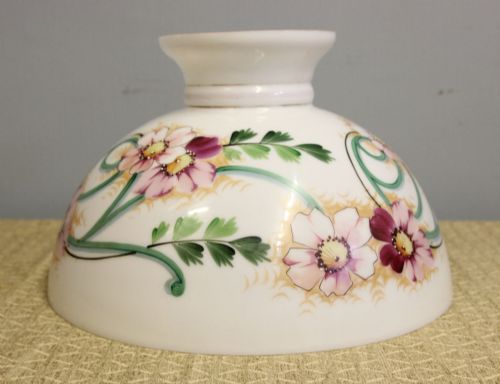
Buyers meet a mix of framed canvases and boards, alongside related objects like painted oil lamps and jugs that share the same floral theme. The selection spans the eighteenth century through to the mid-twentieth century, including works from French, British, and American makers.
How they were made
Artists applied oil paint using brushes and sometimes palette knives onto prepared surfaces such as woven canvas, wooden board, or metal panels. Canvas offered flexibility and texture, while board provided a rigid foundation for detailed brushwork.
Frames made of wood and gilt enhanced the finished artwork, while related decorative pieces employed hand-painted enamel or tin glazing over metal and ceramic bases.
White Floral Oil Painting Retail Price Guide 2026
Typical asking prices for white floral oil painting among the pieces listed under this phrase on Sellingantiques today, from the lower quarter to the upper quarter. They describe what is for sale here now, not the wider market.
Listings span the eighteenth century, Victorian era, Edwardian period, and mid-century modern movements, using canvas, board, oil paint, glass, and brass.
What varies in quality
The skill of the brushwork and the management of light define the upper tier of these works. A deft hand captures the translucence of white petals against contrasting backgrounds with greater depth and naturalism.
Materials and framing also distinguish individual pieces, as original gilt frames and stable supports of canvas or board preserve the integrity of the paint surface over decades.
Emma Fordyce MacRae·Gertrude Hayes·Thomas Bromley Blacklock·Robin MacKertich·Stuart Armfield·Isabelle Cohen
The White Floral Oil Painting Glossary
- Canvas
- A heavy woven fabric stretched across a wooden frame to serve as a painting surface. It provides a textured base for oil paint.
- Oil Paint
- A slow-drying paint made with pigment particles suspended in a drying oil, typically linseed oil. This medium allows for rich blending and subtle tonal shifts.
- Impressionism
- A style of painting that focuses on light and its changing qualities rather than precise detail. Artists use visible brushstrokes to capture the immediate visual impression.
- Still Life
- A work of art depicting mostly inanimate subject matter, typically commonplace objects such as flowers in vases. Floral still lifes focus on botanical arrangements.
- Board
- A rigid flat sheet of wood or compressed material used as a support for painting. It offers a firm, unyielding surface compared to stretched canvas.
White Floral Oil Painting: Frequently Asked Questions
How do I date a white floral oil painting?
Dating relies on the style of the brushwork, the framing, and the material of the support. Canvas, board, and metal panels each gained favour in different decades.
Examining the signature, if present, and the framing materials helps narrow down the period from Victorian times through the mid-century.
Where should I hang these paintings?
These works suit dining rooms, drawing rooms, or hallways where natural light can illuminate the brushwork. Smaller framed pieces fit well in intimate corners.
Keep them away from direct sunlight and damp walls to protect the oil paint and canvas over time.
Are all these pieces on canvas?
The selection includes works on stretched canvas, wooden board, and metal panel. Each support affects how the oil paint rests and ages.
Some listings also feature hand-painted surfaces on ceramic lamp shades and tin-glazed jugs rather than flat wall art.
What is the difference between an impressionist and a botanical piece?
Impressionist works emphasise light, shadow, and mood using looser brushstrokes to suggest petals and leaves. Botanical studies prioritize scientific accuracy and fine detail.
Both styles utilise oil paint but serve different aesthetic purposes within interior decoration.