



White Floral Dessert Plate
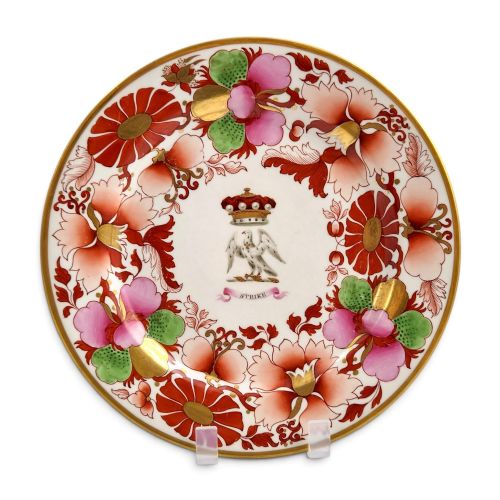
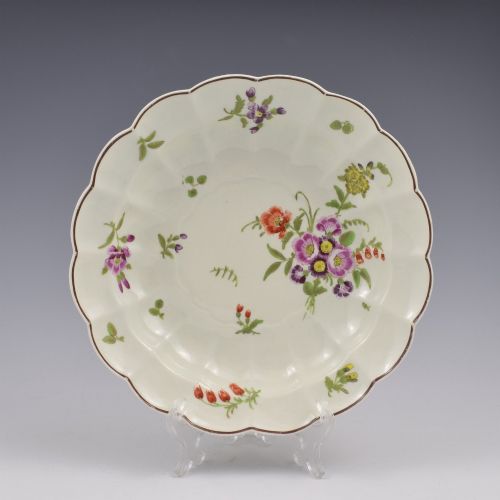
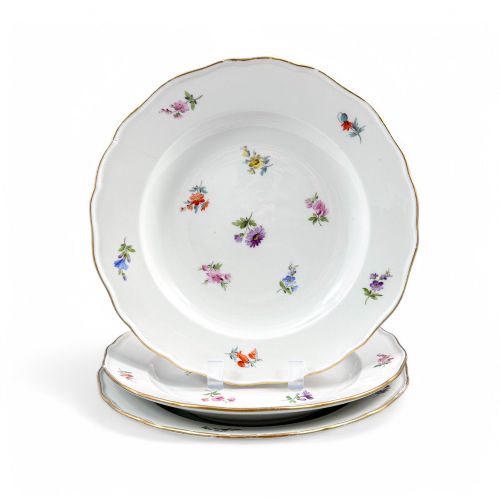
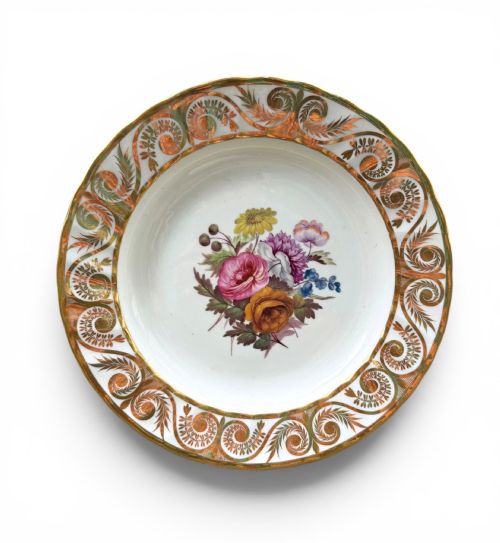
A white floral dessert plate brings botanical painting to the table, created in porcelain or ironstone across Georgian, Victorian, and Edwardian periods.
White Floral Dessert Plate
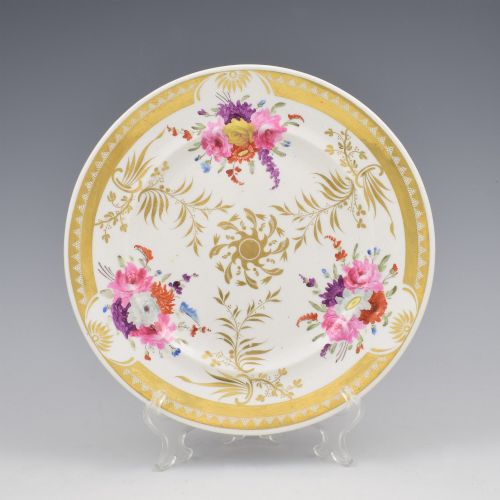
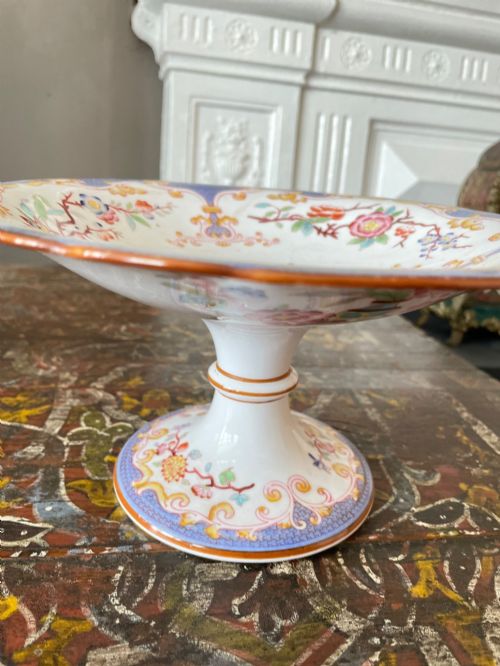
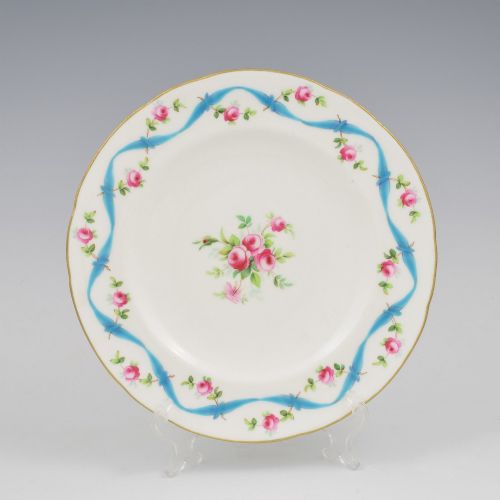
A white floral dessert plate sits within nineteenth-century dessert services, taking the form of plates, shaped dishes, and compotes designed for the final course of a meal. These pieces range from eighteenth-century soft-paste porcelain to Victorian earthenware and ironstone, spanning Georgian, Regency, and Edwardian periods.
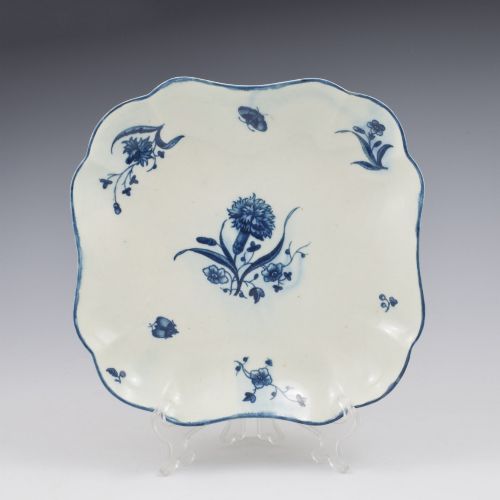
The dominant style on this page is the hand-painted or transfer-printed botanical motif, often accented with gilt borders, cobalt blue underglaze, or moulded basketweave patterns. Makers from Worcester, Derby, Minton, and continental factories applied these floral decorations to shaped rims and lobed edges.
Collectors encounter individual dessert plates, pairs, and larger matched services featuring enamel floral sprays, carnations, roses, and streublumen patterns. Each piece demonstrates the changing ceramic tastes from Rococo Revival curves to clean Edwardian lines.
How they were made
Potters shaped these dessert plates using hard-paste porcelain, soft-paste porcelain, and ironstone, often pressing them into moulded forms with basketweave or ozier borders. Firing set the body beneath clear glaze before enamel colours and cobalt blue underglaze were applied.
Artists painted floral sprays and armorial motifs by hand, using gold leaf and gilt highlights to enrich the rims. Subsequent lower-temperature firings fixed the enamel pigments and gilding to the glazed ceramic surface.
White Floral Dessert Plate Retail Price Guide 2026
Typical asking prices for white floral dessert plate among the pieces listed under this phrase on Sellingantiques today, from the lower quarter to the upper quarter. They describe what is for sale here now, not the wider market.
Some plates preserve the exact botanical illustration of a garden carnation painted over two centuries ago.
What varies in quality
The refinement of the ceramic body and the delicacy of the potting set the baseline, distinguishing fine soft-paste porcelain from denser ironstone. Weight, translucency, and the crispness of moulded basketweave or lobed borders indicate the care taken in the initial moulding process.
Artistic execution separates standard production from exceptional work, visible in the brushwork of hand-painted floral sprays and the precision of gilding. The presence of named factory marks, pattern numbers, or armorial provenance elevates the standing of an individual dessert plate within its period.
Flight Barr And Barr·Dr Wall Worcester·Minton Porcelain·Rockingham Pottery·Royal Crown Derby·Meissen·Sarreguemines·Wedgwood·Mason·Chantilly·Derby
The White Floral Dessert Plate Glossary
- Soft-paste porcelain
- An artificial porcelain composition fired at lower temperatures than hard-paste, common in eighteenth-century French and English wares. It yields a warm, slightly creamy body and absorbs enamel colours with distinctive depth.
- Cobalt blue underglaze
- A pigment applied to the ceramic body before glazing and firing, producing a stable blue decoration that withstands high temperatures. It appears frequently beneath the glaze on floral plates.
- Ozier border
- A moulded wickerwork or basketry pattern used around the rim of ceramic plates. This relief moulding originates from basketry and adds texture to eighteenth and nineteenth-century tableware.
- Gilt
- A thin layer of gold applied to ceramic surfaces for decoration, often highlighting rims and handles. It requires careful low-temperature firing to bond with the glaze.
- Compote
- A raised vessel or pedestal dish used for serving fruit or sweets as part of a dessert service. These elevated pieces complement flat dessert plates on the dining table.
White Floral Dessert Plate: Frequently Asked Questions
What is a dessert plate used for?
A dessert plate served the final course of a formal meal, holding fruit, sweetmeats, or small pastries.
These pieces formed part of larger dessert services deployed at the conclusion of dining.
How do I identify a Georgian dessert plate?
Georgian dessert plates often feature hand-painted botanical studies, armorial bearings, or moulded basketweave borders in soft-paste or early porcelain bodies.
They date from the eighteenth and early nineteenth centuries, displaying Regency or Rococo influence.
Can I use antique plates for dining?
Many collectors prefer to display these plates on walls or stands to protect the hand-painted enamel and gold leaf from wear.
Gentle hand washing preserves the glaze and pigments if used for special occasions.
What does soft-paste porcelain mean?
Soft-paste porcelain is an early ceramic mixture containing glass frit and white clay, fired at lower temperatures than true hard-paste porcelain.
It has a softer lustre and allows enamel colours to sink into the glaze.