




White Earthenware Spill Vase
These white earthenware spill vase pieces are charming Victorian chimney-piece ornaments that hold taper matches, bringing rustic narrative scenes straight into the domestic interior.
White Earthenware Spill Vase
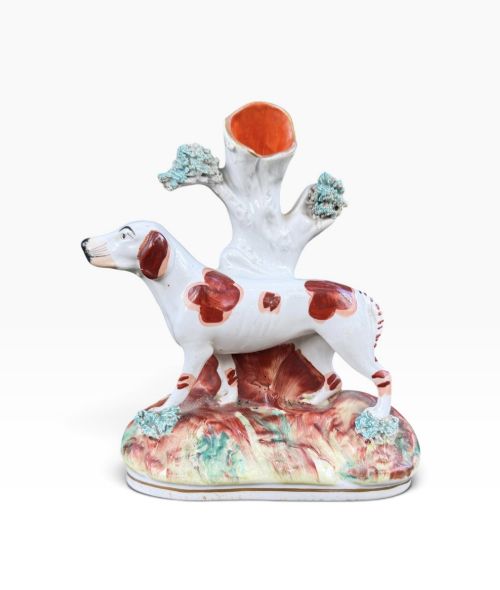
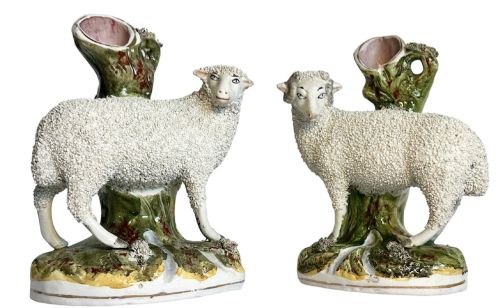
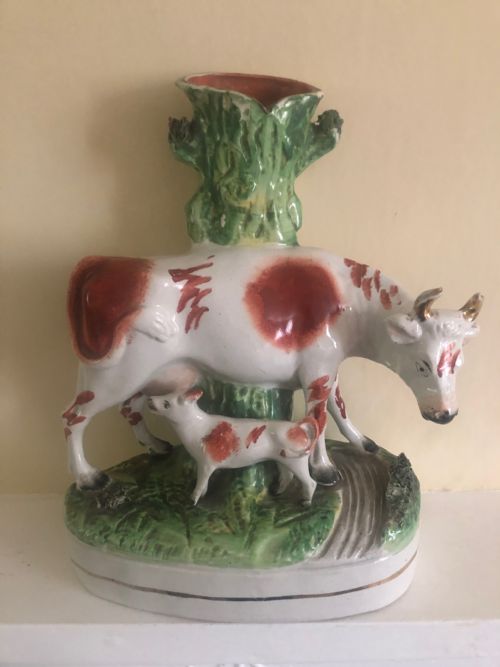
A white earthenware spill vase brings the distinctive utilitarian charm of Victorian flatback figures directly to the mantelpiece. These ceramic vessels combine a hollow cylindrical tube for holding wooden matches with figurative sculptural groups at the front. Buyers will regularly encounter animal pairs, pastoral figures, and dramatic narrative groups produced across the nineteenth century.
The objects span production from the mid-nineteenth century, specifically emerging within the Victorian era around 1860, 1870, and 1880. Surviving examples range from simple animal compositions like sheep, cows, and swans to complex multi-figure groupings such as Scots harvesters and Babes in the wood. These earthenware pieces served a practical function in the parlour before the invention of safety matches, while also acting as colourful decorative ornaments.
How they were made
Potters shaped these figures using earthenware clay, moulding the bodies and hollow spill holders before applying an overall white ground. The construction typically relied on press-moulding techniques to create the characteristic flat backs designed to stand against a wall.
Makers finished the pieces with lead glaze and hand-painted enamel colours to pick out the details of animals, clothing, and foliage. This combination of ceramic body, smooth glaze, and bright surface paint defines the physical character of the surviving inventory.
Current listings feature earthenware, glaze, enamel, and ceramic materials spanning the nineteenth century, including specific dates from 1860 to 1880.
What varies in quality
The complexity of the subject also distinguishes the range, moving from straightforward single animal forms to intricate, multi-figure sculptural groups like the Band of Hope. Pairs naturally command greater visual symmetry than isolated examples, enhancing their decorative presence.
Thomas Parr factory
The White Earthenware Spill Vase Glossary
- Earthenware
- A porous pottery body fired at lower temperatures than stoneware or porcelain. It requires a glaze to become impermeable to liquids.
- Spill vase
- A small hollow vessel designed to hold slender slips of wood used for transferring flames from a fireplace to candles or lamps.
- Flatback
- A style of Staffordshire figure moulded with a flat, unpainted rear surface because the piece was intended to stand against a wall.
- Enamel
- Opaque vitreous paint applied over the fired glaze and subjected to a second, lower-temperature firing to fix the colours.
- Lead glaze
- A shiny glass-like coating containing lead oxide, commonly applied to nineteenth-century earthenware to create a smooth, reflective surface.
White Earthenware Spill Vase: Frequently Asked Questions
What is a white earthenware spill vase?
A white earthenware spill vase is a nineteenth-century ceramic ornament featuring a hollow tube designed to hold wooden taper matches.
These pieces combine practical household utility with figurative sculpture, often depicting animals, birds, or narrative figure groups.
How were spill holders used?
Victorian households placed spill holders on mantelpieces to keep wooden taper matches close to the fireplace.
Family members would light a thin wooden spill in the hearth fire and use it to ignite candles, oil lamps, or tobacco pipes.
How do you date Victorian spill vases?
Dating relies on stylistic clues, ceramic bodies, and subject matter characteristic of the nineteenth century.
Pieces from this era often exhibit moulded flat backs, typical lead glazes, and specific Victorian themes ranging from pastoral animals to literary groups.
How do you display antique spill vases?
These decorative objects sit securely on mantelpieces, shelves, or side tables where their flat backs allow them to rest against walls.
They appear both as single figures and balanced pairs framing other decorative items in a room.