


Ceramic Hunting Dog Ornament
A ceramic hunting dog ornament brings the field indoors, capturing hounds, setters, and greyhounds in earthenware and porcelain.
Ceramic Hunting Dog Ornament
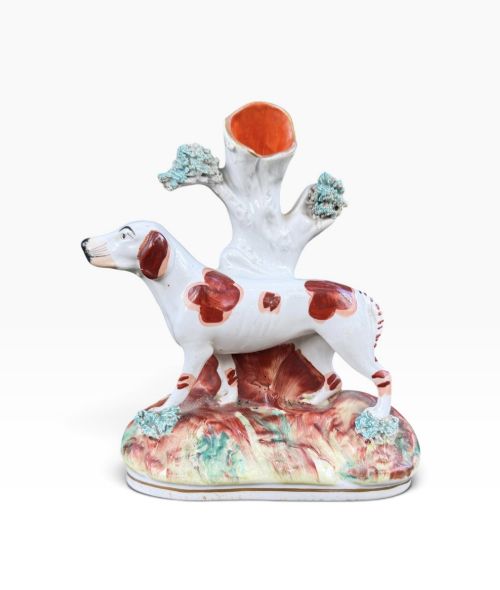
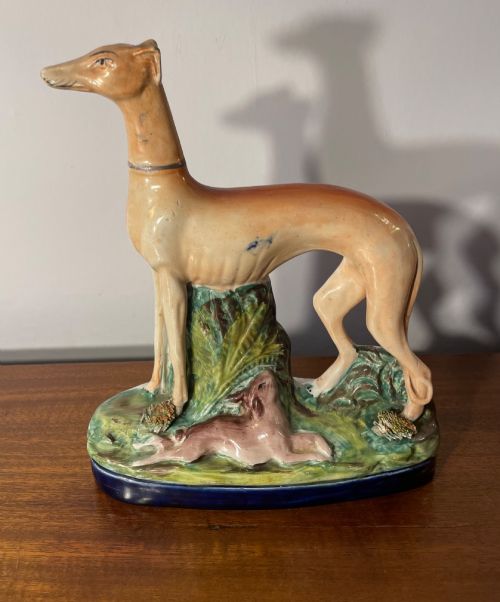
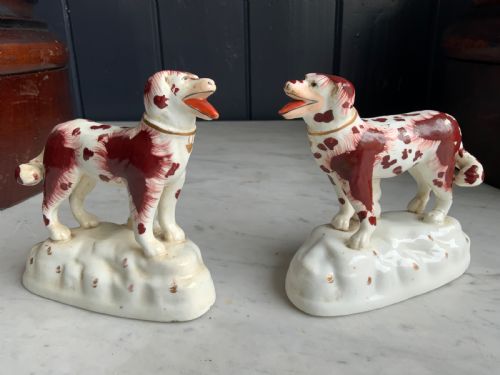
When you search for a ceramic hunting dog ornament, you encounter figures that celebrate sporting hounds, setters, pointers, and greyhounds across various historic periods. These pieces take the form of pottery figurines, spill vases, and decorative ornaments depicting solitary hounds or dynamic scenes with hares and game.
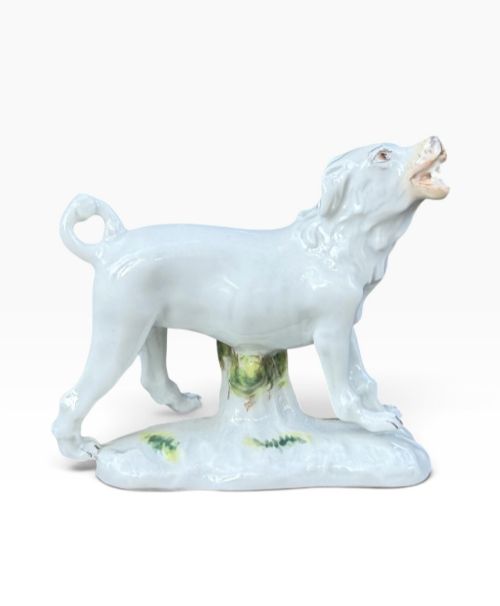
The most common examples you meet on this page are Staffordshire pottery figures from the nineteenth century, alongside continental porcelain works from factories such as Meissen, Royal Capodimonte, and Royal Dux. They range from simple earthenware figures to large, detailed Victorian portrayals.
Makers like Thomas Parr and Enoch Wood shaped the Staffordshire tradition, while later Edwardian pieces from Royal Dux reflect Art Nouveau tastes. Buyers select these ornaments to add traditional sporting character to mantlepieces and interiors.
Materials and manufacture
Potters shaped these figures using earthenware, pottery, and fine porcelain, applying lead glazes and enamel paint to render the coats and markings of the dogs. Many nineteenth-century Staffordshire pieces rely on heavy earthenware bodies finished with smooth glazes.
Continental factories such as Meissen and Royal Dux utilised porcelain and specialised moulding techniques to achieve sharper anatomical details and expressive postures in their setter and hound figures. Enamel paint added realistic colour to the eyes, collars, and surrounding game or foliage.
Listings feature earthenware and porcelain bodies decorated with lead glaze and enamel paint across Victorian and Edwardian periods.
Assessing quality
The presence of a recognised factory mark, such as those from Thomas Parr, Enoch Wood, or Royal Dux, distinguishes standard figures from finer works. Larger, more ambitious compositions involving multiple animals or game demonstrate greater ambition from the potter.
Thomas Parr factory·Enoch Wood factory·Royal Capodimonte Factory·Royal Dux
The Ceramic Hunting Dog Ornament Glossary
- Spill vase
- A hollow pottery figure incorporating a small cylindrical holder designed to store wooden spills for lighting fires or pipes. These often feature a hound standing beside the central tube.
- Earthenware
- A porous pottery body fired at lower temperatures, commonly used for nineteenth-century Staffordshire figures before being glazed and painted. It provides a heavier, coarser texture than porcelain.
- Lead glaze
- A glossy coating containing lead oxide applied to pottery to create a smooth, waterproof surface. This finish gives early Staffordshire dogs their characteristic shine.
- Enamel paint
- Opaque pigments applied over the glaze and fired at a lower temperature to add colour to the eyes, collars, and details of the ornament. These paints sit slightly proud of the glazed surface.
- Figurine
- A small modelled statuette depicting a human, animal, or mythical subject. In this context, they represent hunting hounds and sporting dogs.
Ceramic Hunting Dog Ornament: Frequently Asked Questions
What periods do these dog ornaments come from?
The pieces span the nineteenth and early twentieth centuries, covering Georgian, Regency, Victorian, and Edwardian eras. Staffordshire works tend to date from the mid-nineteenth century, while continental porcelain examples often reach into the early twentieth century.
Makers active during these periods utilised traditional earthenware and porcelain methods to produce figures that reflect the shifting aesthetic tastes of each decade, from robust country pottery to refined Art Nouveau styling.
How were spill vase dog figures used?
Spill vases served a practical domestic purpose in homes before the invention of safety matches, holding thin wooden tapers used to transfer fire from the hearth to candles or pipes. The hunting dog figure was modelled directly onto the side of the cylindrical vase.
Placed on mantlepieces, these combination pieces offered both decorative charm and daily utility, keeping lighting spills close to hand in the principal rooms of the house.
How do I distinguish Staffordshire dogs from continental porcelain?
Staffordshire figures are typically heavier, made from earthenware, and feature hand-painted enamel details over a clear lead glaze. Their construction is often sturdier and more rustic in spirit.
Continental pieces from factories like Meissen or Royal Dux use finer porcelain bodies, achieving smoother surfaces and more delicate anatomical precision. They frequently bear impressed or applied factory marks on the underside.
How do I care for antique ceramic dog ornaments?
Keep these ornaments out of direct sunlight to prevent the enamel paint from fading over time. Dust them gently with a soft, dry brush rather than using liquid cleaners.
Because nineteenth-century earthenware and early porcelain can be fragile, place them on stable surfaces away from high-traffic areas where they might be knocked.