



Antique Pointer Figurines
These antique pointer figurines and related hunting dog figures capture sporting life in bronze, porcelain, and cast iron.
Antique Pointer Figurines
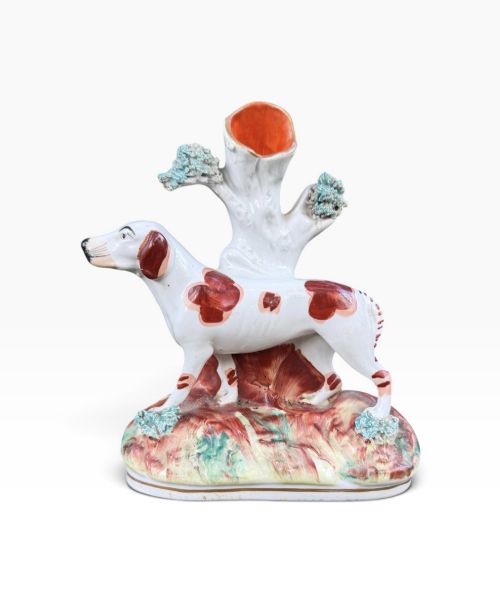
Antique pointer figurines and similar hunting dog sculptures capture sporting dogs in various forms, including decorative porcelain, pepper pots, and mantel figures. Buyers searching this phrase encounter nineteenth-century bronzes, Edwardian pieces, and earthenware models depicting gundogs, hounds, and setters at work.
The selections span distinct periods from the nineteenth century into the twentieth, showing influences from French Animalier styles to Art Deco and Art Nouveau. Most examples originate from European workshops and factories, representing both domestic decorative pieces and novelty silver items.
How they were made
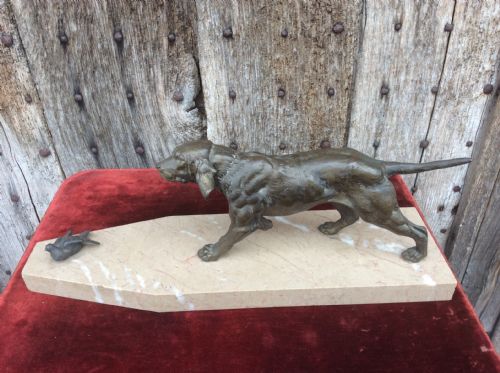
Maker's workshops utilised traditional casting methods for metals, producing detailed bronzes, cast iron figures, and spelter statues often mounted on marble plinths. Bronze works frequently employed the lost-wax technique to capture the muscular forms of hunting dogs.
Pottery and porcelain pieces relied on skilled moulding, glazing, and hand-painting techniques, as seen in factory-produced earthenware and blanc de chine figures. Gilding and specialised glazes added surface texture to ceramic and porcelain examples.
Antique Pointer Figurines Retail Price Guide 2026
Typical asking prices for pointer figurines among the pieces listed under this phrase on Sellingantiques today, from the lower quarter to the upper quarter. They describe what is for sale here now, not the wider market.
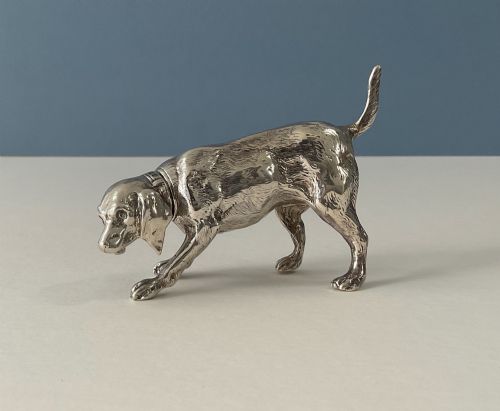
A solitary silver dog waits patiently inside a dining room as a novelty pepper pot.
What varies in quality
The fidelity of the animal's anatomy and the crispness of the casting or moulding separate standard production from finer work. Superior metal sculptures display careful chasing on the fur and lifelike tension in the pose.
The reputation of the maker or foundry heavily influences the desirability of a piece, with signed works by known sculptors commanding greater attention. Material choice also dictates quality, distinguishing solid silver and heavy bronze from lighter spelter or cast iron.
Delabrierre·Enoch Wood factory·Auguste Nicholas Cain·DUBUCAND·C Masson·Royal Dux
The Antique Pointer Figurines Glossary
- Animalier
- A nineteenth-century artistic movement focused on the realistic portrayal of animals. Sculptors in this tradition studied anatomy closely to render dogs and wildlife with dynamic accuracy.
- Blanc de Chine
- A French term for white porcelain originating from China, later adopted by European potteries. This glaze highlights the pure contours of modelled figures without the distraction of colour.
- Spelter
- An alloy of zinc and lead often used as a cheaper alternative to bronze. It was widely utilised in decorative statues during the early twentieth century and finished with metallic paints.
- Gundog
- A type of hunting dog bred to find and retrieve game for hunters. These animals appear frequently in sporting art and sculpture from the Georgian and Victorian eras.
Antique Pointer Figurines: Frequently Asked Questions
What materials are these dog figures made from?
The listings show a variety of materials including bronze, cast iron, spelter, solid silver, and porcelain. Some pieces combine metal figures with marble plinths.
Ceramic examples feature factory glazes and hand-painted details, while metal works rely on casting and patination.
How do I identify the period of a sculpture?
Stylistic markers help date the pieces, such as the naturalistic muscle definition common in nineteenth-century Animalier bronzes. Art Deco works from the nineteen-twenties often display stylised geometric bases.
Signatures from known makers or factory stamps also provide clear chronological reference points.
Were these figures meant for display?
Most functioned as decorative ornaments for the mantelpiece, fireside, or desk, reflecting Victorian and Edwardian sporting interests. Some items, like novelty pepper pots, served a functional purpose on the dining table.
Larger statues were designed to stand independently as interior ornamentation in studies and libraries.
What is the difference between a pointer and a setter?
Pointers and setters are distinct gundog breeds with differing physical stances when locating game birds. Sculptors captured these specific working postures to appeal to hunting enthusiasts.
Nineteenth-century makers observed these traits closely to ensure accurate breed representation in porcelain and bronze.