
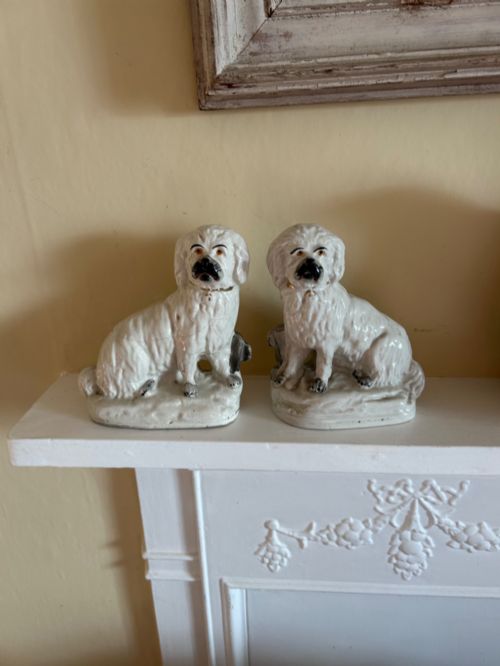


White Ceramic Spaniel Dogs
White ceramic spaniel dogs are classic Victorian mantelpiece figures that bring traditional English character to any room.
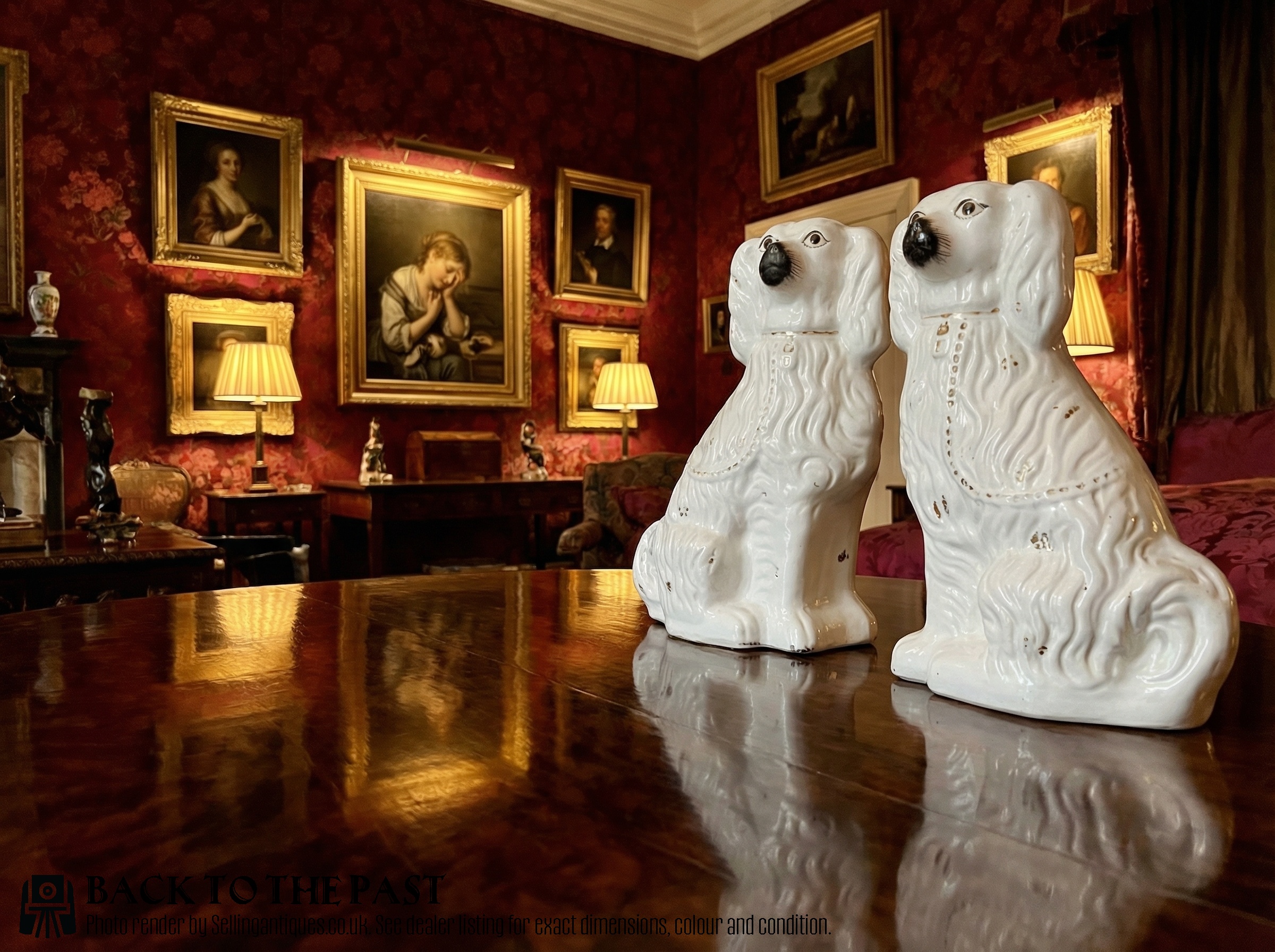
White Ceramic Spaniel Dogs
White ceramic spaniel dogs are typically encountered as pairs of seated mantel figures originating from the nineteenth century. These traditional pieces encompass Staffordshire pottery productions alongside later twentieth-century examples.
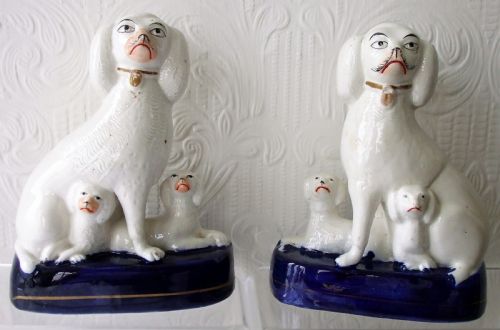
The selections span various forms beyond standard seated pairs, including money boxes, Toby jugs, quill holders, and clock groups. Figures often appear with gilt highlights or coloured markings upon white bodies.
Victorian examples dominate the selection, reflecting the period's fondness for domestic animal ornaments. Makers such as Royal Doulton and Beswick also contribute to the broader tradition of ceramic spaniel figures.
Materials and methods
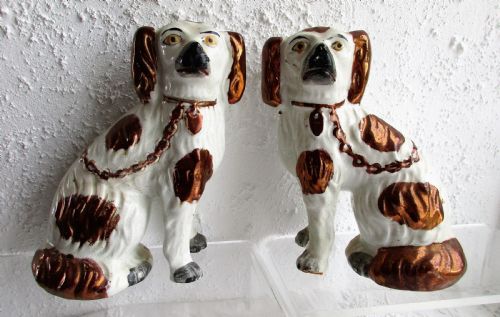
Many items incorporate hand-painted elements alongside moulded construction, resulting in individual variations across pairs. Surface decoration often includes copper lustre or specific colour accents on white ceramic bases.
Listings feature Victorian earthenware bodies decorated with lead glaze, enamel, and gilt highlights.
Distinctions in quality
The presence of matching pairs with consistent glazing and minimal distortion separates finer historical examples from simpler production pieces.
Royal Doulton·Beswick
The White Ceramic Spaniel Dogs Glossary
- Earthenware
- Porous pottery fired at lower temperatures, commonly used for nineteenth-century figures. It forms the primary body material for these traditional canine models.
- Lead glaze
- A shiny coating applied to pottery before firing to create a smooth, glassy finish. This treatment protects the underlying ceramic and enhances surface colours.
- Gilt
- A thin layer of gold or gold-like material applied to the surface for decoration. It frequently highlights collars and facial markings on white figures.
- Staffordshire pottery
- Ceramic wares produced in the Staffordshire region of England, renowned for figure manufacturing. This encompasses the majority of nineteenth-century mantel dogs.
- Toby jug
- A pottery jug shaped as a seated figure, sometimes depicting a spaniel. These functional pieces combine domestic utility with sculptural form.
White Ceramic Spaniel Dogs: Frequently Asked Questions
What are comforter spaniels?
Comforter spaniels refer to the decorative ceramic dogs placed on Victorian fireplace mantels. They were modelled after Queen Victoria's own pet spaniels.
These pairs traditionally sat facing inward toward each other on either side of the hearth.
How old are these ceramic dogs?
The pieces span from the nineteenth-century Victorian era up to mid-twentieth-century productions. Most historical examples date from the period between eighteen-sixty and eighteen-eighty.
Style, glaze type, and modelling characteristics assist in determining the approximate production period.
Were these dogs only made in white?
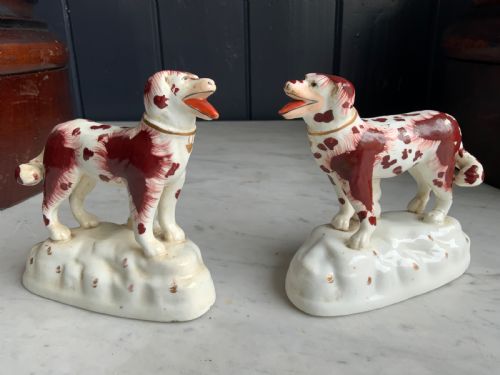
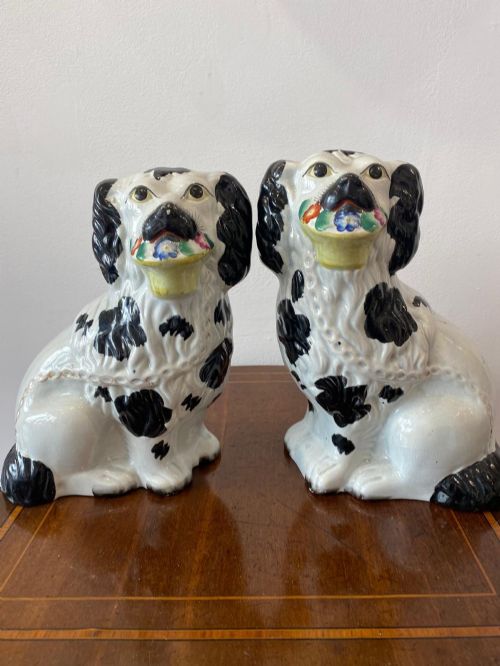
While white and gilt versions are common, makers also produced models with red and white markings, black and white patches, or copper lustre finishes.
Coloured enamels were often hand-painted over the white ceramic base during decoration.
How were ceramic spaniels used?
They served primarily as decorative ornaments for domestic mantelpieces and shelves during the Victorian period. Some specialised pieces also functioned as money boxes, quill holders, or clock surrounds.
Pairs were intentionally arranged to guard the fireplace and bring domestic comfort to the home.