
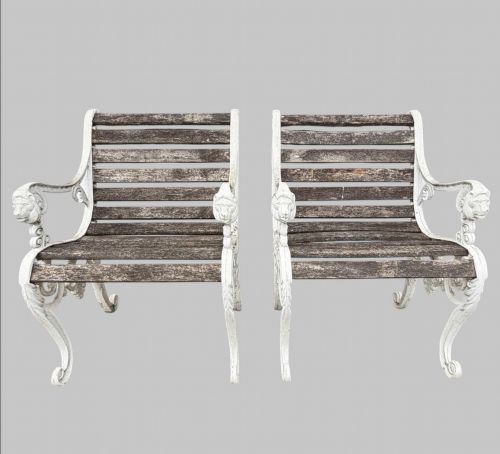


White Cast Iron Bench
A white cast iron bench brings robust Victorian engineering to the lawn, offering enduring seating shaped in intricate botanical motifs.
What these pieces are
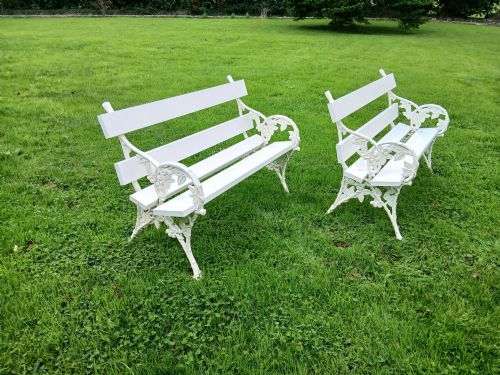
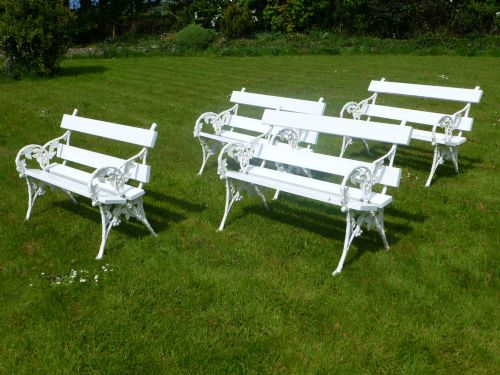
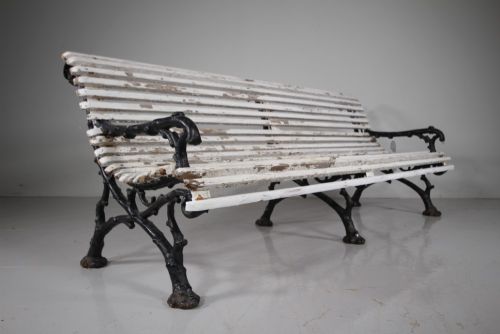
A white cast iron bench represents the heavy metal garden seating produced during the nineteenth century, including the Victorian period. These pieces frequently take the form of garden seats or separate bench ends designed to be fitted with timber slats.
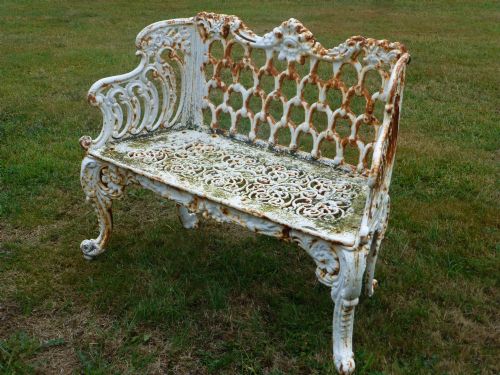
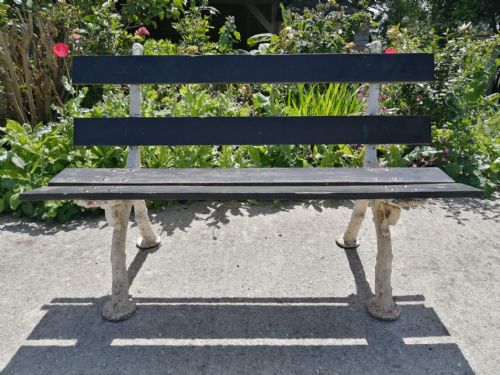
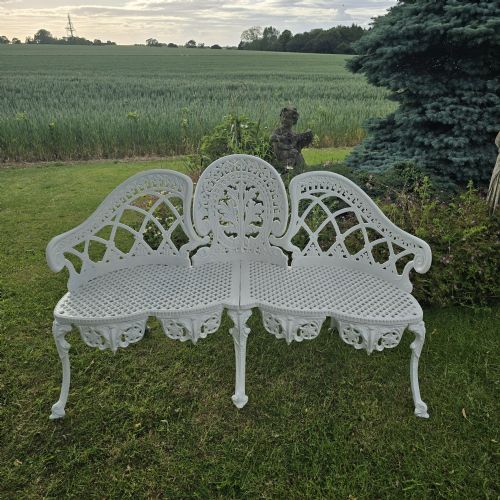
The examples found here span from around eighteen fifty to nineteen hundred, encompassing both complete two seater benches and sets of chairs. Makers and designers of the era utilised distinct patterns such as the blackberry and leaf motif and faux bois timber simulation.
Victorian decorative styles dominate the selection, bringing substantial weight and weather resistant utility to the exterior landscape. Buyers seeking a white cast iron bench will encounter both named foundry output and traditional unassigned garden seats.
How they were made
Foundries poured molten metal into sand moulds to create the rigid components, employing techniques refined during the nineteenth century. Cast iron formed the structural frame and decorative backrests, while timber slats often provided the seating surface.
White paint was subsequently applied over the ironwork to protect the metal from rust and to brighten the appearance within garden settings. This painted finish defines the classic aesthetic of the surviving pieces.
Retail Price Guide 2026
Typical UK retail prices for white cast iron bench, calculated from the Sellingantiques database of over a million retail prices indexed since 2003. This retail price guide relies exclusively on Sellingantiques data; no external sources or auction records are used, so the figures do not describe the wider market.
Listings feature items from the nineteenth century, including specific dates such as eighteen fifty and nineteen hundred.
What varies in quality
The crispness of the casting separates standard production from superior foundry work, particularly in botanical details like leaves and stems. Finer pieces retain sharp relief in the pattern work without the blurring seen in later or secondary casts.
Attribution to notable foundries elevates a piece, as does the survival of matching components in pairs or larger sets. The integrity of the original iron structure alongside complementary timber elements dictates the overall standard.
Falkirk Carron Foundry·Coalbrookdale
The White Cast Iron Bench Glossary
- Cast iron
- A hard, relatively brittle alloy of iron and carbon that can be cast in a mould. It provides the heavy framework necessary for nineteenth century garden furniture.
- Faux bois
- An artistic imitation of wood created in other materials such as iron or stone. Victorian designers utilised this technique to make metal benches mimic natural branches.
- Bench ends
- The structural side supports of a seat that hold the back and seat slats together. These metal panels frequently display the heaviest ornamentation.
- Painted wood
- Timber planks coated with protective pigment used for the seating portion of iron framed garden furniture. This material contrasts with the rigid metal structure.
Frequently Asked Questions
Are these benches heavy to move?
These items are exceptionally heavy due to the solid metal composition used in their construction. Two or more people are generally required to lift and position them safely in a garden.
The substantial weight keeps the seating firmly in place on lawns or patios without needing permanent fixings. This mass also means they withstand strong winds without shifting.
Can they stay outside all year?
The metal frames endure outdoor conditions well, though the painted surfaces require periodic maintenance to prevent rust. Protecting the iron with fresh coats of paint preserves the material through wet winter months.
Wooden slats attached to the frames may need more frequent care or winter storage depending on the timber used. Checking the condition of the paint prevents moisture from reaching the underlying iron.
How do I date a bench?
Dating relies on stylistic clues, foundry marks, and the specific casting techniques visible on the frame. Pieces from the mid nineteenth century often feature deep relief work and specific botanical patterns associated with documented makers.
Design registrations and foundry catalogues provide reference points for establishing the decade of production. Examining the construction of the joints and bolts also helps place the piece within the Victorian era.
What is faux bois?
Faux bois translates from French as false wood, describing designs shaped to resemble natural branches and bark. Victorian ironfounders used this style to blend industrial metalwork into natural garden landscapes.
Benches featuring this treatment show knotted wood textures and overlapping twigs cast directly into the iron. This organic style became popular during the mid nineteenth century for rustic garden seating.