

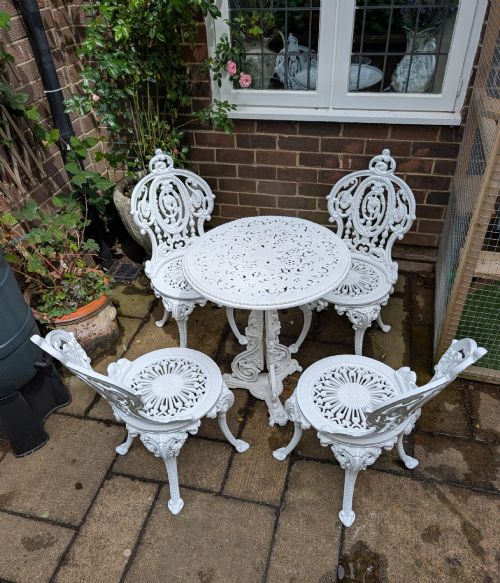
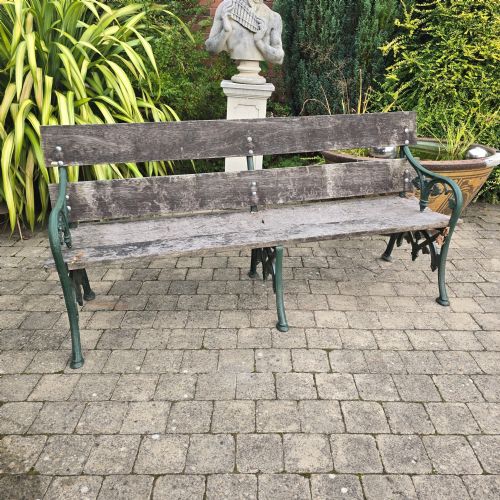
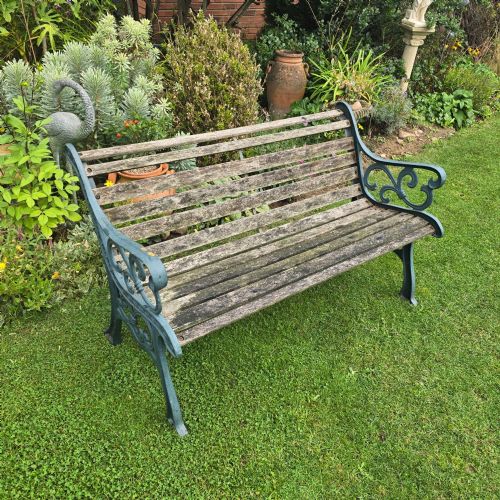
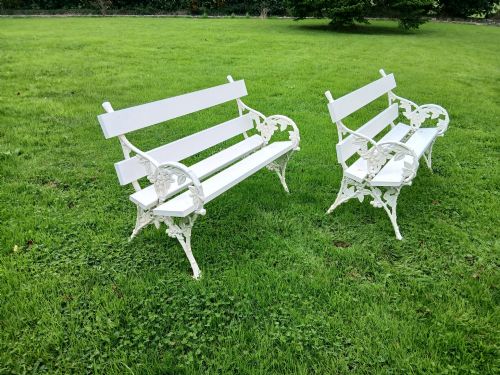
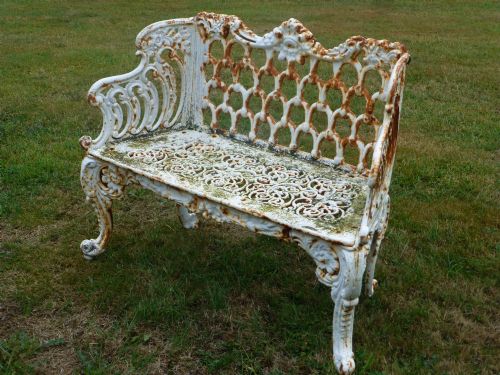
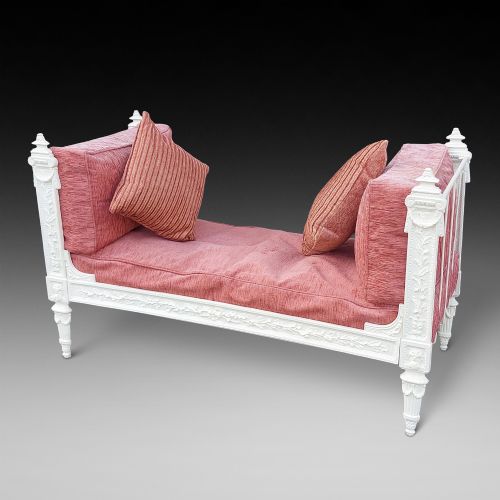
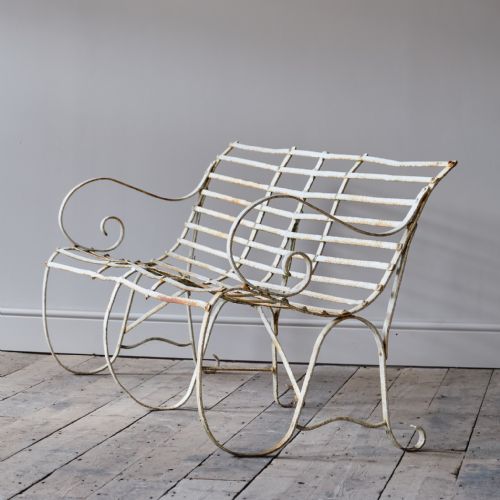
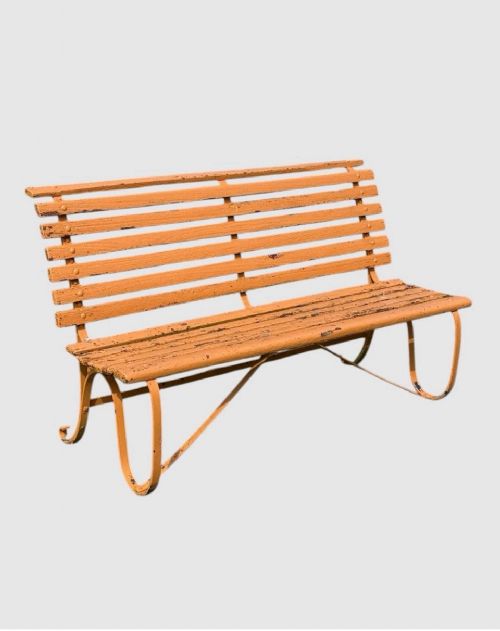

Painted Cast Iron Seat
These painted cast iron seat examples offer durable outdoor styling from the nineteenth and early twentieth centuries.
Painted Cast Iron Seat
A painted cast iron seat combines heavy metal framework with functional outdoor utility, commonly found in nineteenth century and Victorian styles. Buyers searching for a painted cast iron seat encounter garden benches, chairs, and daybeds originating from British foundries and makers.
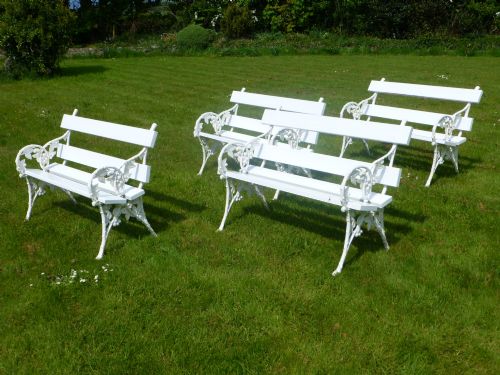
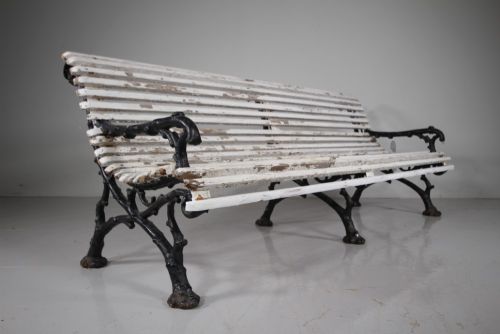
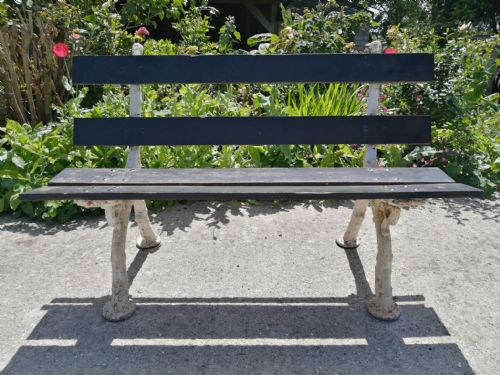
The most frequent pieces on this page are Victorian garden benches featuring botanical or rustic patterns. These forms often incorporate wooden slats or integrated metal frames designed for parks, estates, and gardens.
Materials and construction methods
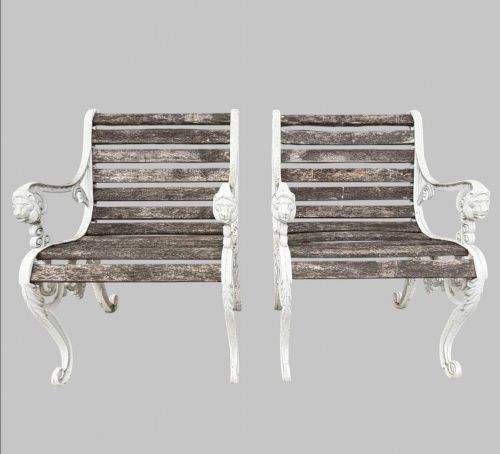
Foundries utilised heavy cast iron for structural ends, frames, and ornate backs, often pairing the metalwork with timber or wooden slats for seating surfaces. Wrought iron strapwork also appears alongside cast elements.
Pieces received protective coats of paint to withstand outdoor elements, with surviving examples displaying layered white, green, or dark finishes over time.
Painted Cast Iron Seat Retail Price Guide 2026
Typical asking prices for painted cast iron seat among the pieces listed under this phrase on Sellingantiques today, from the lower quarter to the upper quarter. They describe what is for sale here now, not the wider market.
Listings feature pieces spanning the nineteenth century, Victorian era, nineteen-thirties, and nineteen-twenties, incorporating cast iron, timber, and painted wood.
Factors of quality and distinction
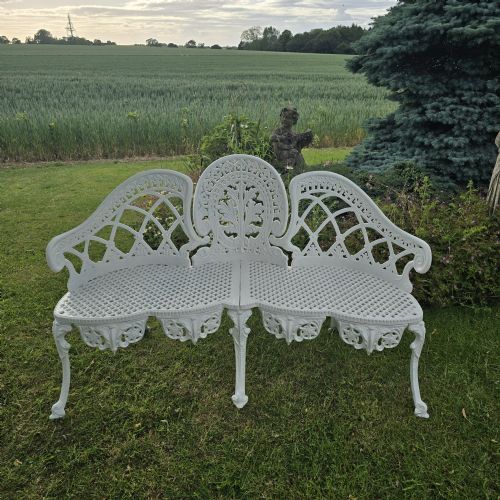
The finesse of the casting separates standard utility pieces from high foundry work, particularly where intricate botanical motifs or figural elements are rendered. Crisp relief work on blackberry, leaf, or shell patterns indicates superior foundry skill.
Completeness and originality of components, such as matching bench ends and timber slats, define the integrity of each seat. Refurbished surfaces and retained maker attributions further distinguish individual pieces.
Falkirk Carron Foundry·Carron Foundry·Christopher Dresser·Coalbrookdale
The Painted Cast Iron Seat Glossary
- Cast iron
- An iron-carbon alloy poured into moulds to create rigid, highly detailed structural and decorative components. This material forms the primary support of garden benches and chairs.
- Faux bois
- Imitation wood grain rendered in metal or stone, popular during the Victorian period. Foundry workers shaped iron to resemble gnarled branches and rustic timber.
- Foundry
- A factory where metal is melted and poured into moulds. Historic foundries produced marked garden seats and architectural ironwork.
- Wrought iron
- Iron beaten or rolled into shape rather than cast in a mould, providing flexible strapwork for garden furniture frames.
- Strapwork
- Flat bands of metal arranged in geometric or interlaced patterns. This technique appears on the frames of specific Victorian garden benches.
Painted Cast Iron Seat: Frequently Asked Questions
How do I care for a painted cast iron seat?
Keep the metal clean and dry during harsh winter months to prevent moisture damage beneath the painted surface. Regular gentle maintenance preserves the underlying iron.
Inspect the paint periodically for signs of flaking and touch up bare spots promptly. Using appropriate outdoor coatings protects the historic material from rust.
Were these seats made for indoor or outdoor use?
These pieces were constructed primarily for gardens, parks, railway stations, and patios. Their heavy metal frames and weather-resistant paint suited them for continuous outdoor placement.
Some lighter forms, such as daybeds or specific armchairs, were also positioned in conservatories or shaded verandahs. Their robust construction handled both sheltered and open environments.
How can I identify a Coalbrookdale bench?
Look for distinctive Victorian rustic patterns, such as faux bois branches or naturalistic leaf motifs cast with high definition. Many pieces feature specific fern or blackberry designs associated with foundry catalogues.
While some bear direct foundry marks or registry numbers, others are identified through established design patterns and benchmark forms. Bench ends often carry the characteristic weight and proportion of the foundry's output.
Are wooden elements original to these seats?
Original timber slats on nineteenth-century garden benches frequently required replacement due to outdoor exposure. Many surviving pieces combine original cast iron ends with later replacement wood.
Examining the fixings and the integration of the slats helps determine whether the woodwork matches the period of the metal frame. Refurbished examples often feature newly fitted timber designed to mirror historic configurations.