



19th Century Garden Bench
A sturdy 19th century garden bench brings enduring structure and botanical charm to an outdoor space.
19th Century Garden Bench
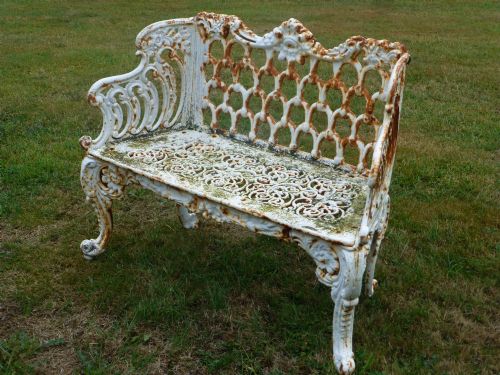
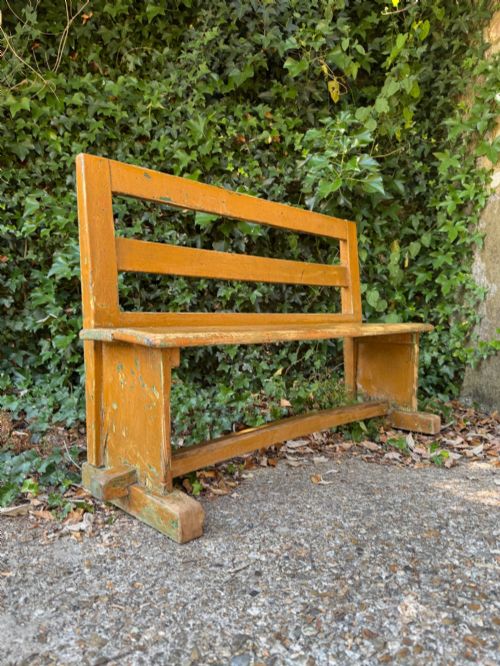
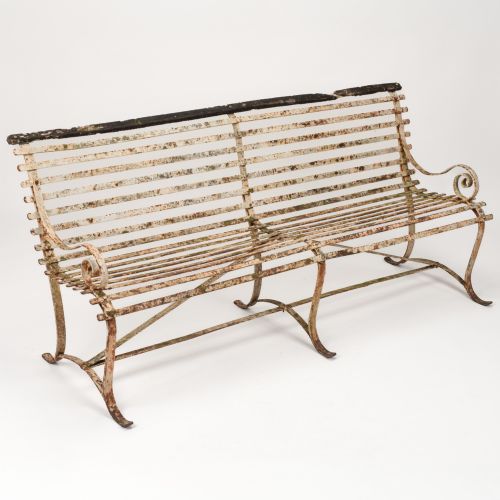
A 19th century garden bench provides both functional seating and substantial architectural presence for grounds and terraces. Buyers seek these pieces for their robust construction and the character that decades of weathering impart to metal and timber. The selection spans formal Regency strapwork designs, ornate Victorian Gothic patterns, and rustic French faux bois interpretations.
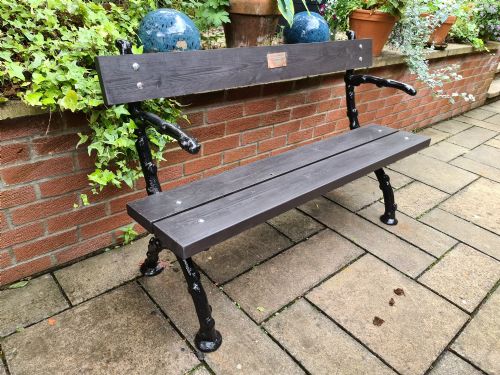
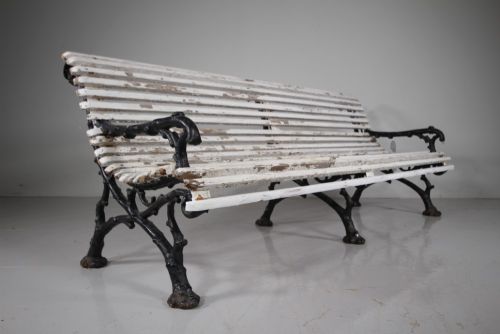
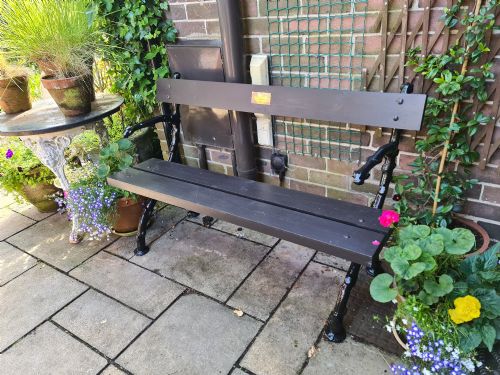
Cast iron and wrought iron examples dominate the choices, often paired with timber slats in oak, elm, pine, or teak. The forms range from two-seater domestic seats to large railway station benches and demi-lune tree benches that curve around living trunks. Each piece reflects the functional requirements of Victorian and Regency estates combined with decorative outdoor taste.
Materials and Construction Methods
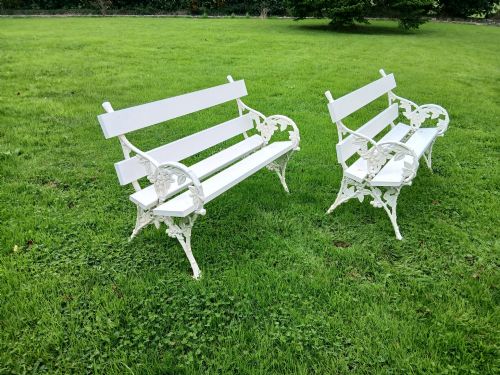
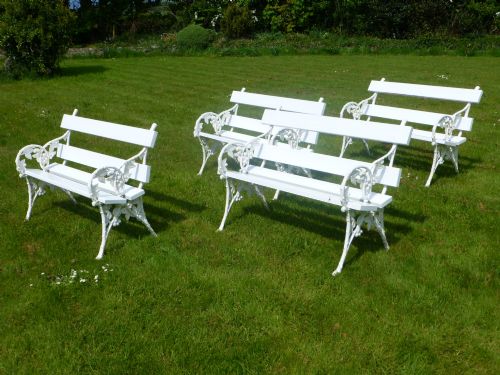
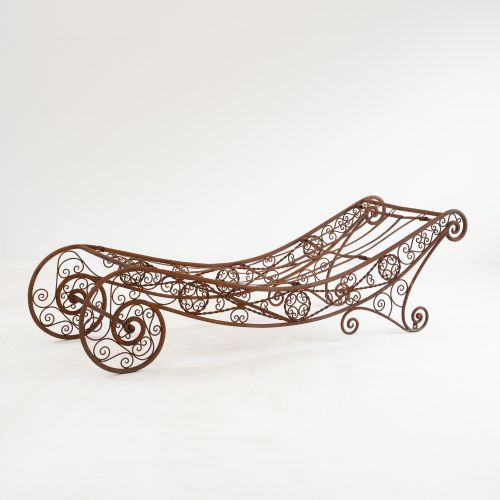
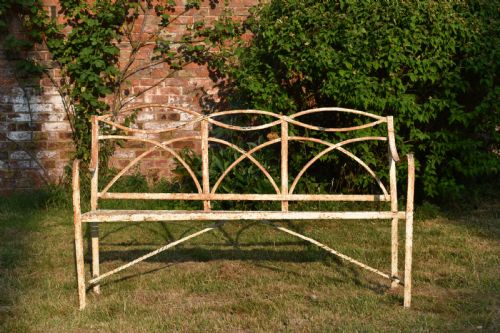
Makers utilised cast iron for intricate botanical motifs such as blackberry and leaf patterns, fern designs, and snake or serpent frames. Wrought iron was shaped by hand into geometric strapwork, graceful scrolls, and flat bar frameworks that offered resilience against the elements.
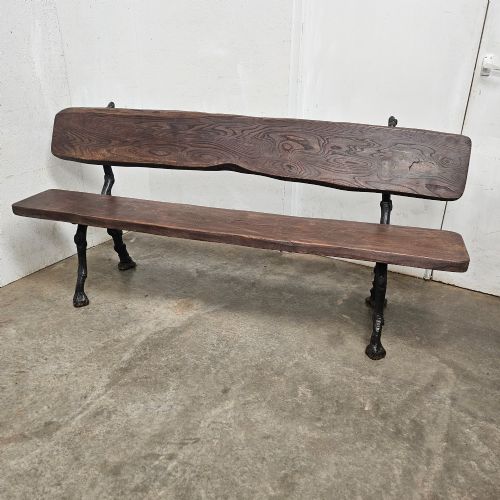
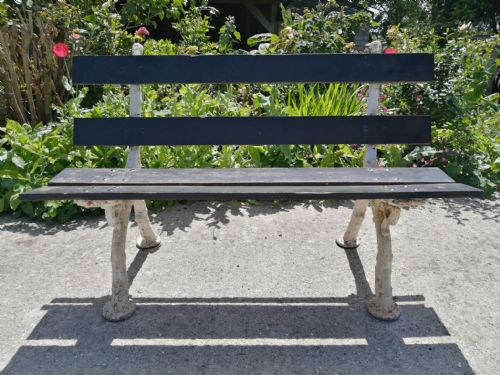
Timber elements incorporated native hardwoods like oak and elm alongside imported teak, frequently secured to iron ends with through-bolts. Surfaces accumulated layers of protective paint over decades, preserving the metal and wood beneath while developing deep patination.
19th Century Garden Bench Retail Price Guide 2026
Typical asking prices for 19th century garden bench among the pieces listed under this phrase on Sellingantiques today, from the lower quarter to the upper quarter. They describe what is for sale here now, not the wider market.
Listings feature periods spanning the Regency era, Victorian era, and the early 1900s, utilising cast iron, wrought iron, oak, elm, pine, and teak.
Evaluating Design Depth and Originality
Quality rests upon the crispness of the casting and the ambition of the design, from simple slatted frames to sculptural faux bois simulating natural branches. Foundry attributions, such as marked Coalbrookdale or Falkirk pieces, distinguish standard utilitarian seating from celebrated design catalogue output.
The integrity of original materials dictates value, particularly where crisp ironwork meets well-preserved timber slats or authentic accumulated layers of old paint. Retaining matched components across sets of chairs or pairs of benches elevates the standing of a piece significantly.
Falkirk Carron Foundry·Coalbrookdale·J P White
The 19th Century Garden Bench Glossary
- Faux Bois
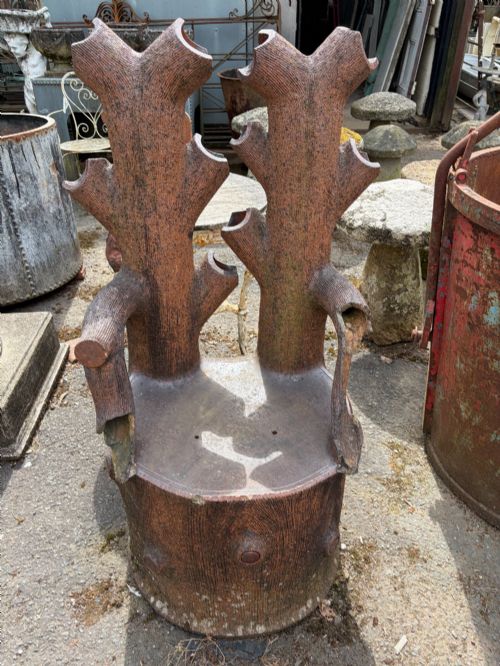
- Concrete, iron, or timber formed to imitate the natural texture and appearance of wood. This technique was popular in French and Victorian garden furniture to blend seats into woodland settings.
- Strapwork
- Flat bands of metal arranged in geometric, interlaced patterns. Regency designs frequently employed this technique to create airy, linear garden seats.
- Demi Lune
- A half-moon or semicircular shape. In garden seating, this describes curved benches built to encircle the trunks of mature trees.
- Patina
- The surface texture, colour changes, and wear accumulated on a material through age and exposure. Original paint layers contribute strongly to this weathered character.
- Gothic
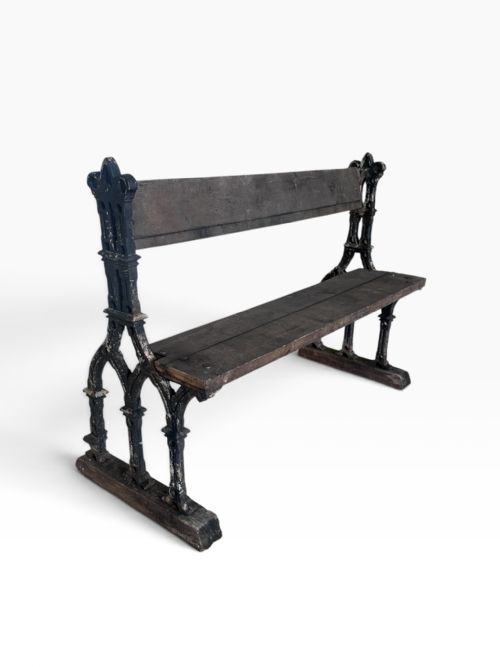
- A decorative style characterised by pointed arches, trefoils, and vertical tracery. Victorian ironfounders adapted these architectural motifs for outdoor seating.
19th Century Garden Bench: Frequently Asked Questions
Can I leave my antique bench outside all year?
Cast iron and heavy wrought iron benches withstand the elements well, having spent generations exposed to outdoor conditions.
However, wooden slats benefit from seasonal covering or storage in drier months to prevent timber degradation and protect older paint layers.
How do I distinguish Regency from Victorian garden seats?
Regency designs lean towards restrained geometry, featuring linear wrought iron strapwork and classical proportions.
Victorian pieces embrace heavier cast iron construction, botanical motifs like ferns and serpents, and ornate Gothic or rustic faux bois styles.
What does faux bois mean on a bench?
Faux bois translates from French as false wood, describing iron or concrete shaped to resemble rustic branches and tree bark.
This whimsical style gained popularity during the 19th century to harmonise garden furniture with natural surroundings.
Are these benches comfortable to sit on?
Many 19th century garden benches feature ergonomically curved iron slats or wooden profiles designed for outdoor resting.
Adding a simple cushion transforms rigid metal and timber into a comfortable seat for long afternoons in the garden.