
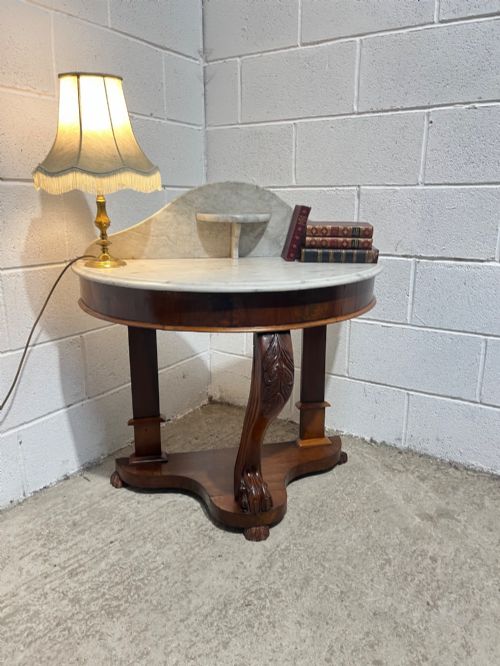
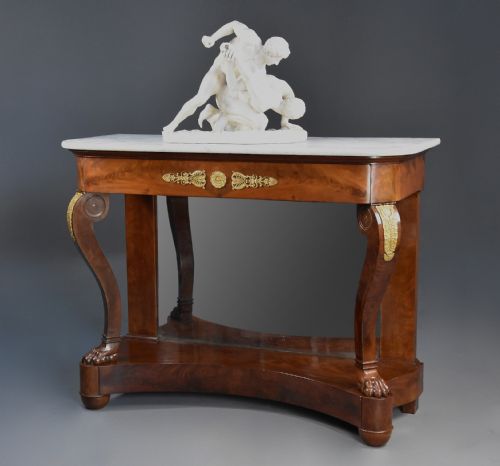
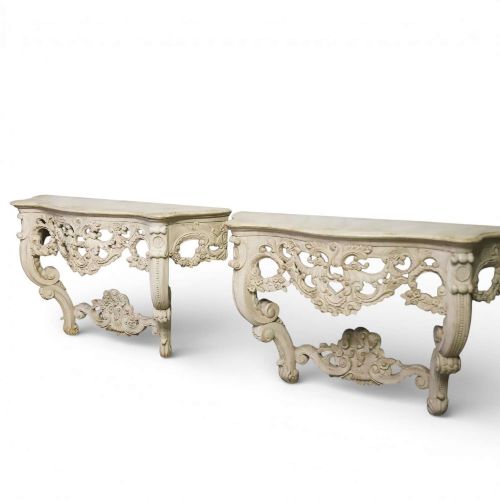
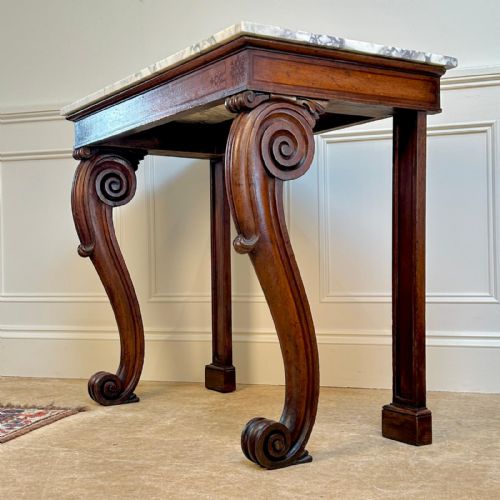
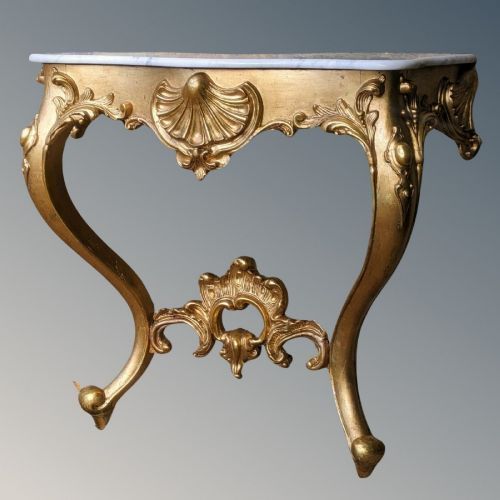
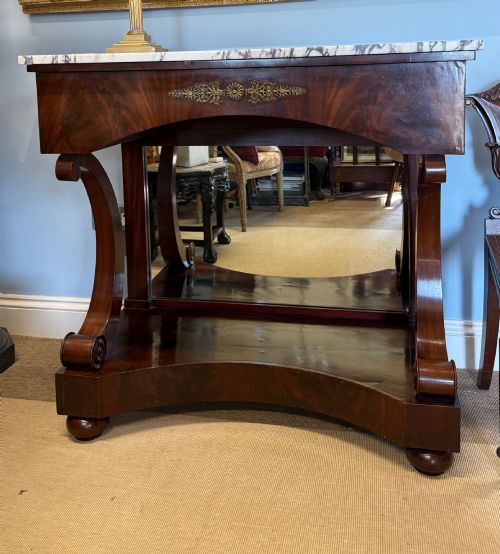


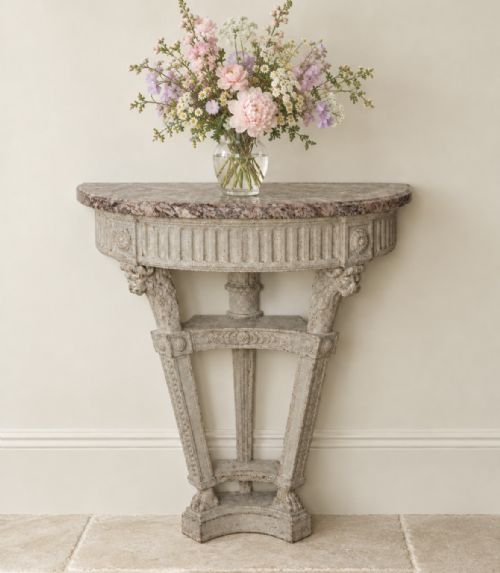


White Carved Console Table
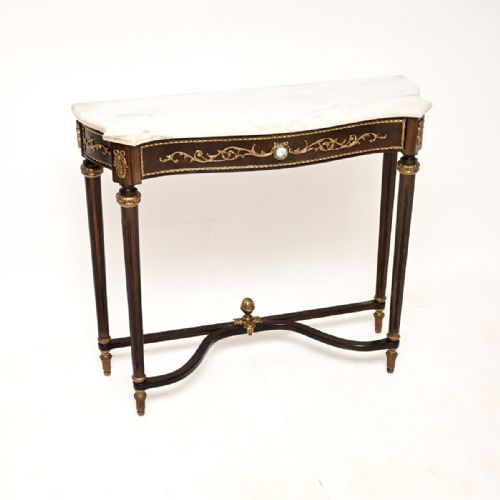
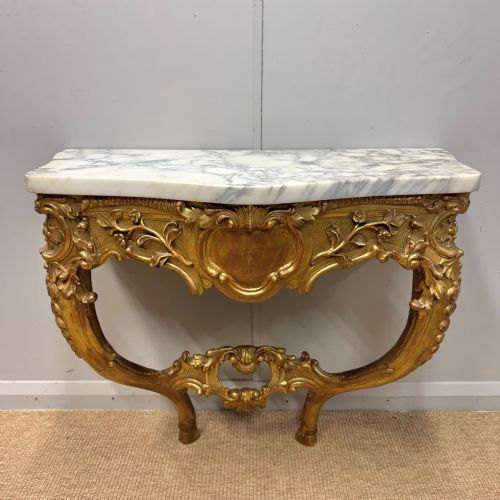
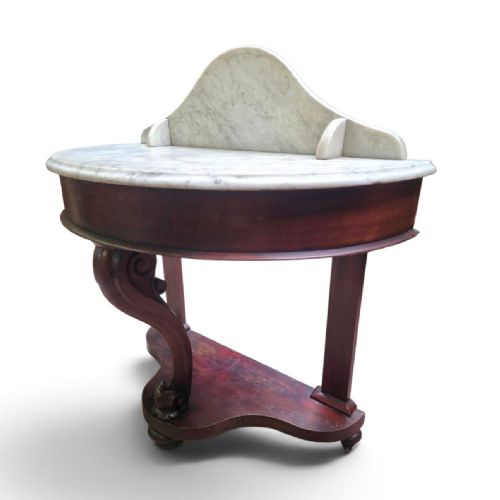
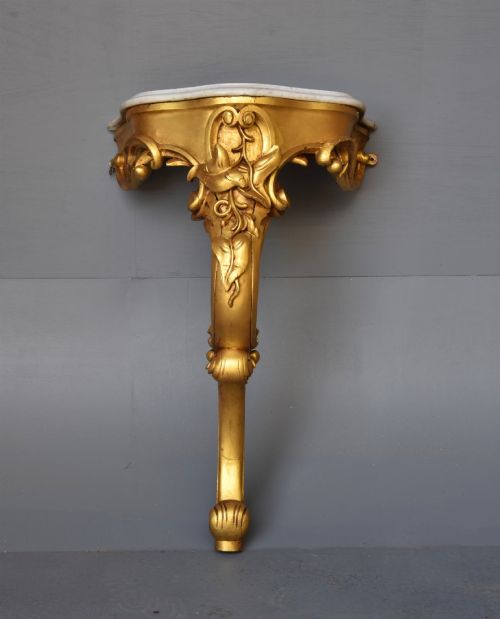
A white carved console table brings architectural presence and heavy stone surfaces to a hallway or drawing room.
Materials and construction methods
Makers built these tables from timbers such as mahogany, oak, walnut, and pine, often applying layers of gesso and paint or giltwood finishes to the exterior. Hand-carved details define the aprons and legs, reflecting stylistic revivals from Rococo to Louis XVI.
Heavy marble slabs, including white Carrara, form the tabletops on many examples, resting directly upon the wooden frames to provide a stable, cool surface.
Distinguishing quality in construction
Depth and precision of hand-carving separate standard joinery from superior examples, particularly where acanthus leaves, scrollwork, or figurative elements meet the frame. Crisp edges on carved gesso and wood indicate skilled workshop production rather than hurried moulding.
The integration of the stone top dictates the overall dignity of the piece; thick, well-fitted marble with clean bevels sits far better than thin or later replacement slabs.
Listings feature white carved console tables spanning the eighteenth century through to the 1930s, utilising marble, mahogany, and gesso.
The White Carved Console Table Glossary
- Console table
- A table designed to stand against a wall, traditionally supported by two front legs or brackets fixed directly to the masonry.
- Gesso
- A plaster-like mixture applied to wood surfaces as a smooth base for painting or gilding.
- Pier table
- A low table specifically placed beneath a wall mirror or between two windows.
- Carrara marble
- A type of white or blue-grey marble quarried in Italy, frequently utilised for classical tabletops.
White Carved Console Table: Frequently Asked Questions
Where should I place a console table?
These narrow tables suit entrance halls, narrow corridors, and drawing rooms where floor space is limited. They fit flat against a wall beneath mirrors or artwork.
Because of their shallow depth, they do not obstruct passageways while offering a firm surface for lamps or decorative objects.
Are the marble tops original?
Many tables retain their heavy fitted marble surfaces, though replacement stone occurs due to centuries of domestic use. Inspecting the underside reveals how the slab rests upon the wooden frame.
Original marble typically shows period weathering and matches the exact proportions of the carved apron beneath.
How do I care for painted wood?
Painted and gessoed surfaces require dry dusting with a soft cloth rather than liquid cleaning agents. Moisture can soften historic gesso and lift delicate paint layers.
Keeping the table away from direct heat sources prevents the timber beneath from shifting and cracking the finish.
What is the difference between a console and a centre table?
A console table stands flat against a wall and often requires wall fixing for absolute stability. Its back edge is traditionally finished more simply.
A centre table stands free in the middle of a room, finished with carved detail on all four sides for viewing from any angle.