



Whiskey Decanter Set
A whiskey decanter set brings together functional glassware and secure framework, offering a traditional way to serve spirits from periods spanning the nineteenth and twentieth centuries.
Whiskey Decanter Set
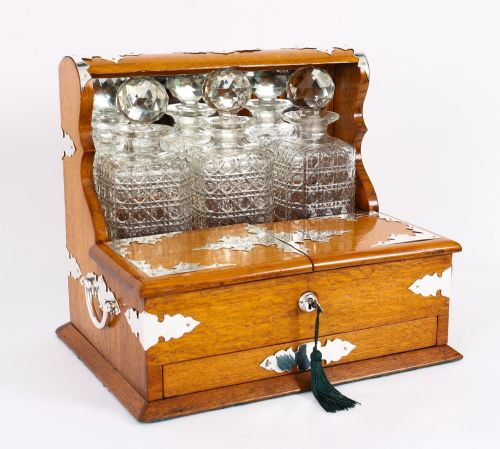
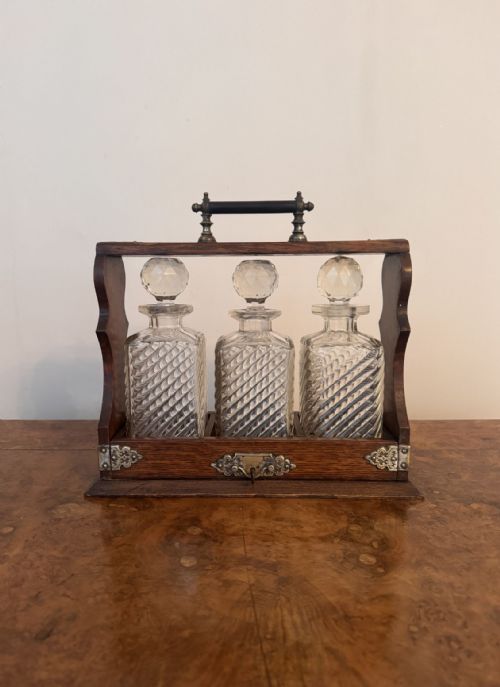
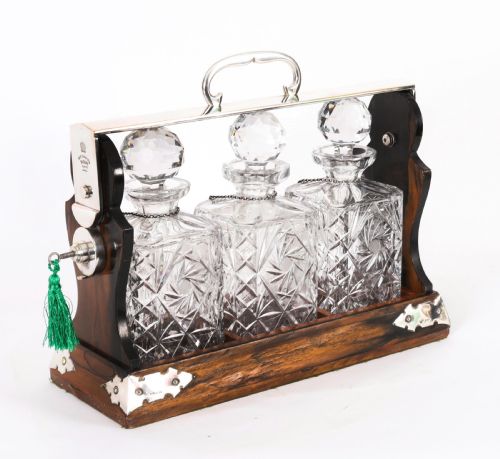
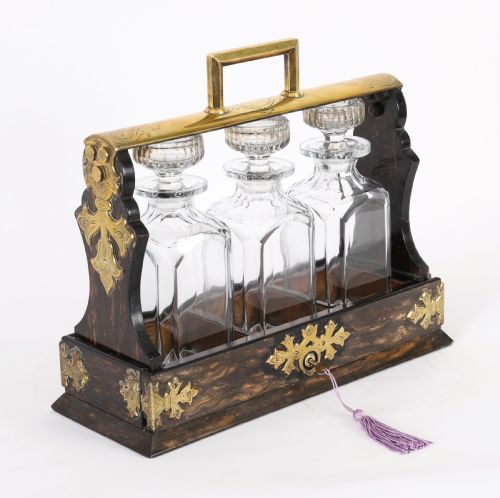
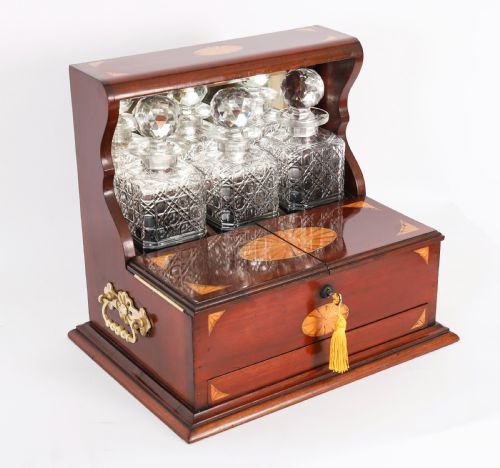
A whiskey decanter set typically comprises multiple glass or crystal bottles housed within a dedicated caddy, stand, or locking framework known as a tantalus. These assemblies range from simple silver-plated trays holding pairs of bottles to elaborate oak, walnut, and coromandel wood cases incorporating games compendiums and dry bars.
The pieces on this page originate predominantly from the Victorian, Edwardian, and Art Deco eras. Buyers encounter traditional British wood-and-silver mountings alongside geometric continental glassware from makers working in Bohemia during the 1930s.
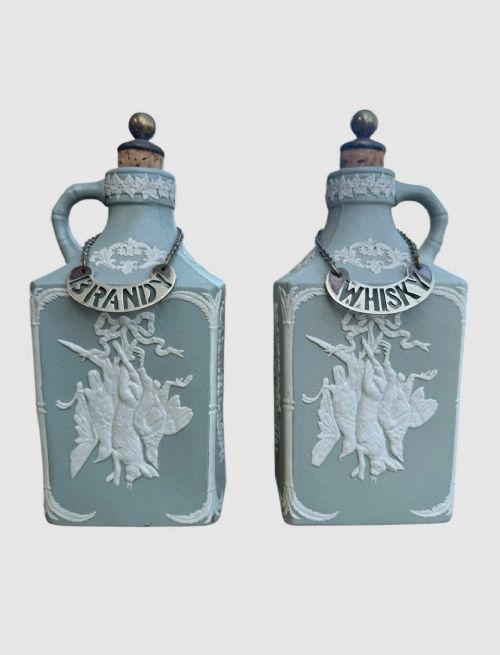
Bottle configurations vary from single-bottle cased items to service sets featuring three or four decanters accompanied by matching glasses or silver decanter labels inscribed for specific spirits like whisky and brandy.
How they were made
Frameworks rely on dense hardwoods such as oak, mahogany, satinwood, and coromandel, frequently enhanced with brass mountings, inlaid marquetry, and silver-plated hardware. Locking mechanisms on tantalus sets utilise functional keys to secure the stoppers in place.
Vessels are formed from cut crystal, lead crystal, or optically blown glass. Art Deco examples feature hand-enamelled surface decoration and geometric cutting executed in Czech workshops.
Metal components include silver plating and solid silver hallmarks applied to bottle labels, frames, and carrying trays by established nineteenth and twentieth-century makers.
Many a Victorian host kept the tantalus locked not from thirsty guests, but to stop the household staff from sampling the scotch.
What varies in quality
Quality separates standard production items from elite presentation pieces through the complexity of the cabinetwork and the weight of the crystal. Superior items integrate games compartments, secret drawers, and substantial silver-plated or hallmarked mounts that show precise engineering.
Glassware clarity and depth of cutting dictate the visual merit of the set. Deep hand-cut facets refract light differently than moulded glass, while matching sets containing all original stopper pairs and glasses retain greater integrity than assembled groupings.
Betjemann·James Powell·Elkington·Mappin and Webb·Karl Palda·Hukin and Heath
The Whiskey Decanter Set Glossary
- Tantalus
- A locking drink cabinet that holds decanters securely by their necks, displaying the contents while preventing unauthorised pouring without a key.
- Compendium
- A fitted box or cabinet containing multiple pastimes, such as cards and board games, combined with a decanter service.
- Decanter label
- A small tag suspended by a chain around the neck of a bottle to identify the specific spirit held inside.
- Lead crystal
- Glass containing metal oxide that increases weight, brilliance, and the refraction of light through cut patterns.
Whiskey Decanter Set: Frequently Asked Questions
What is a tantalus?
A tantalus is a locking wooden or metal frame designed to secure decanter stoppers so that spirits cannot be poured without a key.
This invention allowed hosts to lock away expensive whiskey from servants or guests while keeping the bottles visibly displayed on a sideboard.
How do I date a whiskey decanter set?
Dating relies on combining the wood species, hardware style, and glass cutting techniques present in the set. Victorian and Edwardian examples typically feature heavy oak cases with silver-plated mounts, whereas Art Deco sets display geometric crystal and enamel work from the 1930s.
Silver hallmarks on mounts or decanter labels provide precise assay office dates for many British pieces.
Are the glasses original to the set?
Determining originality involves comparing the glass tint, wear patterns, and decorative motifs on the tumblers against the decanters. Sets produced by European glass houses often matched every glass to the specific enamel or cut pattern of the main bottles.
Assembled sets remain common since individual glasses frequently suffered breakage during use over the decades.
How do I care for antique decanters?
Antique decanters require gentle hand washing in warm water without harsh detergents to preserve original glass surfaces and aged silver plating. Wooden cases and metal frames benefit from occasional treatment with appropriate wax and dry polishing cloths.
Stoppers should be stored carefully or kept slightly elevated to prevent them from sticking permanently inside the bottle necks.