
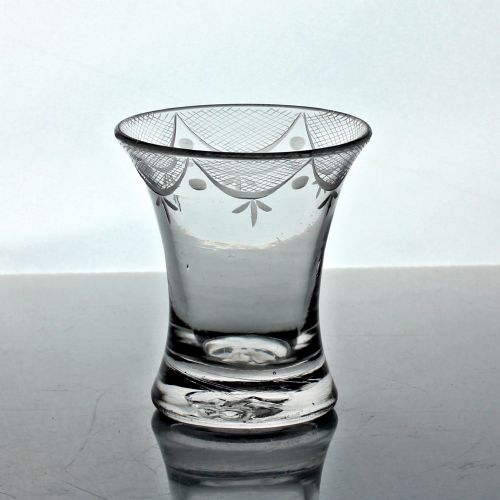
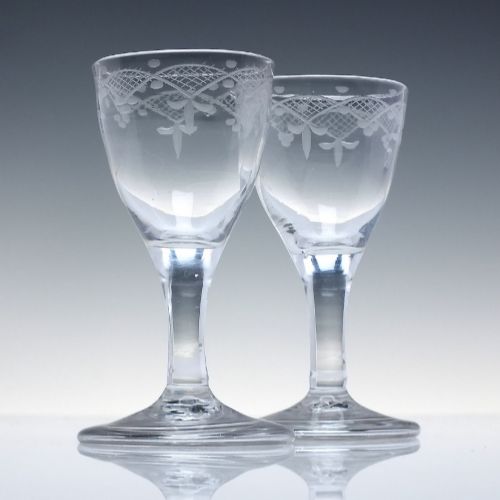


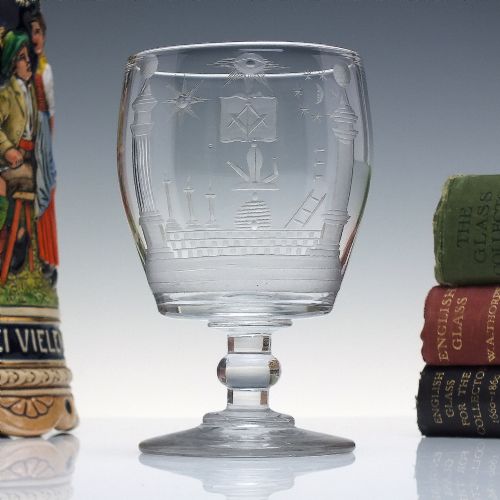


Wheel Engraved Glassware
Wheel engraved glassware brings together tactile forms and meticulous surface detail, offering collectors tangible links to centuries of skilled British and continental craftsmanship.
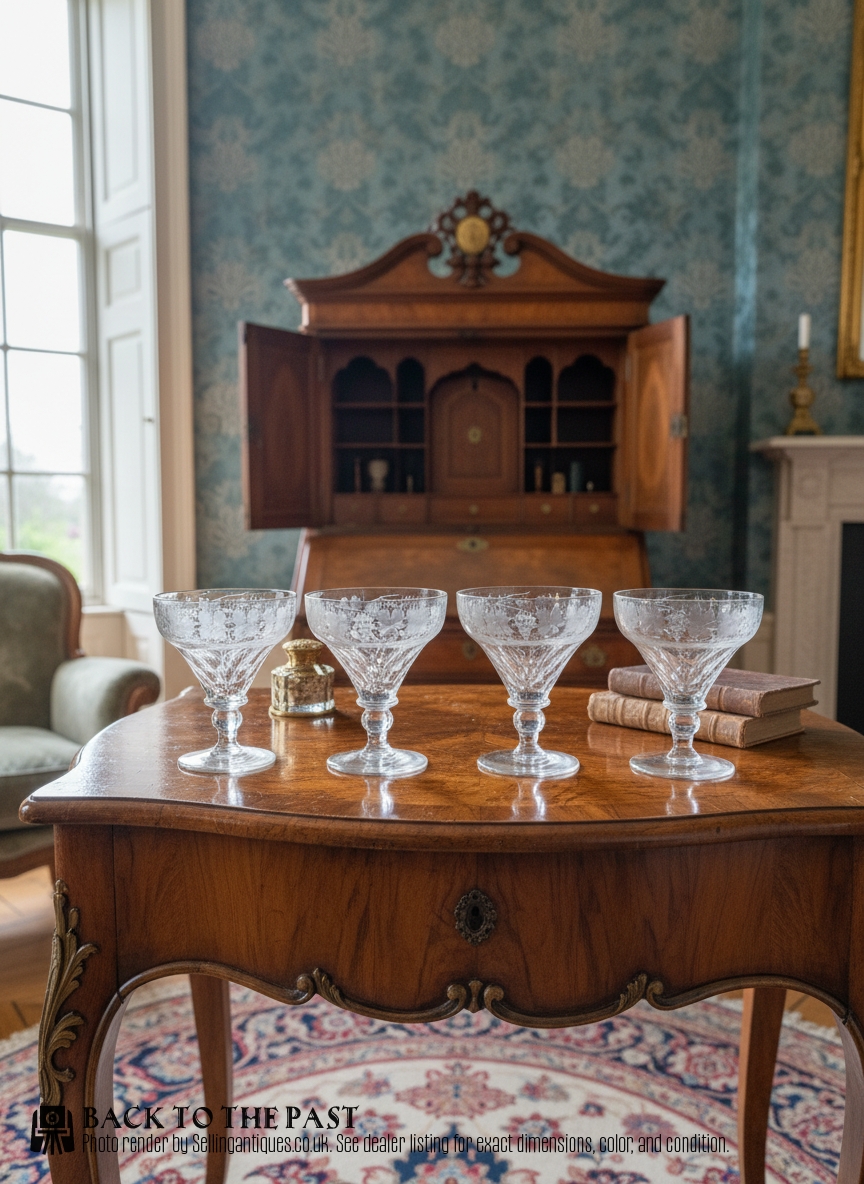
Wheel Engraved Glassware
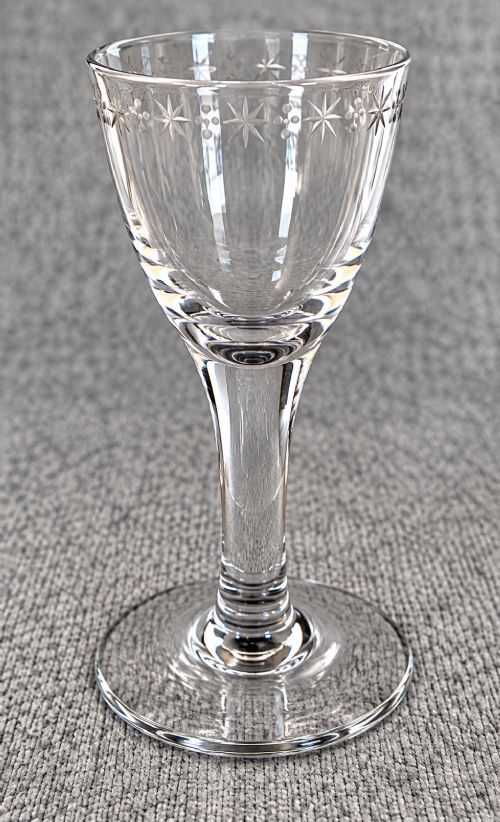
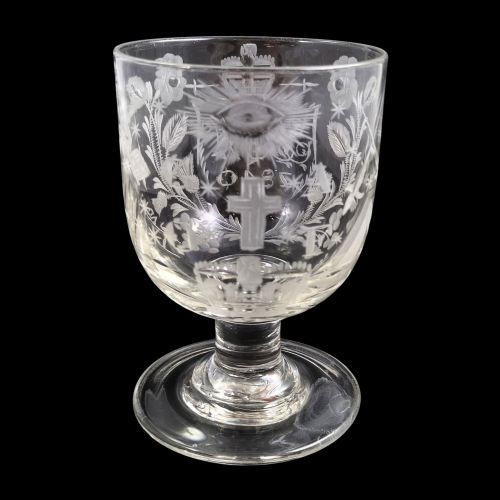
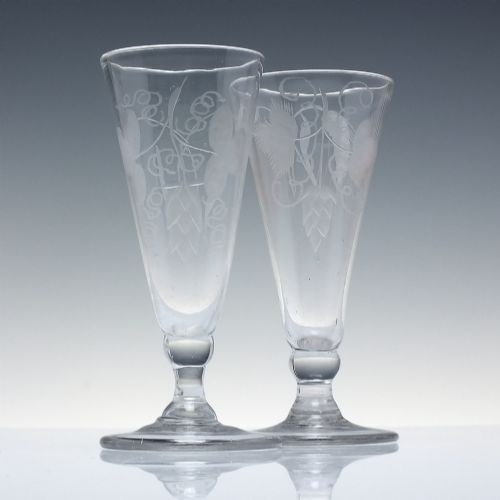
When you search for wheel engraved glassware, you are looking at items shaped by history, ranging from small eighteenth-century dram glasses and firing glasses to substantial nineteenth-century rummers and decorative vases. These vessels served functional roles at the table before transitioning into cherished display pieces.
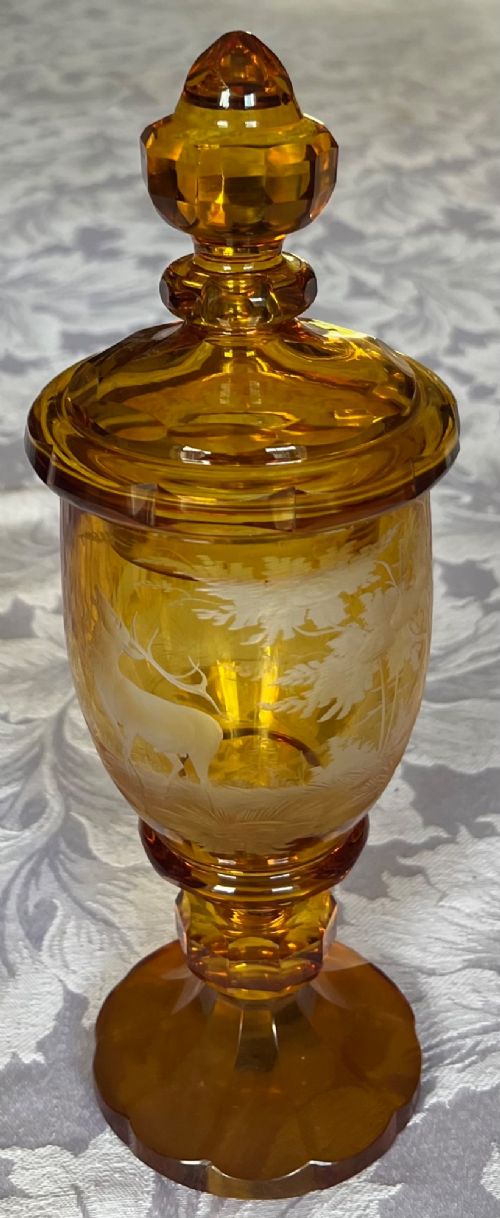
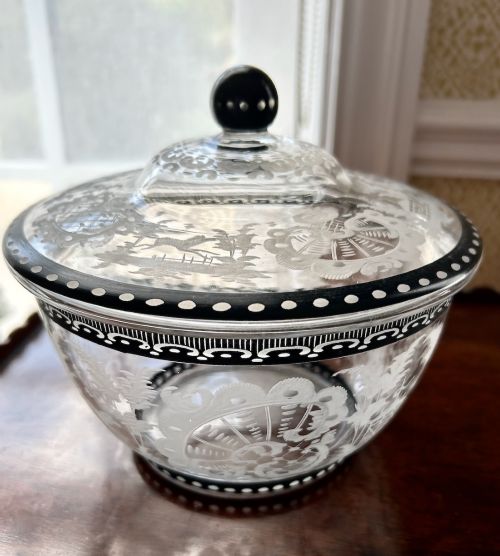
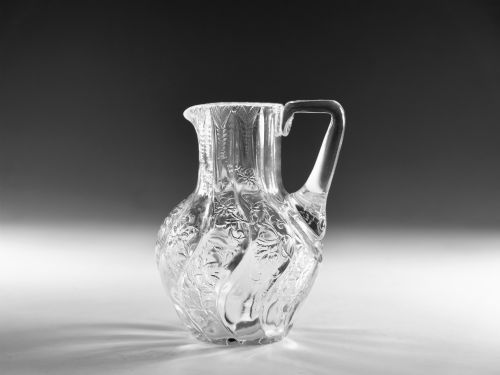
The pieces you are most likely to meet on this page span the Georgian and Victorian eras, alongside Edwardian examples and Bohemian items in ruby and amber glass. Forms vary from simple wine glasses and goblets to decanters, jugs, and covered bowls.
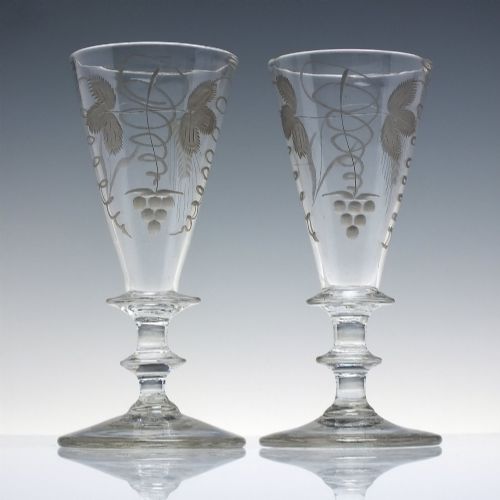
Makers utilised various techniques to decorate clear lead glass, flint glass, and coloured glass with motifs including hops, barley, and portraits. Each object carries the distinct visual weight of its period, whether produced in England or across continental workshops.
Materials and Making
Artisans shaped these objects using lead glass, clear glass, flint glass, and lead crystal, occasionally working with amber, green, or ruby glass for striking coloured vessels. Hand-blowing provided the foundational form, creating blanks ready for subsequent surface decoration.
The engraving itself relied on small rotating wheels of varying sizes, fed with an abrasive paste to cut intricate designs into the glass surface. Craftsmen finished these cuts with finer polishing wheels to achieve clarity and contrast against the matte or brilliant textures.
Some eighteenth-century drinkers showed their political allegiances quite literally by hoisting firing glasses engraved with covert Jacobite symbols.
Judging Quality
Quality rests upon the depth, precision, and control of the wheel work on the glass surface. Crisp lines and well-balanced proportions separate finer artistic achievements from simpler utilitarian production.
The clarity and weight of the underlying metal, whether lead crystal or plain glass, dictate the tactile appeal of each piece. Superior items display harmonious integration between the glassblower's initial form and the engraver's subsequent ornamentation.
Stevens and Williams·Webb Corbett
The Wheel Engraved Glassware Glossary
- Lead glass
- A heavier type of glass containing lead oxide, which increases brilliance and makes the material softer for detailed engraving. This composition defined much of the finer British production from the eighteenth century onwards.
- Rummer
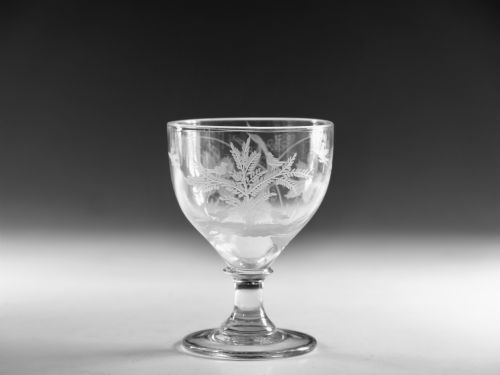
- A large drinking glass with a thick stem and robust bowl, commonly used for beer, ale, or wine during the Georgian and Victorian periods. These vessels frequently feature hop and barley motifs.
- Firing glass
- A heavy-bottomed drinking glass designed to be banged on a table to create a sharp sound instead of cheering during eighteenth-century toasts. The thick foot absorbed the shock to prevent breakage.
- Roemer
- A traditional continental European drinking vessel, typically made of green or amber glass with a ribbed stem and a wide bowl. These pieces often display elaborate wheel-cut decoration.
- Intaglio
- A technique where the design is sunken beneath the surface of the glass rather than carved in relief. This method creates a subtle three-dimensional effect when light passes through the vessel.
Wheel Engraved Glassware: Frequently Asked Questions
How do I date wheel engraved glassware?
Dating relies on combining the form of the vessel, the composition of the glass, and the style of the engraving. Characteristics like folded feet on eighteenth-century glasses or heavy moulded stems on Victorian rummers provide clear chronological markers.
Changes in material standards, such as the adoption of lead crystal versus plain glass, also help narrow down the decade of production. Comparing pieces against documented examples from specific periods ensures accurate attribution.
What were rummers used for?
Rummers served as everyday drinking vessels for beer, ale, or wine during the Georgian and Victorian eras. Their generous proportions suited hearty portions at the dinner table or tavern.
Many examples feature engravings of hops and barley, reflecting their primary association with malt beverages. Over time, these sturdy glasses evolved from practical tableware into collectible decorative items.
Are coloured glass items rarer?
Coloured glass items, particularly ruby and amber pieces originating from Bohemian workshops, offer a different visual impact compared to clear lead glass. The presence of colour often indicates specific regional manufacturing traditions.
While colour alone does not determine age or quality, vibrant hues and double-layered flashed glass require specialised production techniques. These decorative variations add distinct character to any collection.