



Victorian Etched Glassware
Victorian etched glassware brings tactile, light-catching detail to table settings through nineteenth-century wheel-engraved and acid-treated vessels.
Victorian Etched Glassware
Victorian etched glassware spans functional table service and decorative vessels produced across the nineteenth century, encompassing wine glasses, decanters, finger bowls, and rummers. These pieces reflect the expanding manufacturing capabilities of the period, moving from simple wheel-engraved motifs to complex acid-etched and cut designs.
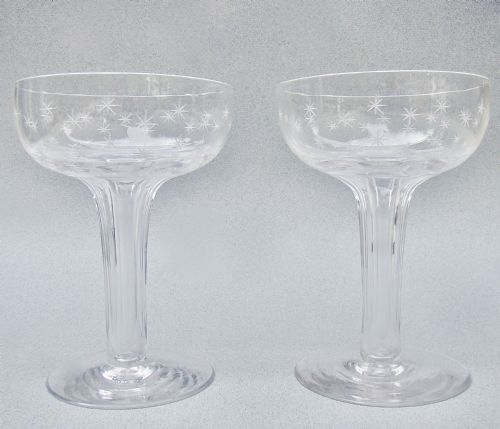
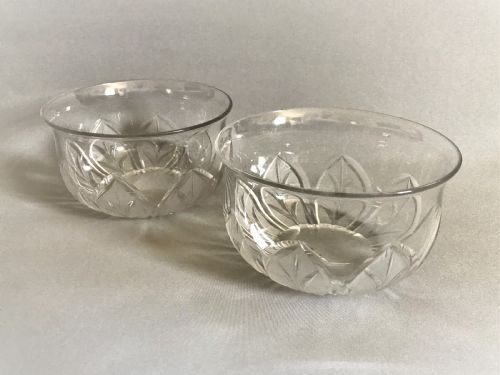
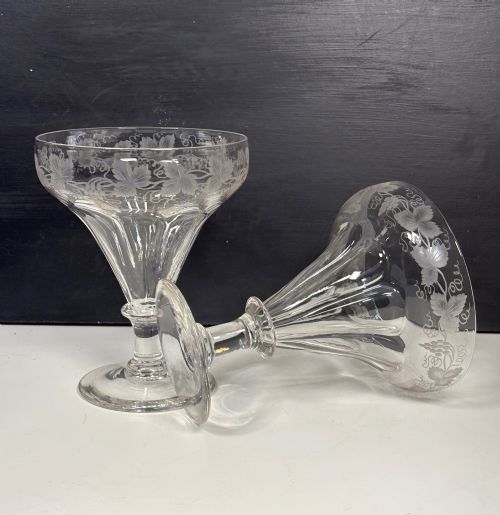
The selection here frequently centres on matching sets of wine glasses and champagne coupes, alongside larger centrepieces such as celery vases, decanters, and tazza stands. Forms range from clear lead crystal to richly coloured cranberry, ruby, and amber glass.
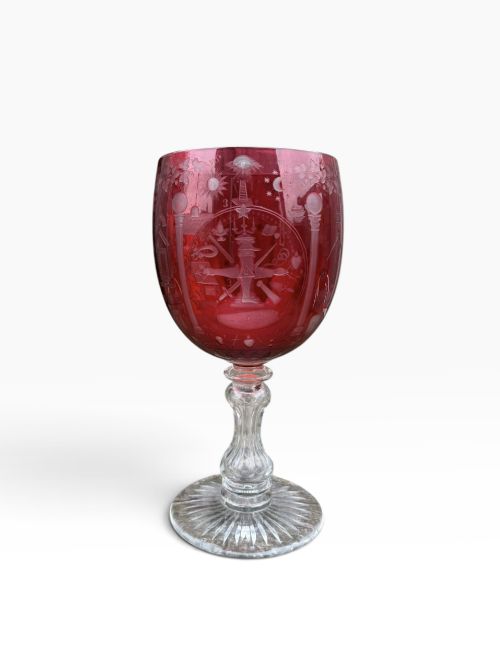
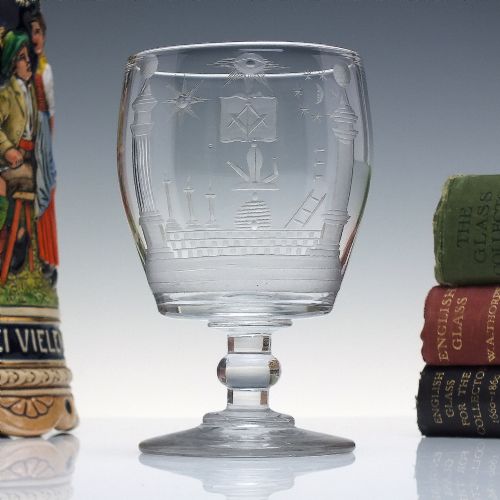
Originating predominantly from British workshops alongside continental centres like Bohemia, these items capture the varied stylistic shifts from mid-century neoclassical revival tastes to later Victorian decorative abundance. Collectors encounter everything from modest medicine measures to grand commemorative Masonic vessels.
Quality and execution
The depth, precision, and clarity of the wheel-engraving or acid-work separate standard production from superior examples. Crisp linework and well-defined motifs demonstrate high technical skill from the artisan.
The quality of the base material matters greatly, with heavy, clear lead crystal showing superior light refraction compared to simpler soda glass. Consistency across matched sets, particularly in stem heights and bowl thicknesses, dictates the desirability of surviving groups.
Tiny medicine glass measures remind us that nineteenth-century cures required precise doses, even when taken from crystal.
Stevens and Williams
The Victorian Etched Glassware Glossary
- Rummer
- A heavy-stemmed drinking glass with a capacious bowl, commonly used for ale, wine, or punch during the nineteenth century. These sturdy vessels often feature engraved floral or Masonic motifs.
- Tazza
- An elevated decorative stand or shallow cup supported on a central foot, utilised for serving fruit or sweets at formal Victorian tables. They frequently combine etched crystal bowls with matching pedestals.
- Roemer
- A traditional continental European wine glass characterised by a large spherical bowl resting on a cylindrical stem decorated with applied glass prunts. These frequently appear in coloured amber or green glass.
- Acid-etching
- A decorative technique where wax or another resistant substance is applied to the glass surface before acid eats away the exposed areas to create frosted designs. This method allowed for intricate, repeatable patterns.
- Celery vase
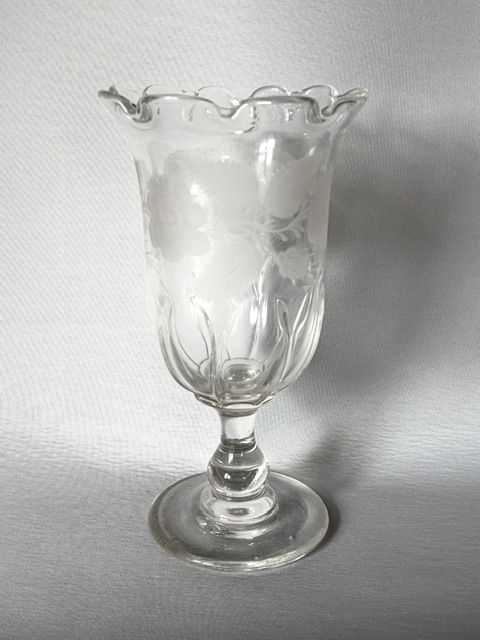
- A tall, footed vessel specifically designed to display and serve stalks of celery upright at the centre of a dining table. They are typically heavily cut or etched to catch the candlelight.
Victorian Etched Glassware: Frequently Asked Questions
Were these glasses used daily or displayed?
Middle and upper-class households utilised these vessels during formal dinners, grand banquets, and evening gatherings for serving wines, cordials, and desserts. Etched decanters and rummers formed a central part of the dining ritual.
While robust enough for regular use, many matched sets and decorative tazza stands spent considerable time displayed on sideboards or within glass-fronted cabinets.
How can I date Victorian glassware?
Dating relies on observing stylistic shifts, pontil mark treatments, and manufacturing techniques recorded across the period from eighteen-fifties to nineteen-ten. Earlier pieces often display deeper wheel-engraving, while later decades introduced chemical acid-etching methods.
Comparing forms like champagne coupes, rummers, and decanters against documented nineteenth-century shapes helps narrow the production window.
What is cranberry glass?
Cranberry glass is a striking red-pink ornamental material created by adding gold chloride to the molten glass batch. It became extremely popular during the Victorian era for decorative decanters, wine glasses, and finger bowls.
Artisans frequently combined this rich colour with clear crystal overlays or etched through the surface layer to reveal contrasting tones beneath.