

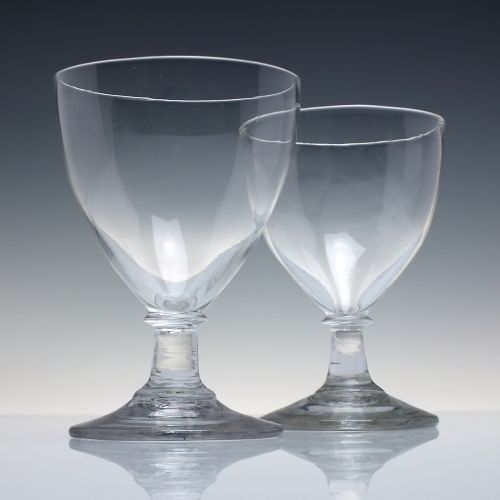


Pair of Rummers
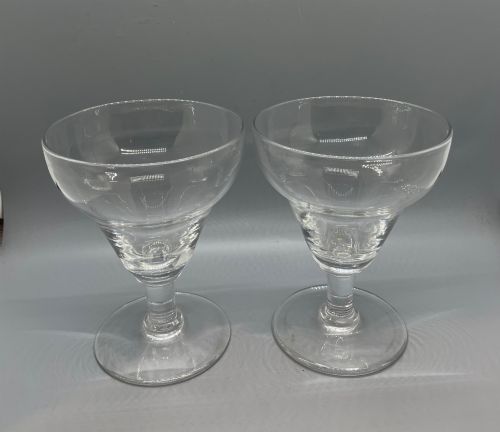
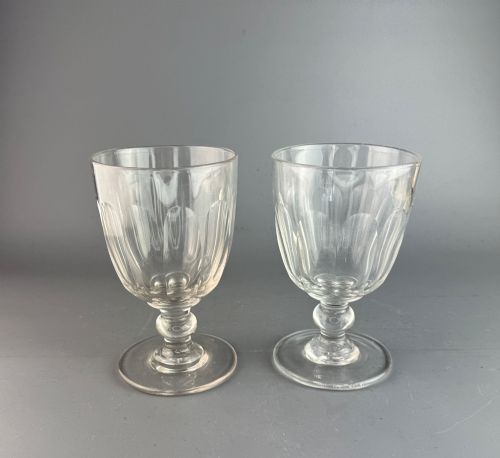
These heavy drinking vessels known as a pair of rummers served hearty measures of ale or wine at the table during the Georgian and Victorian eras.
Pair of Rummers
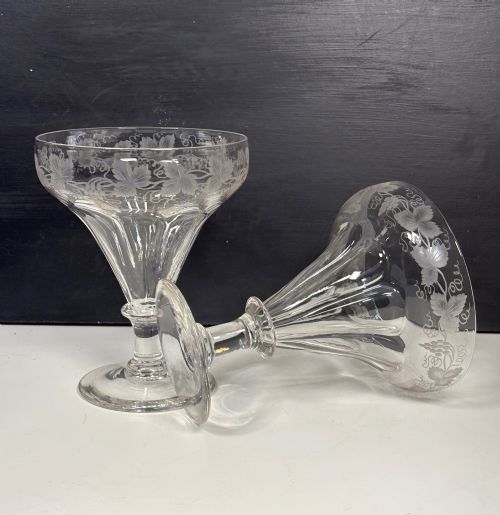
When you search for a pair of rummers, you encounter robust drinking vessels designed for daily use rather than delicate display. The forms span from Georgian ogee and bucket bowls to Victorian etched pan shapes.
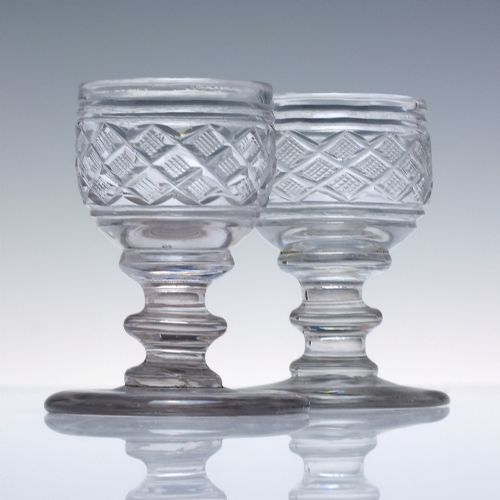
Most examples originate in the Georgian and Victorian periods, often fashioned with sturdy feet and substantial stems to handle heavy toast-drinking. The selection ranges from plain lead glass to deeply cut Anglo-Irish designs.
Materials and Manufacture
The makers relied primarily on lead crystal and flint glass to achieve brilliance and weight. These materials allowed the glass to be blown and subsequently finished by hand.
Surface decoration involved skilled cutting, wheel engraving, or etching to create patterns such as flutes, panels, and hunting scenes. Certain pieces also feature distinctive lemon squeezer bases formed in moulds.
Listings for a pair of rummers frequently showcase Georgian and Victorian periods, utilising lead crystal, clear glass, and cut glass in bucket and ogee bowl forms.
Assessing the Craftsmanship
Quality rests upon the clarity of the metal and the crispness of the cutting. Superior pieces display deep, sharply defined facets that catch the light without blurring.
The proportion between the bowl, stem, and foot dictates the visual balance. Heavier lead glass and finely executed hand engraving distinguish the finer examples from standard tavern ware.
Absolon Factory
The Pair of Rummers Glossary
- Ogee
- A double-curved profile resembling an elongated S shape, often seen on Georgian rummer bowls.
- Bucket Bowl
- A straight-sided bowl widening towards the rim, typical of heavy drinking glasses from the Georgian period.
- Lemon Squeezer Base
- A square, moulded foot with four indented corners, designed to resemble a citrus juicer.
- Flint Glass
- A dense, bright glass formula containing lead oxide, prized for its clarity and heavy weight.
Pair of Rummers: Frequently Asked Questions
What were rummers used for?
These large vessels were built for consuming ales, wines, and punches during social gatherings and communal toasts.
Their robust capacity meant they held generous measures compared to standard wine glasses of the period.
How do I date a pair of rummers?
Dating relies on observing the bowl shape, foot style, and manufacturing techniques such as hand-cutting or moulding.
Early Georgian pieces often display heavy bucket bowls and polished pontil marks, whereas Victorian examples introduce pan shapes and etched decoration.
Are lead crystal and flint glass the same?
Both terms describe high-clarity glass containing lead oxide, which adds substantial weight and brilliance to the vessel.
Georgian and Victorian makers utilised these dense formulations to create durable rummers that could withstand regular toasts.
Can I use antique rummers for drinks?
These glasses remain entirely functional for serving beverages, provided they are washed by hand with care.
Their sturdy historical design makes them suitable for modern dining tables as well as display cabinets.