




West African Sculptures
West african sculptures encompass powerful ritual figures, bronze castings and tribal masks originating from communities across the region.

West African Sculptures
West african sculptures comprise wooden figures, bronze statues, and ceremonial masks originating from traditions such as the Yoruba, Ashanti, Dogon, and Baule peoples. These objects include fertility figures, staff heads, commemorative busts, and shoulder masks associated with tribal rituals and leadership.
The pieces encountered on this page span the nineteenth century through the mid twentieth century, reflecting diverse regional aesthetics from Nigeria, Ghana, Ivory Coast, and Mali. Wooden carvings and cast bronzes dominate the selection, showing distinct patinas and carving techniques.
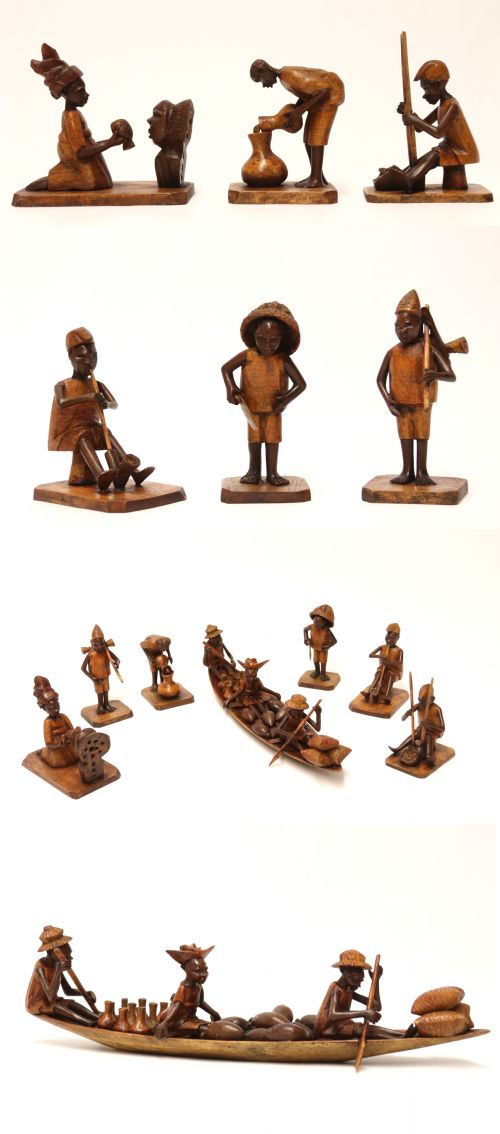
Collectors will find functional and ritual items alongside portrait statues and figural groups, each representing specific cultural practices and craftsmanship from West Africa.
Materials and Construction
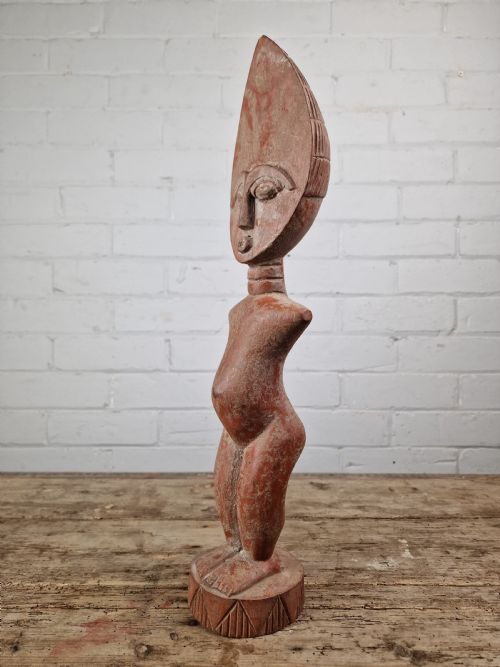
Carvers utilised hardwoods and local timbers to produce figures, masks, and staffs, frequently applying surface pigments and organic fibres to enhance the appearance. Wood sculptures display tool marks and handled patinas built up through ceremonial use.
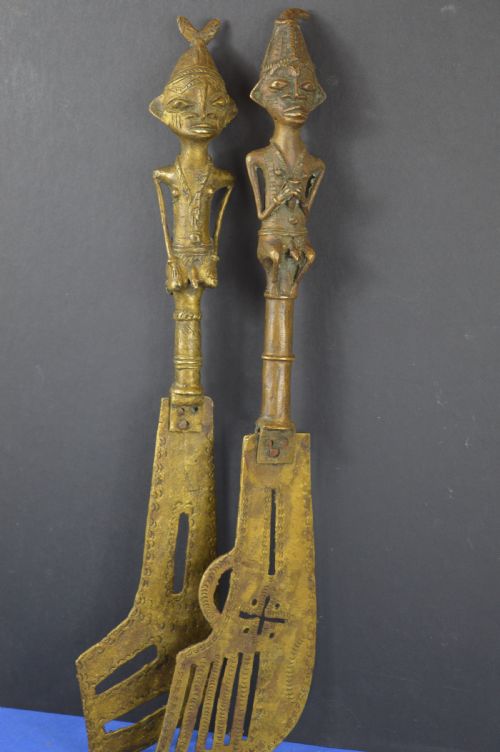
Metalworkers employed the lost wax casting method to create bronze and brass statues, warrior figures, and staff ornaments with detailed surface decoration. These cast metal objects range from moderate hand-held pieces to large statues weighing several kilograms.
A solitary nineteenth century bone and wood pipe sits among the heavy bronzes and towering ceremonial masks.
Assessing Quality and Execution
Quality in these sculptures rests upon the confidence of the carving or the precision of the metal casting, alongside the integrity of the surface patina. Pieces attributed to named carvers or specific regional workshops demonstrate superior anatomical proportion and stylistic articulation.
The depth of ritual wear, the preservation of original pigments, and the complexity of the composition distinguish exceptional examples from standard utilitarian items.
Master carver Abegunde of Ede
The West African Sculptures Glossary
- Patina
- The surface sheen and coloration developed through handling, age, and ritual application over decades. A good patina indicates genuine period use.
- Lost wax casting
- A metalworking process where a molten metal is poured into a mould created by melting away a wax model. This technique produced the bronze figures and staffs in the collection.
- Ibeji
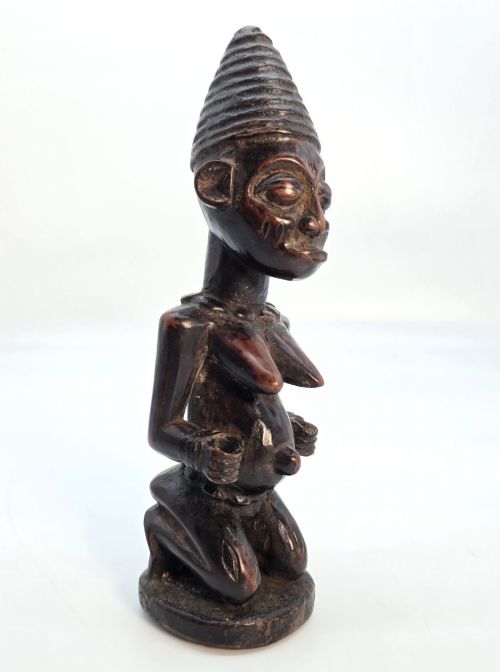
- A wooden twin figure created by the Yoruba people to honour a deceased twin. These sculptures often feature cowrie shell decoration and regional hairstyles.
- Tribal mask
- A ceremonial face or head covering worn during rituals, dances, and agricultural rites. Examples include horned and animal forms from the Baule and Gouro peoples.
- Ogboni Edan
- Cast bronze ritual staff figures linked to the Yoruba earth-worship society. They typically depict linked male and female Janus forms.
West African Sculptures: Frequently Asked Questions
How do I identify a Yoruba figure?
Yoruba figures often feature distinctive facial scarification, large eyes, and elaborate hairstyles associated with traditional status. Many examples depict seated couples, twins, or dignitaries holding ritual objects.
Wooden versions display dark patinas from handling, while metal pieces utilise bronze cast through traditional foundry methods.
What are bronze warrior statues?
Bronze warrior statues represent historical figures, guards, and horsemen associated with the court art of Benin and the broader region. These heavy cast metal sculptures display traditional regalia, weapons, and ceremonial dress.
They were produced using lost wax casting, resulting in solid metal forms with detailed surface ornamentation.
How should I care for tribal wood carvings?
Keep wooden sculptures away from direct sunlight and dramatic fluctuations in ambient temperature to prevent timber splitting. Maintain stable indoor humidity and avoid applying modern polishes or oils to the historic surface.
Dust the pieces gently with a soft, dry brush to preserve the original dry or waxed patina.
What is the purpose of an Ibeji figure?
Ibeji figures serve as memorial sculptures commissioned by Yoruba families following the death of a twin child. They provide a physical vessel for the departed soul and receive ritual care, including washing and dressing.
Over time, this handling imparts a smooth, lustrous patina to the carved hardwood surface.